- Home
- ›
- ›How to Set a PDF Expiry Date and Protect Your Sensitive Information
How to Set a PDF Expiry Date and Protect Your Sensitive Information
Set a PDF expiry date to control how long others can view your file. Keep sensitive documents secure with simple access limits.
More on Protect PDF
More on Edit PDF
More on Unlock PDF
Sharing a PDF that should only be available for a short time can feel risky. Once you send the file, it is hard to control who keeps it, forwards it, or opens it again weeks later.
PDF expiry is one way to add guardrails. Instead of trying to change the PDF itself, you control how long people can access it through platforms like Google Drive or DRM software.
Smallpdf doesn’t currently include a built-in expiry or DRM feature, but we can help you protect PDFs before you share them and guide you through the expiry options that work.
Quick-Start: How to Set a PDF Expiry Date
From there, you can add extra protection with Smallpdf features like Protect PDF, watermarking, or redaction before you share anything.
Can You Actually Make a PDF Expire?
Yes, but not in the way many people expect. Standard PDFs do not have a native “self-destruct” setting. You cannot add a date inside a normal file that makes it erase itself on every device.
Instead, PDF expiry works through access control. You keep the file behind a service that checks rules such as dates, number of opens, or number of prints. Once the conditions are no longer met, the service blocks access or refuses to open the encrypted file.
Common high-intent ways people search for this include “set PDF expiry date,” “PDF with expiration date,” or “expire PDF after download.” All of these lead back to the same idea: control who can open the file, for how long, and through which viewer.
How PDF Expiry Works
Most expiry systems rely on two ideas: encryption and controlled access.
Encryption means the PDF is scrambled so that only users with valid keys can open it. Access control means a server or viewer checks rules like dates or view counts before using that key.
Typical expiry controls include:
Fixed date expiry: the document stops working after a specific calendar date.
Days after first open: a countdown starts when the user first opens the PDF.
Number of opens: the PDF becomes inaccessible after it has been opened a set number of times.
Number of prints: printing is blocked after a limited number of copies.
Per-user access windows: each user has their own time window or expiry date.
These options work only while the PDF stays protected inside that system. Once a user downloads an unprotected copy or takes screenshots, expiry rules no longer apply.
How to Set a PDF Expiry Date on Google Drive
Google Drive offers simple, time-limited access for shared files, including PDFs. This works only with Google Workspace accounts and only for specific people, not for “Anyone with the link.”
Step 1: Upload and Share your PDF
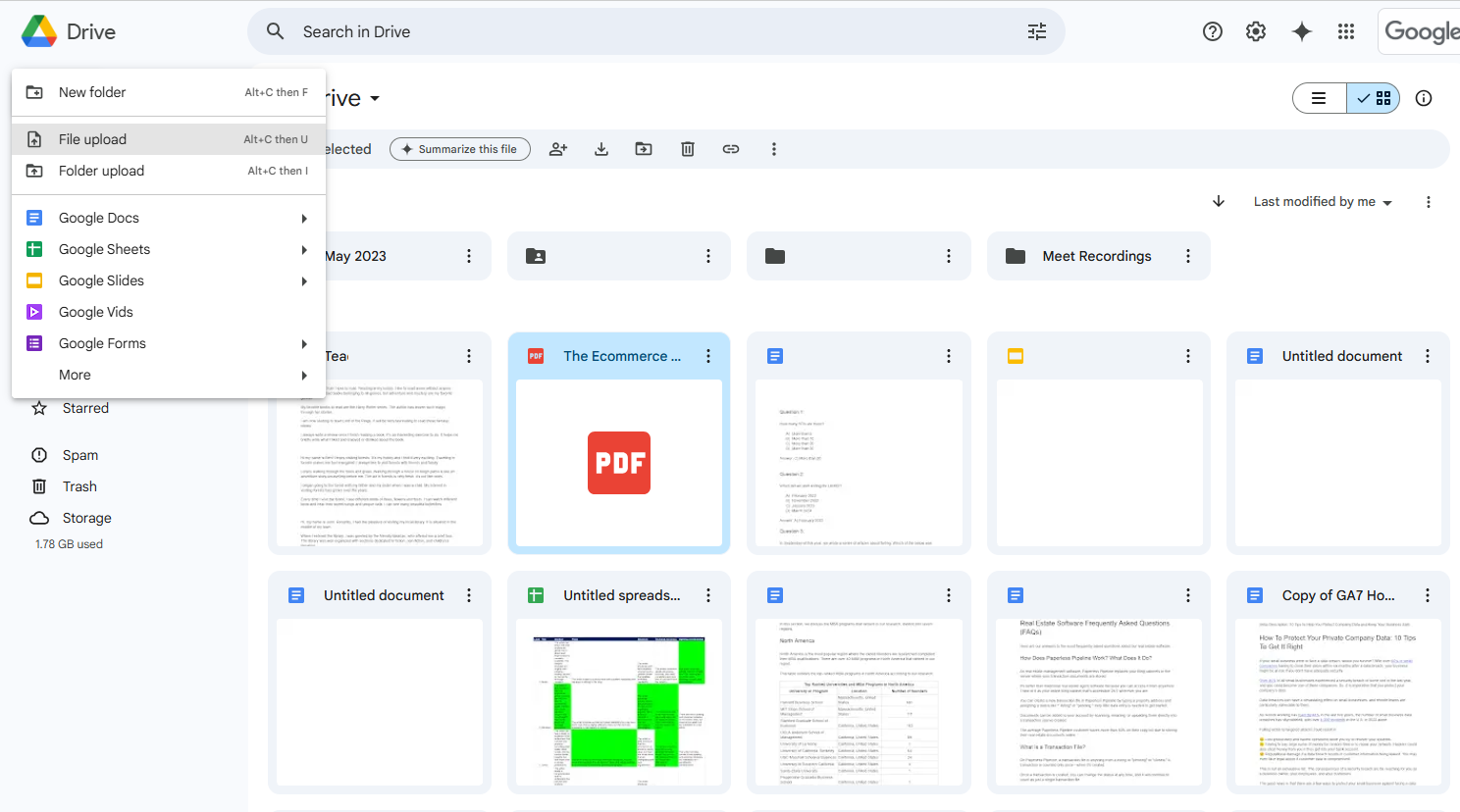
Sign in to your Google Workspace account and go to Google Drive. Click “New” > “File upload” to upload your PDF if it is not already stored there.
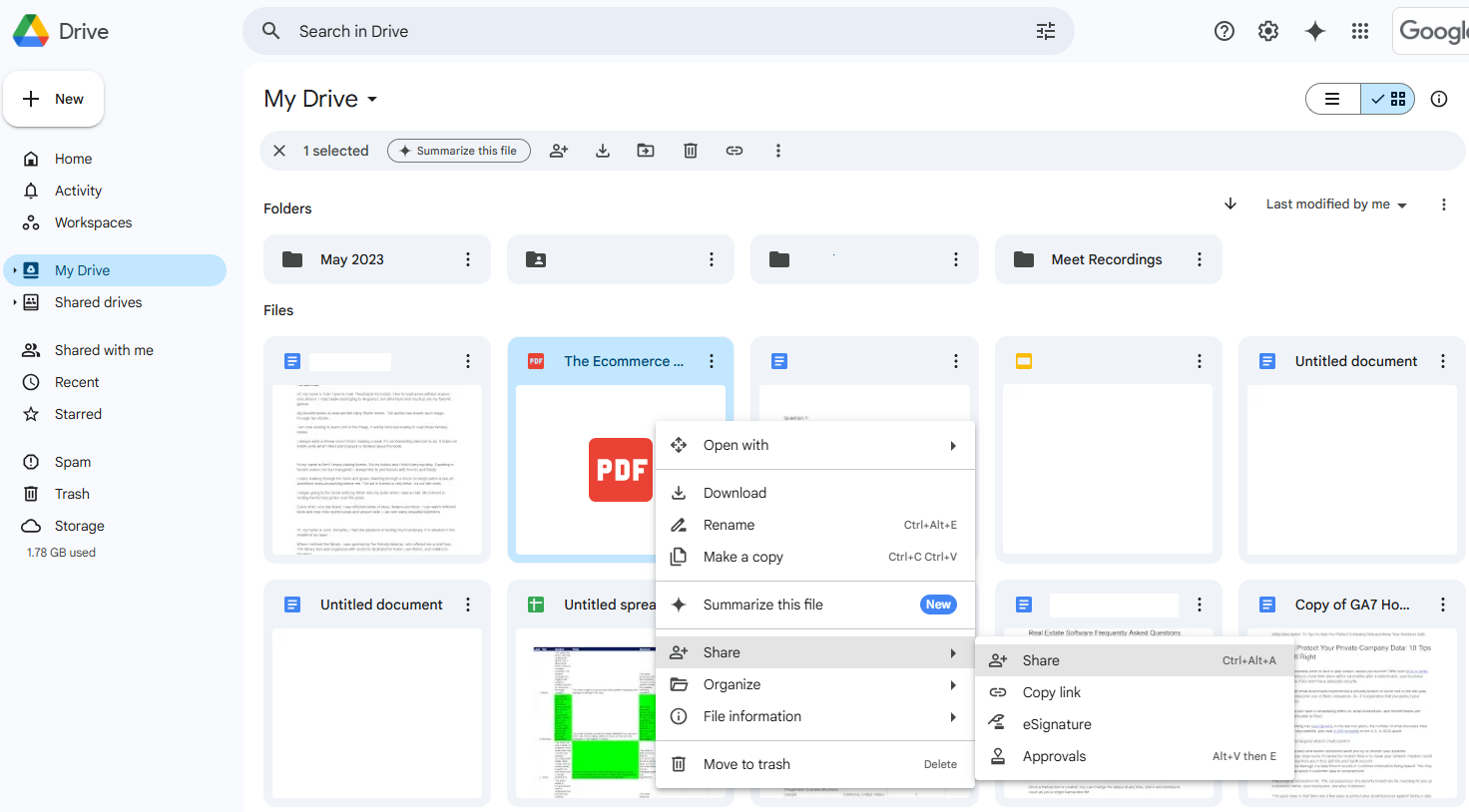
Once the upload finishes, right-click the file and select “Share.”
Step 2: Add Specific people
In the “Share” window, type the email addresses of the people who should access the PDF.
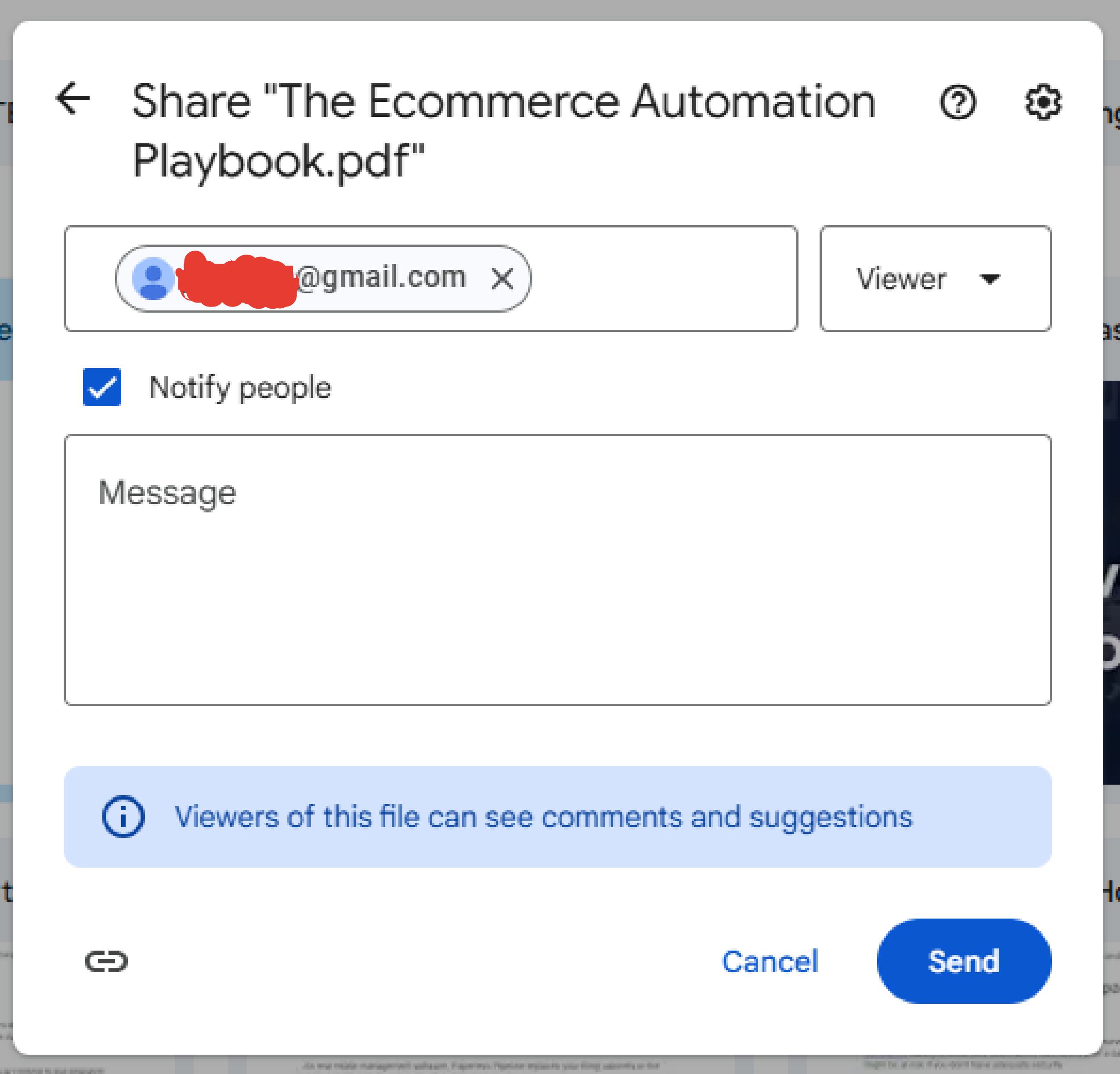
Set their role to Viewer, Commenter, or Editor, depending on what they need to do. Click “Send” so they receive the invitation.
Step 3: Set the Expiration Date
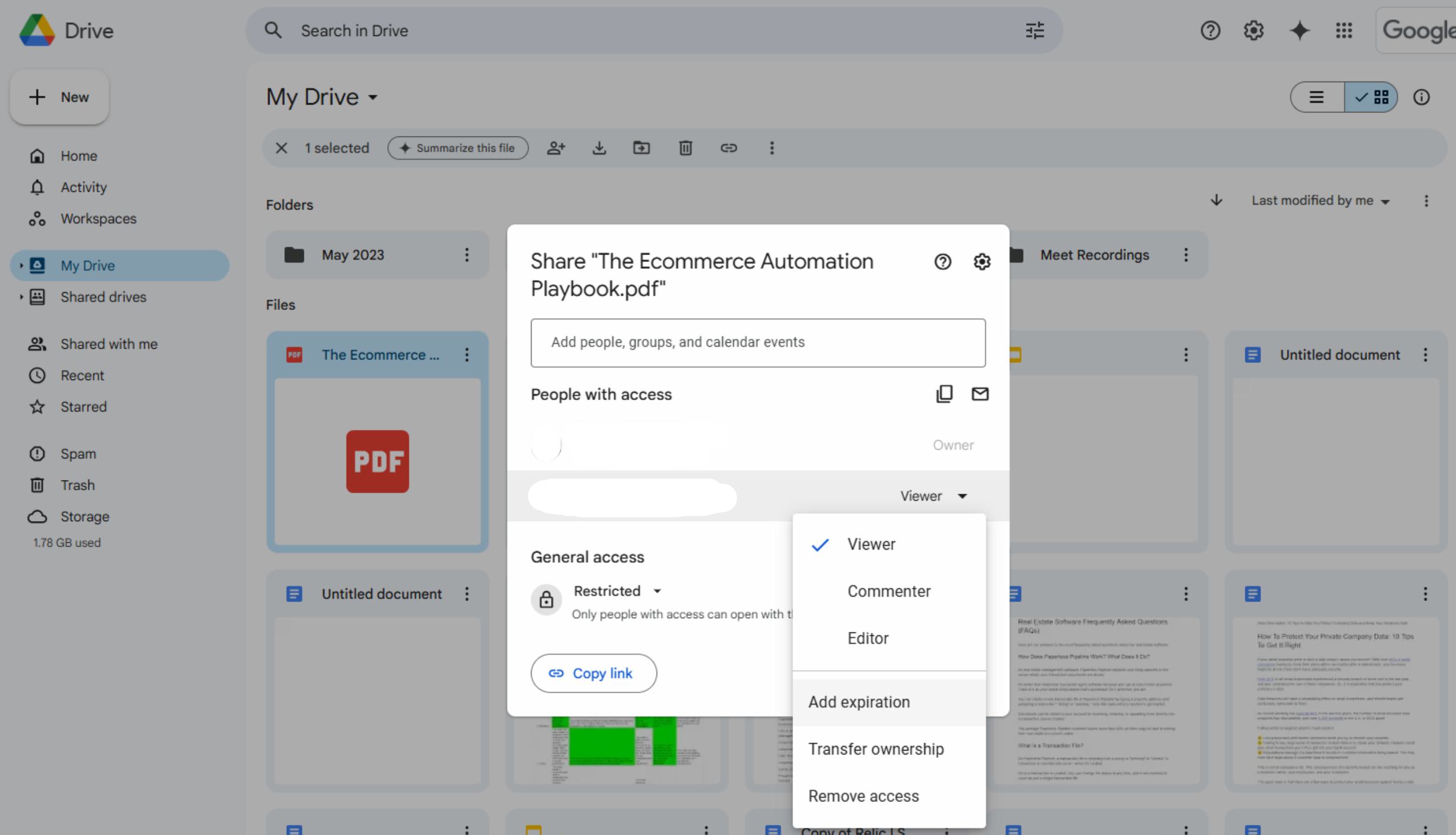
Open the “Share” window again and look under “People with access.” Find the person whose access you want to expire, then click the dropdown arrow next to their role. Choose “Add expiration.”
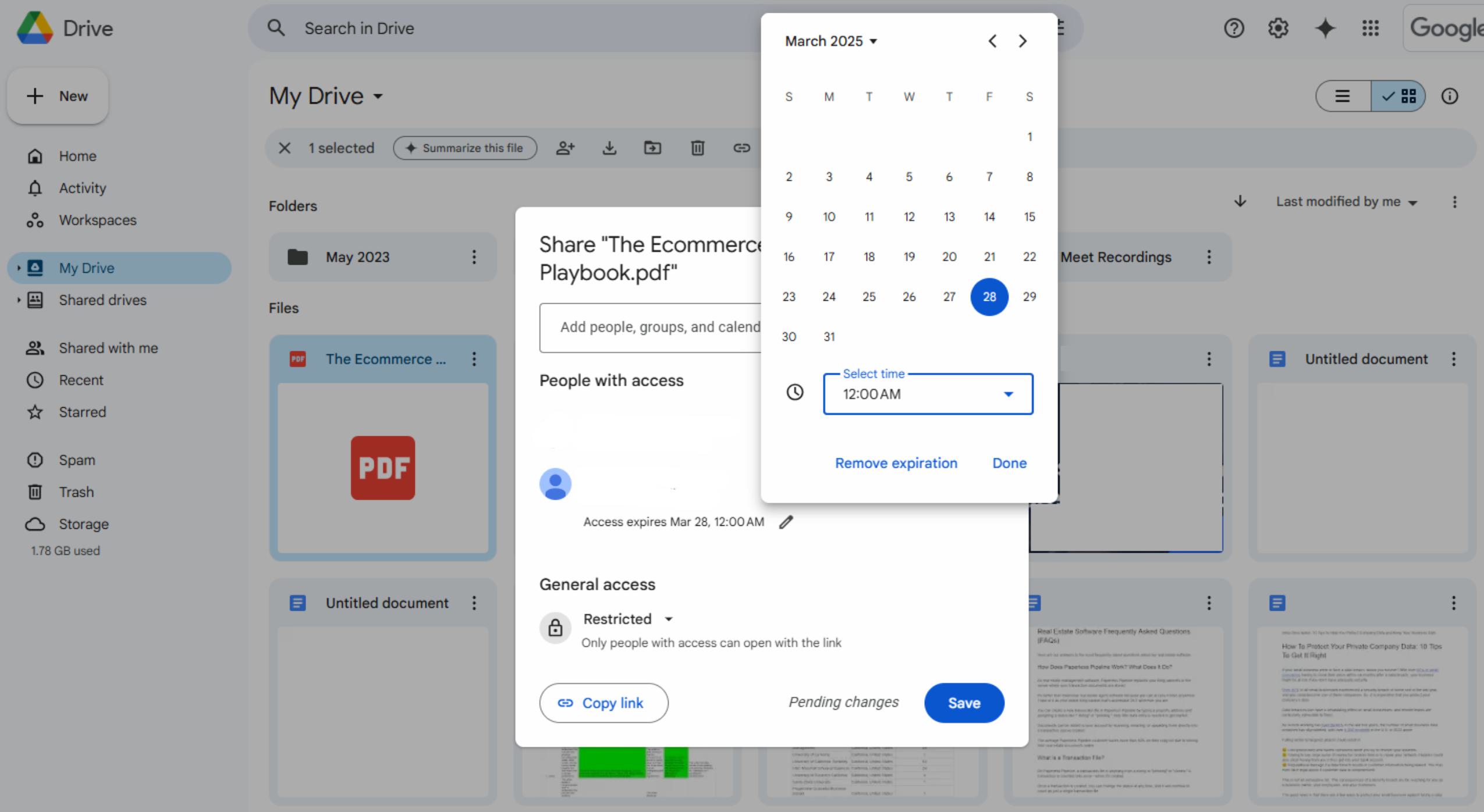
Pick an expiry date from the options. Google currently allows a minimum of one day and a maximum of one year in the future. Click “Done,” then “Save.”
Step 4: Confirm and Adjust Access
You will now see the expiry date listed next to the user’s email. You can change it any time by clicking the date and selecting a new one.
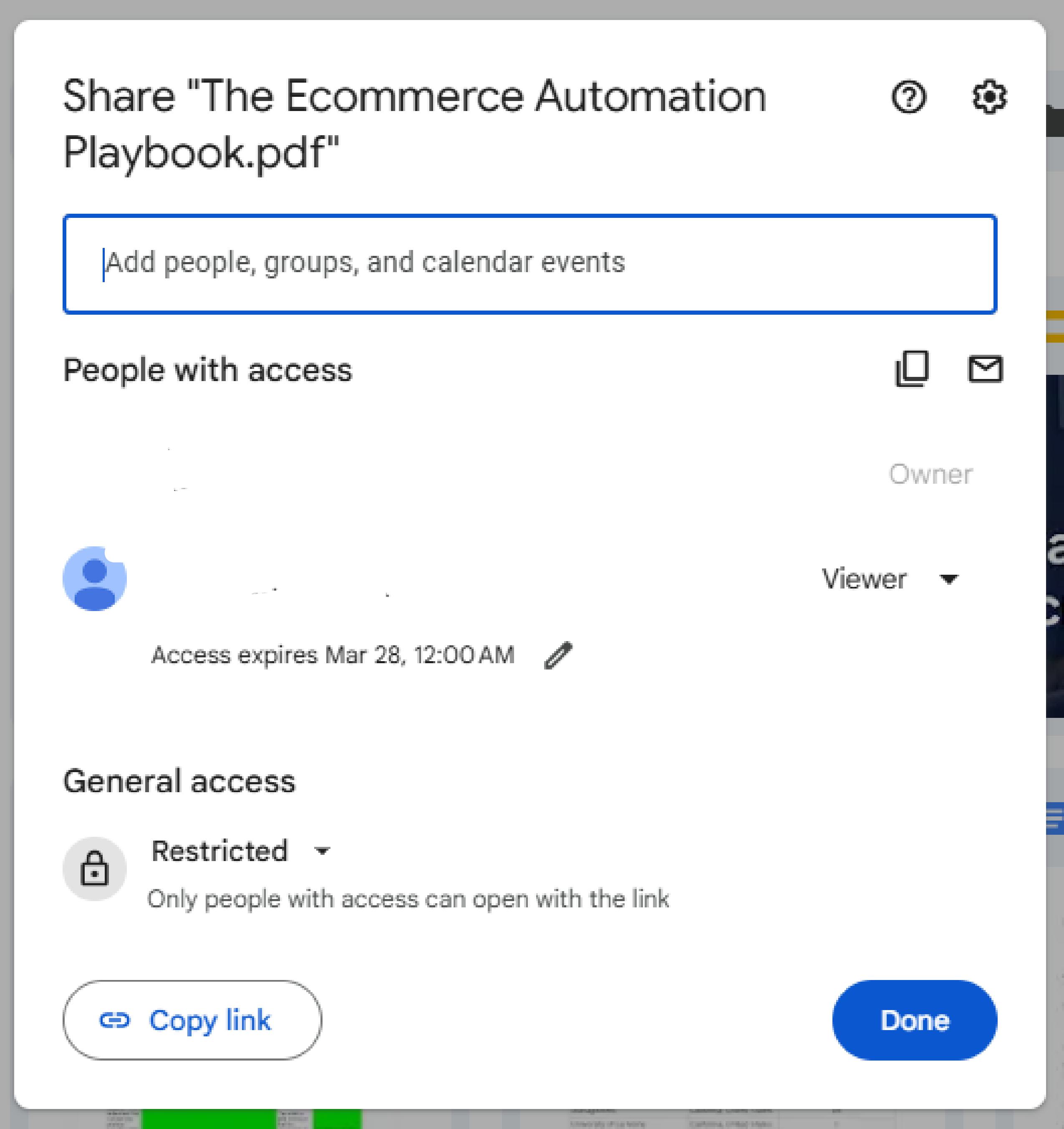
After the expiry date passes, that person will no longer be able to open the file through Google Drive. Keep in mind that if they downloaded a local copy before expiry and the file was not otherwise protected, they can still open that local version.
Set PDF Expiry with DRM Software
Digital Rights Management (DRM) software offers the most secure way to set PDF expiry dates. These tools encrypt your PDFs and require special viewers that enforce your expiration policies, even when recipients are offline.
DRM software is useful when you need:
Strong encryption and access control
Expiry that still works offline
Limits on views, prints, and devices
Per-user access windows and tracking
DRM definition: DRM is a set of technologies that control how digital files are used, copied, printed, or shared. For PDFs, this usually involves encrypting the file and using a special viewer to enforce your rules.
Typical DRM Workflow
The exact interface varies from product to product, but the workflow is similar:
Upload or import your PDF into the DRM dashboard.
Apply encryption and choose expiry rules such as a fixed date, number of days, or view limits.
Decide on extra restrictions like blocking printing or copy-and-paste.
Publish or “wrap” the PDF, which creates a protected file.
Share the protected PDF and give your recipients access to the DRM viewer.
Popular choices include Locklizard and other enterprise DRM services. Each one has its own pricing, setup process, and admin controls, so it makes sense to test them with a small group first.
Example: Basic Steps in a DRM Platform Like Locklizard
Here is a generic example of what you can expect with a platform such as Locklizard:
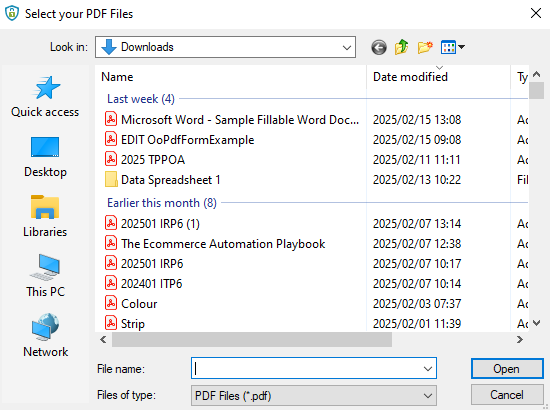
Create an account and install the publisher software.
Add your PDF, then choose “Expiry & Validity” options such as a fixed date or a number of days after first open.
Turn on extra controls, such as print limits or watermarking, if needed.
Publish the secured file and send it to your users, along with instructions to install the viewer.
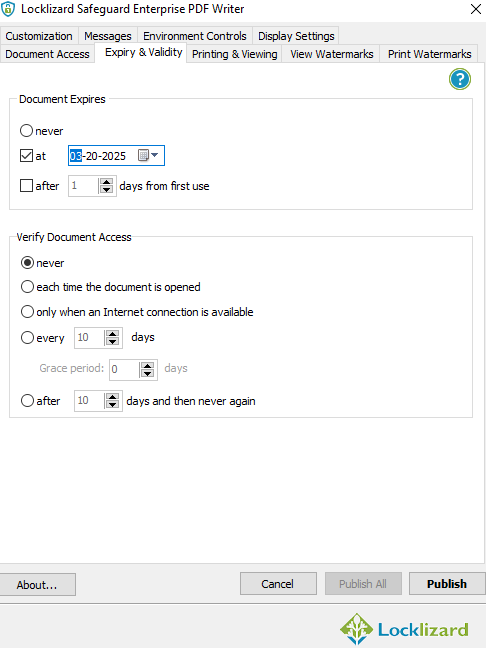
Once a user reaches the expiry date, opens the file too many times, or uses up the allowed prints, the viewer will refuse access.
Other PDF Expiry Options and Limits
Many DRM platforms combine expiry with more granular options.
Expire PDFs on a Fixed Date or After a Set Number of Days
Fixed-date expiry works well for time-limited offers, contract drafts, or event-related documents. A relative period like “30 days after first open” works better for trials and training materials where people start at different times.
Expire PDFs After a Set Number of Opens
View-limited PDFs stop working after they have been opened a certain number of times. This can help when you want people to review a report briefly but not keep long-term access.
Expire PDFs After Printing or With Per-User Windows
You can also:
Allow only a few printed copies before blocking further prints
Set different expiry dates per user or per group
These features are common in higher-end DRM platforms and are useful for sales decks, confidential reports, and licensed training materials.
Why JavaScript PDF Expiry Is Not Reliable
You might see guides that suggest adding JavaScript inside a PDF to check the date and block access. For security-sensitive files, this is not reliable.
JavaScript-based expiry has several issues:
Many PDF viewers, such as macOS Preview, ignore PDF JavaScript completely.
Users can turn off JavaScript in their viewer settings.
Skilled users can remove JavaScript from the PDF.
Offline viewers may not check the current date correctly.
If you care about expiry for legal, compliance, or confidential reasons, it is safer to use Google Drive access controls or a proper DRM system.
Alternative Ways to Secure PDF Files with Smallpdf
Expiry helps control how long someone can access a document, but it is only one layer of protection. You can also strengthen your files before you share them.
With Smallpdf, you can:
Use Protect PDF to encrypt your file with a strong password so only people with the password can open it.
Add a signature with eSign to authenticate who approved or sent the document.
Use Edit PDF to remove or replace sensitive text and images before sharing.
Add watermarks to discourage forwarding or unauthorized reuse.
Compress and convert files as needed so you share only what is necessary.
You can combine these with expiry methods. For example, protect a PDF with a password in Smallpdf, then store and expire it through Google Drive or a DRM platform.
Troubleshooting Common PDF Expiry Problems
Expiry systems can behave in unexpected ways. Here are common issues and what to check.
1. PDF does not expire as expected
Your recipient may have downloaded an unprotected copy before the expiry date. In that case, the expiry rules no longer apply. For strict control, keep files inside DRM or cloud access instead of sending raw attachments.
2. “Document expired” error too early
Check the date and time on both your device and the recipient’s device. Some systems rely on local clocks, and incorrect settings can cause early expiry.
3. Expiry not working on mobile devices
Some expiry methods only work in specific apps or browsers. Let recipients know which viewer they should use and test on a sample device.
4. Cannot change the expiration date
Several platforms do not let you change the expiry for an existing share. Instead, you may need to stop sharing the old link or file and share a new version with updated rules.
5. Recipients cannot open protected PDFs
Confirm that they have installed the correct DRM viewer or have access to the required account. If you are using encryption, double-check that they have the correct password.
Compare PDF Expiry Methods
A quick comparison can help you choose the right approach.
| Method | Security level | Setup effort | Best for | Main limitations |
|---|---|---|---|---|
| Google Drive expiry | Medium | Low | Business docs in Google Workspace | Does not control local downloads |
| DRM software | High | Medium to high | Highly sensitive or licensed documents | Cost, setup, and dedicated viewer required |
| Link-based expiry | Low to medium | Low | Simple sharing and marketing materials | Links can be shared or copied |
| Smallpdf protection | Medium (no expiry) | Very low | Adding passwords, watermarks, or redactions | Does not include native expiry or access time limits |
Use this as a starting point, then match it to how sensitive your PDFs are and how many people need access.
Which PDF Expiry Method Should You Use?
The right method depends on your risk level and how much control you need.
Use Google Workspace if you want:
Simple expiry for internal or client documents
Recipients who already use Google accounts
Cloud-based control without extra software
Use DRM software if you need:
Strong control over viewing, printing, and forwarding
Expiry that still works offline
Detailed tracking and per-user rules
Use link-based sharing if you want:
Quick, low-friction access control
The option to disable or replace links later
A lighter-weight approach for low-risk files
Then strengthen your files with Smallpdf features like Protect PDF, watermarking, and redaction to reduce the impact if someone keeps a copy for longer than planned.
Protect Your PDFs Today
PDF expiry is a useful extra layer for sensitive documents, especially when you share them widely or on a schedule.
Even though Smallpdf does not include built-in expiry or DRM, you can still combine our protection features with Google Drive or DRM software for better control.
Start by securing your files with Smallpdf’s PDF protection features, then choose the expiry method that matches your document sensitivity, audience, and budget.
Frequently Asked Questions
Can you set an expiration date on a PDF?
You cannot add a built-in expiry switch to a normal PDF, but you can store it in a system that controls access. Google Drive, DRM platforms, and some link-based services let you set expiry rules for who can open your file and for how long.Can you make a PDF expire after download?
Not reliably. Once someone has downloaded an unprotected PDF, they can usually open it as often as they like. To keep control, use DRM software that keeps the file encrypted and requires a dedicated viewer, or avoid sending raw attachments.How do you create a PDF with an expiry date?
Create your PDF as usual, then upload it to a system that supports expiry rules. For example, upload it to Google Drive as a Google Workspace user and add an expiration date for each person, or import it into a DRM platform and set a fixed date or a number of days after first open.How do you hide sensitive information in a PDF?
Use a proper redaction or editing feature instead of simple black boxes. With Smallpdf, you can open the file in Edit PDF, remove sensitive text or images, and save a new version that no longer includes that data.How do you protect a PDF so it cannot be edited?
You can encrypt the file and restrict editing in PDF software, then share it as a protected PDF. With Smallpdf’s Protect PDF feature, you can set a password so only people who know the password can open the file. You can also combine this with permissions in your viewer or platform.Is it possible to tell if a PDF has been edited?
Some PDFs include metadata or digital signatures that show if a file has changed since signing. If a certified digital signature is present, most viewers will warn you when the document has been modified after signing. For unsigned files, detection is more difficult and often requires specialized tools.What is the difference between password protection and PDF expiry?
Password protection controls who can open the file at all. PDF expiry controls how long they can keep opening it or how many times they can use it. Many organizations combine both: passwords from Smallpdf and expiry from Google Drive or DRM.Does Smallpdf offer a PDF expiry or DRM feature?
Smallpdf does not provide a native PDF expiry or DRM system at this time. Instead, we focus on protection features such as passwords, watermarking, and editing. You can still use our features to secure your files, then apply expiry using Google Drive or a DRM platform.Protect sensitive PDFs with controlled access using Smallpdf Pro