How to Embed Fonts in a PDF Document
Fix font issues in PDFs by embedding fonts properly. Learn how to keep text, spacing, and layout consistent on any device.
More on PDF Fonts
More on Edit PDF
More on Embed PDF
You open a PDF and suddenly the text looks wrong. Fonts are swapped, spacing is off, or characters are missing entirely. This usually happens when the fonts used in the document weren’t embedded before sharing.
Embedding fonts locks the typefaces into the PDF so it looks the same everywhere, whether it’s opened on another computer, printed, or sent to a client.
In this guide, we’ll show you how to embed fonts in a PDF step by step, explain when it matters most, and help you avoid common formatting problems for resumes, design files, and legal documents.
Quick Start on How to Embed Fonts in PDF Files
If you need to embed fonts quickly, here’s the straightforward methods:
For new documents: Enable “Embed fonts” in your software’s Save or Export settings before converting to PDF.
For existing PDFs: Convert back to Word using PDF to Word.
You can verify success by checking “Document Properties” > “Fonts” tab to confirm fonts show as “Embedded” or “Embedded Subset.”
Let’s dive into the detailed steps below.
Tip: Use the converter below to upload your PDF and convert it to Word for re-export with fonts embedded
What Does “Embed Fonts in a PDF” Mean?
When you embed a font in a PDF, you’re essentially including the font file inside the document. Font embedding prevents font substitution, where your carefully chosen typography gets replaced with default system fonts like Times New Roman or Arial.
There are two types of font embedding:
Full embedding: The entire font file is included, allowing complete editing capabilities.
Subset embedding: Only the characters used in your document are embedded, reducing file size while maintaining appearance.
This guarantees:
Consistent Presentation: Your text will display correctly on any device, even if the font isn’t installed.
No Substitutions: Fonts won’t be replaced with default ones, which can affect your document’s layout and design.
Better Accessibility: Embedded fonts ensure that visually impaired users (using screen readers) can experience the document as intended.
Whether you’re sharing a resume, contract, or digital magazine, embedding fonts preserves your content’s integrity.
How to Embed Fonts Before You Create a PDF
The best time to embed fonts is while you’re creating the document, before converting it to PDF. Here’s how you can do it with the most common tools:
Microsoft Word
Open your document in Word.
Click “File,” then “Options.”
Choose “Save” from the sidebar.
Under “Preserve fidelity when sharing this document,” check “Embed fonts in the file.”
Optionally, select: “Embed only the characters used in the document” to reduce file size, or “Do not embed common system fonts” (such as Arial or Times New Roman)
Save your document as a PDF by selecting “File,” then “Save As,” choosing “PDF” as the file type, and clicking “Save.”
Word will now include your fonts in the saved PDF file.
Google Docs
Google Docs doesn’t support font embedding directly. Use this workaround instead:
Download your document as a Word file by selecting “File,” then “Download,” then “Microsoft Word (.docx).”
Open the file in Word and follow the steps above to embed fonts before saving it as a PDF.
Embedding fonts ensures your PDF text stays consistent, no matter who opens the file or which fonts are installed on their device.
How to Check if Fonts Are Embedded in a PDF
After creating your PDF, it’s important to make sure the fonts are embedded. Here’s how to verify and what to look for:
What to look for when checking font embedding:
Text that appears jagged or pixelated
Unexpected font changes (serif fonts becoming sans-serif). If a font is missing entirely on the viewer's device, that needs a separate fix
Spacing issues or overlapping characters
Missing special characters or symbols
Using Smallpdf PDF Reader to Check Fonts
You can quickly preview and work with PDFs using Smallpdf’s PDF Reader to spot visual issues:
Open your file in the PDF Reader.
Drag and drop your PDF, or upload it from Google Drive, Dropbox, or OneDrive.
While Smallpdf Reader doesn’t display detailed font properties like desktop apps do, you can still spot issues with text rendering, spacing, or layout.
If the text looks off (e.g., missing characters, replaced fonts), the file may not have fonts embedded.
Need to fix it?
Use the PDF Converter to turn your PDF back into a Word file.
Open it in Word and embed the fonts by selecting “Save,” then “Options,” then “Embed fonts in the file,” before exporting it again as a PDF.
Or use Edit PDF to replace or adjust any affected text directly in your file.
Quick start: Use the tool below to upload your PDF and either convert it to Word or edit the affected text.
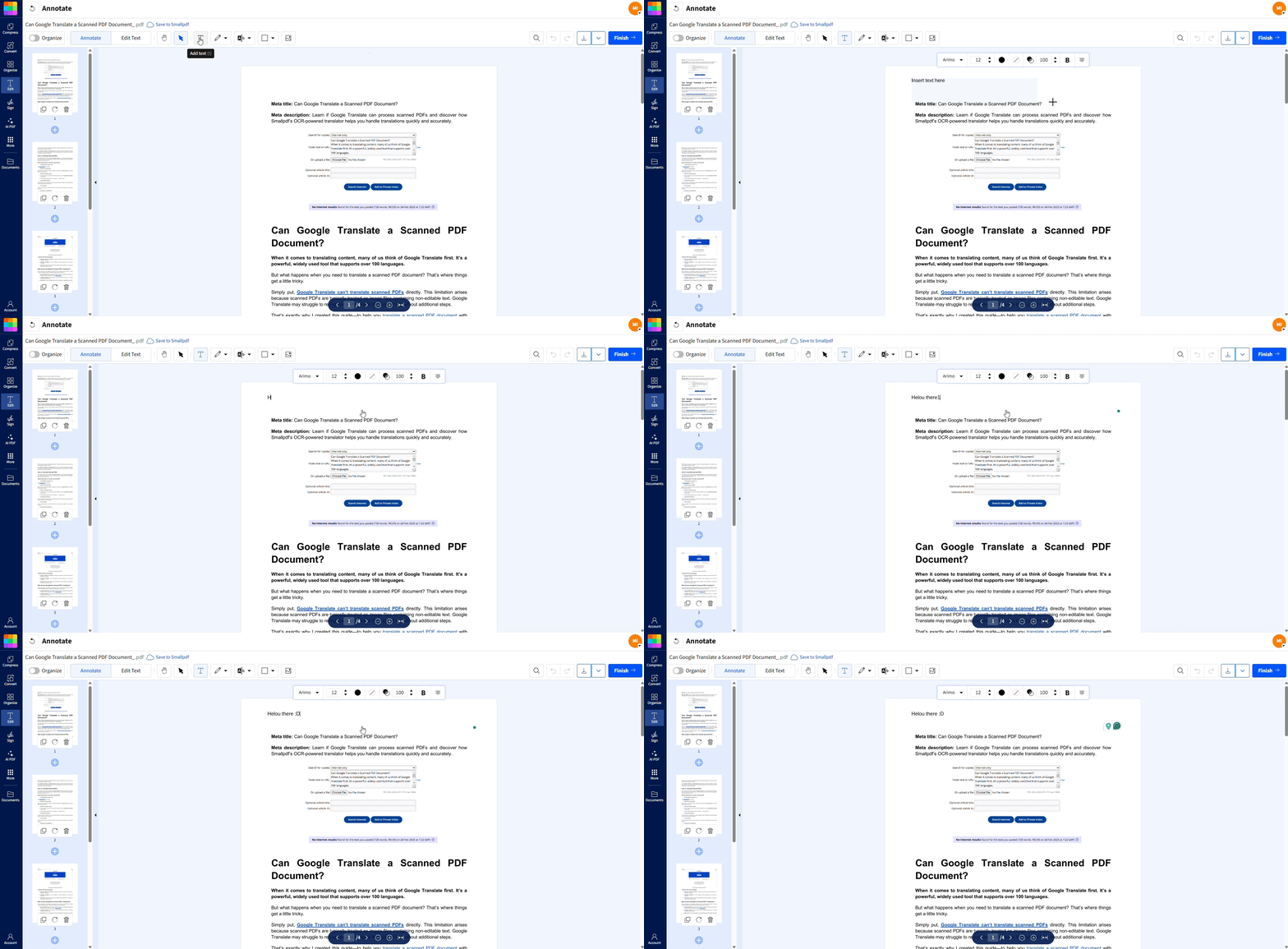
Tip: If your PDF fonts don’t look consistent across devices or print differently, they’re likely not embedded. Fixing that ensures a clean, universal layout.
Why Embed Fonts in PDFs?
Embedding fonts ensures your work looks professional, maintains its impact, and avoids embarrassing layout issues.
Consider this: A marketing agency spent weeks designing a client presentation, only to have the fonts change to Comic Sans when opened on the client’s computer, all because fonts weren’t embedded.
Font embedding is particularly crucial for:
Resumes or Job Applications where every detail matters
Legal Documents that require exact formatting
Creative Projects, such as eBooks or presentations
Plus, if you frequently share PDFs and receive feedback about layout issues, font embedding is a simple fix to ensure your documents are universally compatible.
Start Embedding Fonts Like a Pro
Ready to ensure your PDFs look perfect everywhere? Try Smallpdf Pro for easy font embedding and advanced PDF editing tools.
Frequently Asked Questions
What’s the best way to embed fonts in existing PDFs?
While you can’t re-embed missing fonts directly in a PDF, converting it back to Word using Smallpdf’s PDF to Word and re-exporting with embedded fonts can solve the issue.Can I embed fonts in Google Docs?
Not directly. You’ll need to download your document as a Word file, embed fonts in Word, and save it as a PDF.Why can’t I embed certain fonts?
Some fonts have licensing restrictions that prevent embedding. Commercial fonts may require special permissions, while others are designed to be “non-embeddable” by their creators.Do embedded fonts work on all devices?
Yes, that’s the whole point! Embedded fonts display consistently across Windows, Mac, mobile devices, and web browsers because the font data travels with your PDF.What happens if fonts aren’t embedded in my PDF?
If fonts aren’t embedded, they may display incorrectly or be replaced with defaults (like Times New Roman). This can disrupt layouts and designs.Does embedding fonts increase PDF file size?
Yes, slightly. However, you can compress the file using Smallpdf’s Compress PDF to reduce the size without sacrificing quality.Why won’t my font embed in the PDF even when I enable font embedding?
Some fonts can’t be embedded due to licensing restrictions set by the font creator. This is common with commercial or custom brand fonts. When this happens, your software may silently substitute the font during export. If embedding fails, switch to a font with embedding permissions (such as common system or Google Fonts), or convert the file to Word and re-export using an embedded-font-friendly font.Why does my PDF still show substituted fonts after export?
This usually means the font wasn’t embedded correctly at the source stage. Saving a file as a PDF does not guarantee font embedding unless the option is explicitly enabled. Check the PDF’s font properties to confirm fonts are listed as “Embedded” or “Embedded Subset.” If they’re marked as substituted, convert the PDF back to Word, embed the fonts there, and export again.Why is bold or italic missing even though the font is embedded?
Bold and italic are often separate font files, not styling effects. If only the regular font variant is installed, the PDF may display faux bold or drop the styling entirely. Make sure all font variants (regular, bold, italic, and bold italic) are installed before exporting. If needed, replace the text using a font family that includes proper weight files.Why does my PDF look fine on my computer but broken on other devices?
Your system may have the font installed locally, masking the problem. On devices without that font, the PDF falls back to a default substitute. Embedding fonts ensures the font data travels with the PDF, so it renders consistently on Windows, Mac, mobile devices, and printers.Why can’t I embed fonts directly into an existing PDF?
PDFs don’t behave like editable documents. If the font data wasn’t embedded when the PDF was created, most tools can’t add it afterward. The reliable workaround is to convert the PDF back to an editable format, embed the fonts at the source level, then export a new PDF.Manage PDF formatting and text consistency on Smallpdf