- Home
- ›
- ›PDF Collaboration: How To Collaboratively Edit PDF Documents
PDF Collaboration: How To Collaboratively Edit PDF Documents
Stop email chaos and version confusion. Use one shared PDF, clear comments, and simple version control, so your team stays aligned.
More on Edit PDF
More on PDF Annotator
PDF Tips & Resources
PDF collaboration usually breaks down in the same place. Someone marks up page two, someone else edits page five, and you end up comparing attachments with names like “Final_v3_really-final.pdf.”
A better workflow keeps one review copy moving in a straight line. Everyone gives feedback in the same file, and one person turns that feedback into a clean final PDF.
We’ll walk you through a practical process you can use for contracts, reports, proposals, and internal docs, using Smallpdf where it fits best.
Quick Start: PDF Collaboration Without Version Chaos
If you need the fastest safe workflow, do this:
Pick one “document owner” who controls the master file.
Share one review copy, and ask teammates to comment instead of rewriting text.
Use color rules and initials so feedback is easy to trace.
Merge feedback into one clean final PDF, then share the final version.
This is the same system below, just with the details that prevent mistakes.
What Is PDF Collaboration?
PDF collaboration is a way for a team to review and improve one document without creating competing versions. Unlike Word or Google Docs, PDFs are not built for true co-authoring in most workflows. The cleanest pattern is “comment-first,” with one final editor applying approved changes.
A solid PDF collaboration setup usually includes:
One source of truth. A single file that everyone reviews.
Structured feedback. Highlights, comments, and redlines that point to exact spots.
Basic version control. File names and a clear owner, so edits don’t drift.
A predictable handoff. Review, consolidate, finalize, then distribute.
Smallpdf supports this approach with PDF Annotator for markup, Edit PDF for direct changes in the document, and Share PDF for link-based sharing instead of attachments.
How To Collaboratively Edit a PDF Document
This workflow is built for teams that want clean feedback and a clean final file, not messy “tracked changes” that PDFs usually can’t support.
Step 1: Prep a Review Copy, Not the Original
Before you send anything out, make a working copy.
Duplicate the file, then rename it with a clear version like “Policy-Update_v1_review.pdf.”
If the PDF is long, consider splitting it into sections for reviewers, then merge feedback later.
If it’s too large to share smoothly, compress it first so collaborators can open it quickly.
If your team needs to keep the original untouched for compliance or recordkeeping, store that original separately and only share the review copy.
Step 2: Share One File, One Link, One Direction
Attachments encourage forks. Links keep everyone pointed at the same document.
With Smallpdf Share PDF, you upload the file and generate a shareable link you can paste into an email, Slack, or Teams.
If your PDF contains sensitive data, take a minute to protect it before sharing. Smallpdf supports secure transfer with TLS encryption, and files are removed automatically after a short period for most tools.
A simple sharing rule that works well: reviewers comment on the shared copy, and the owner publishes the next version after consolidating feedback.
Step 3: Collect Feedback With Comments, Highlights, and Redlines
This is where most teams lose time, because feedback arrives in five different styles. Set a small standard so you can scan comments fast.
In Smallpdf PDF Annotator, reviewers can add highlights, text, and markup right in the browser.
Ask your team to follow three habits:
Use a consistent mark for intent. Strikethrough means delete, underline means add, and highlight means review.
Add a short comment for the “why.” One sentence is usually enough.
Sign comments with initials. It helps when two reviewers disagree.
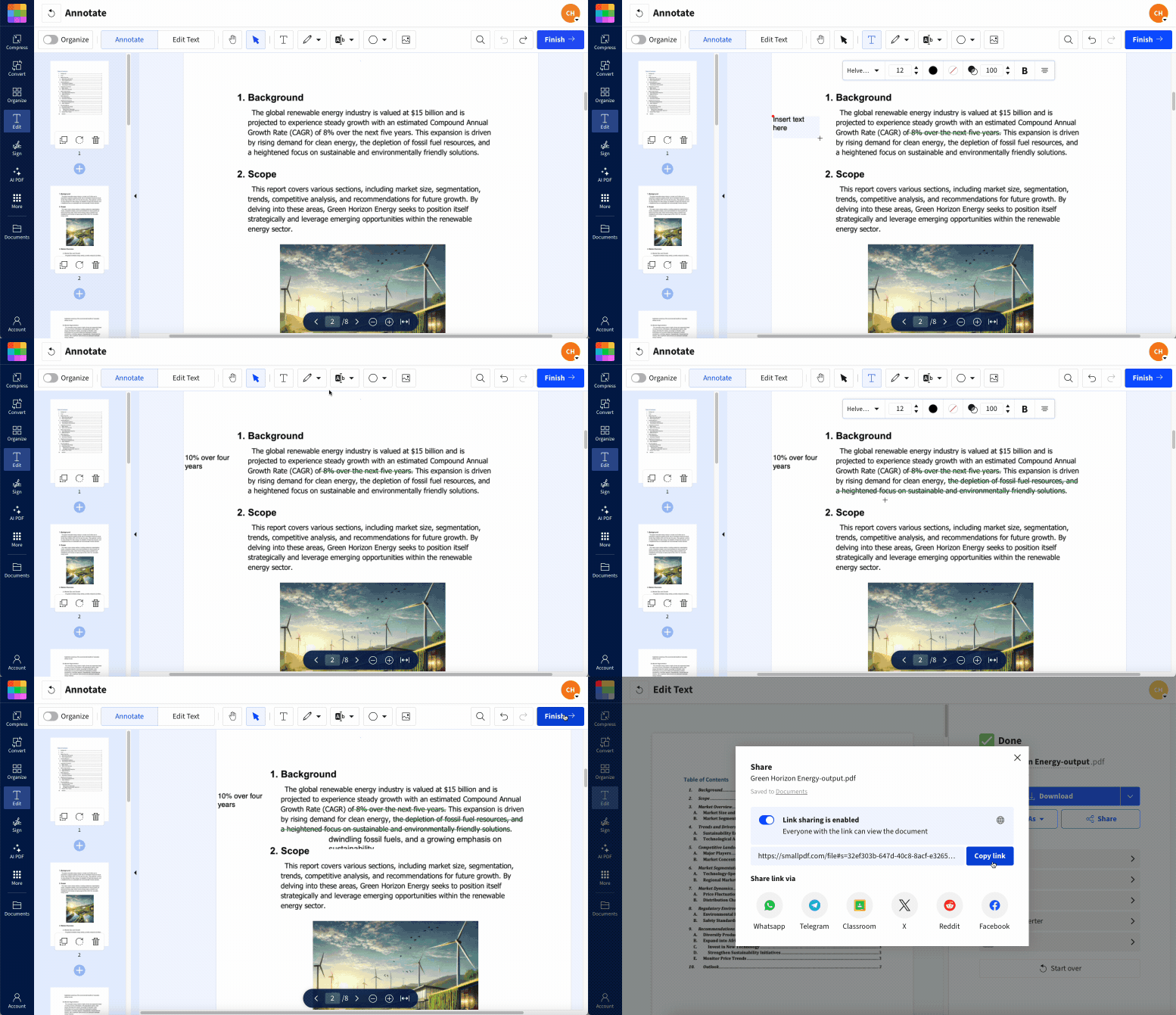
If someone wants to rewrite entire paragraphs, ask them to comment with replacement text instead of rebuilding the PDF. It keeps the review readable.
Step 4: Apply Approved Edits and Publish a Clean PDF
After feedback is in, the document owner produces the next version.
If you need to change text directly in the PDF, Smallpdf Edit PDF supports adding and editing elements in your file, and “Edit Text” is available with a Pro plan.
For heavier edits, a convert-edit-convert workflow can be faster. Convert the PDF to Word, edit it cleanly, then convert back to PDF for sharing.
When the final version is ready:
Save a clean copy with annotations removed.
Keep the redlined review copy archived, in case someone needs history later.
Share the final PDF as the only version to sign or distribute.
Version Control Rules That Keep Reviews Sane
You don’t need a full document management system to avoid “Final-Final.” You need a few rules that your team actually follows.
Here’s a lightweight system that works:
One owner per round. Only one person publishes the next version.
Simple file naming. Use v1, v2, v3 with one purpose tag, like “review” or “final.”
Short review windows. Set a deadline so feedback arrives together.
One change log comment. The owner adds one note like “v2 includes legal edits + updated payment terms.”
Freeze before final. No new comments once the final edit pass starts.
If you adopt one habit only, make it “one owner publishes versions.” That one rule prevents most chaos.
Security Basics for PDF Collaboration
Teams often share PDFs that include personal data, pricing, or internal strategy. Collaboration should not turn into accidental oversharing.
A safer baseline looks like this:
Share a redacted version if only part of the PDF is relevant.
Add password protection for confidential documents before sending.
Use link sharing instead of attachments when possible, so distribution is controlled.
On our side, Smallpdf secures transfers with TLS and follows recognized security and privacy standards like ISO/IEC 27001 and GDPR compliance. If your workflow requires storing documents online, Pro plans include online file storage.
Troubleshooting Common PDF Collaboration Problems
Most collaboration “bugs” are really workflow problems. Here’s how to fix the common ones fast.
Comments Aren’t Showing for Someone on the Team
Ask them to open the PDF in a viewer that supports annotations.
Confirm the reviewer saved or exported the file after marking it up.
If you’re sharing a link-based copy, confirm they’re viewing the same version.
The PDF Got Crowded, and Nobody Can Read It
Ask reviewers to highlight less and comment more.
Combine three small comments into one clear instruction.
Have the owner publish a new version after each review round.
Two People Edited Different Versions
Pause edits. Pick one file as the master.
Copy the missing comments into the master manually.
Restart the round with one shared file and one owner.
The PDF Is a Scan, and the Markup Feels Unreliable
Run PDF OCR first, so the document has real text. (OCR is a Pro feature.)
Upload your file in the PDF OCR area below to run OCR, then your comments will anchor more predictably because the text is selectable.
Alternatives When You Need True Co-Authoring
Sometimes you don’t want “comment-first.” You want two people actively editing content at the same time.
In that case, convert the PDF to an editable format and co-author there:
Convert PDF to Word, collaborate in Word or your team’s document editor, then export back to PDF for distribution.
Use PDFs mainly for final review, approvals, and signing, once content is stable.
This keeps the PDF stage clean and avoids fighting the format.
Keep PDF Collaboration Simple With Smallpdf
PDF collaboration works best when your team shares one review copy, leaves clear comments, and follows one version owner from round to round. That single habit cuts down rework and keeps approvals moving.
With Smallpdf PDF Annotator, Edit PDF, and Share PDF, you can mark up changes, produce a clean final version, and distribute it without messy attachments or format issues.
Use the same workflow each time a document needs review, and you’ll spend less time managing versions and more time finishing the work.
Frequently Asked Questions
Does WCAG apply to PDFs?
WCAG is written for digital content accessibility, and W3C publishes PDF techniques that support WCAG conformance for PDF documents. If your PDFs are public-facing, accessibility checks are worth including in your review process.How do I make a PDF editable for other people?
If you want others to suggest changes, use comments and annotations. If you want others to change text directly, convert the PDF to an editable format first, or use an editor that supports direct text edits, and then control version ownership.How can two people edit a document at the same time?
Most PDF workflows aren’t built for true simultaneous co-authoring. The practical alternative is co-authoring in Word first, then exporting to PDF for review and approval.How do I make a PDF signable for multiple people?
Use the Sing.com workflow that supports multiple signers and a clear signing order. Keep one final PDF version for signing, and avoid sending signers a redlined copy.How do I let multiple people edit a PDF?
The cleanest method is comment-first collaboration, where multiple people annotate, then one owner applies edits and publishes the next version. It avoids conflicts and keeps the final file clean.How do I make a PDF editable and signable?
Convert the PDF to Word with OCR using Smallpdf to make the PDF editable. Use eSign PDF to add your signature and finally lock the file with Protect PDF. This prevents signed documents from getting edited afterward.Annotate and review PDFs with your team on Smallpdf
Related Articles