How to Convert a Legal PDF to Letter Size
Convert a legal PDF to letter size (8.5” x 11”) without formatting issues. Learn reliable, print-ready methods using Smallpdf and other options.
More on Legal Documents
PDF Tips & Resources
More on Word to PDF
Trying to print a legal-size PDF on letter paper often leads to cut-off text, awkward scaling, or messy page breaks. It’s a common problem when documents need to be filed, shared, or printed quickly.
The most reliable fix is to convert the PDF to an editable format, switch the page size to US Letter, then save back to PDF. We’ll cover that method first, then share direct PDF-to-PDF options for simpler files.
Quick Steps to Convert a Legal PDF to Letter Size
Letter-Size Conversion Options at a Glance
Here’s the quick visual so you can pick the right path before you start.
Best layout control: PDF → Word (via Smallpdf) → Set Letter → Save as PDF
Fastest simple fix: Print → Paper Size: Letter → Scale: Fit/Shrink
Last resort for speed: Online page resizer (may reflow pages)
Legal vs. Letter vs. A4
Before you resize anything, it helps to know what changed.
US Letter: 8.5 x 11 in
US Legal: 8.5 x 14 in
A4: 210 x 297 mm (commonly used outside North America)
When you convert legal to letter, you’re shrinking the page height by three inches. That’s why long tables, signature blocks, and footers often shift.
How to Convert a Legal PDF to Letter Size With Smallpdf
This method is the most predictable for contracts, forms, and multi-page documents because you get real control over page setup.
Step 1: Convert the PDF
Open Smallpdf PDF to Word, then upload your PDF in the converter area below from your device, Google Drive, Dropbox, or OneDrive to begin the conversion.
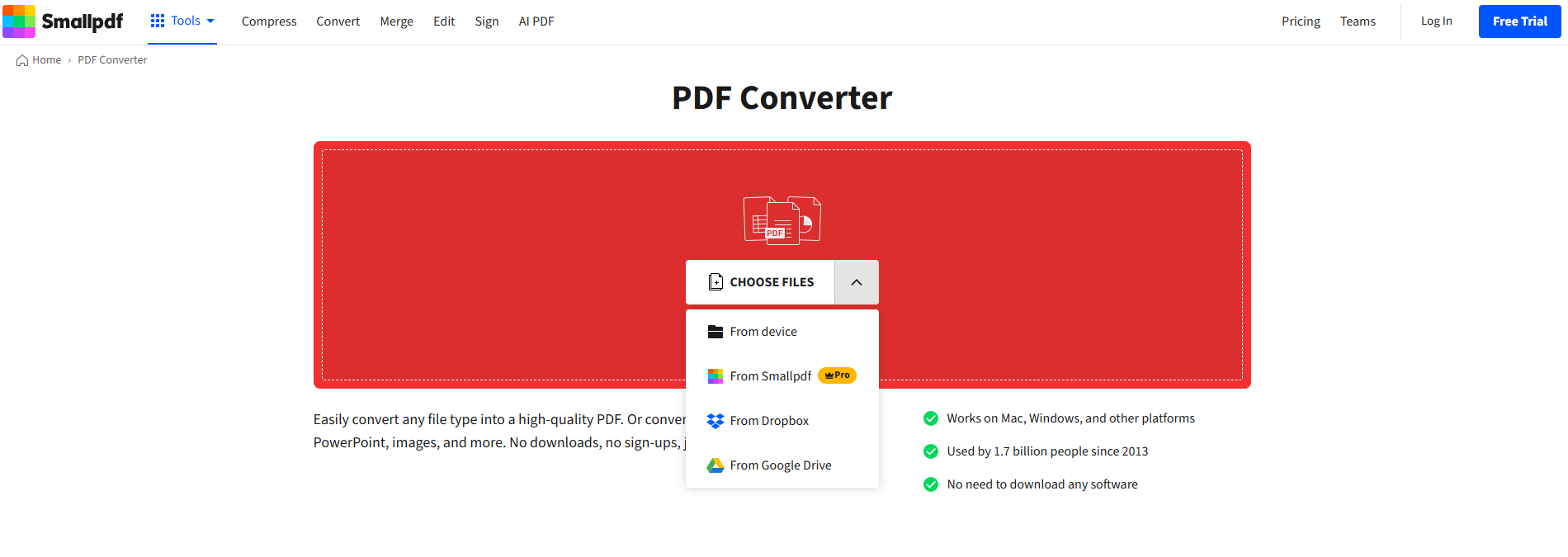
Once the conversion finishes, download the Word file to your Mac or PC.
Step 2: Change the Paper Size to Letter in Word
Open the downloaded file in Word. Then go to “Layout” > “Size” > “Letter (8.5” x 11”).”
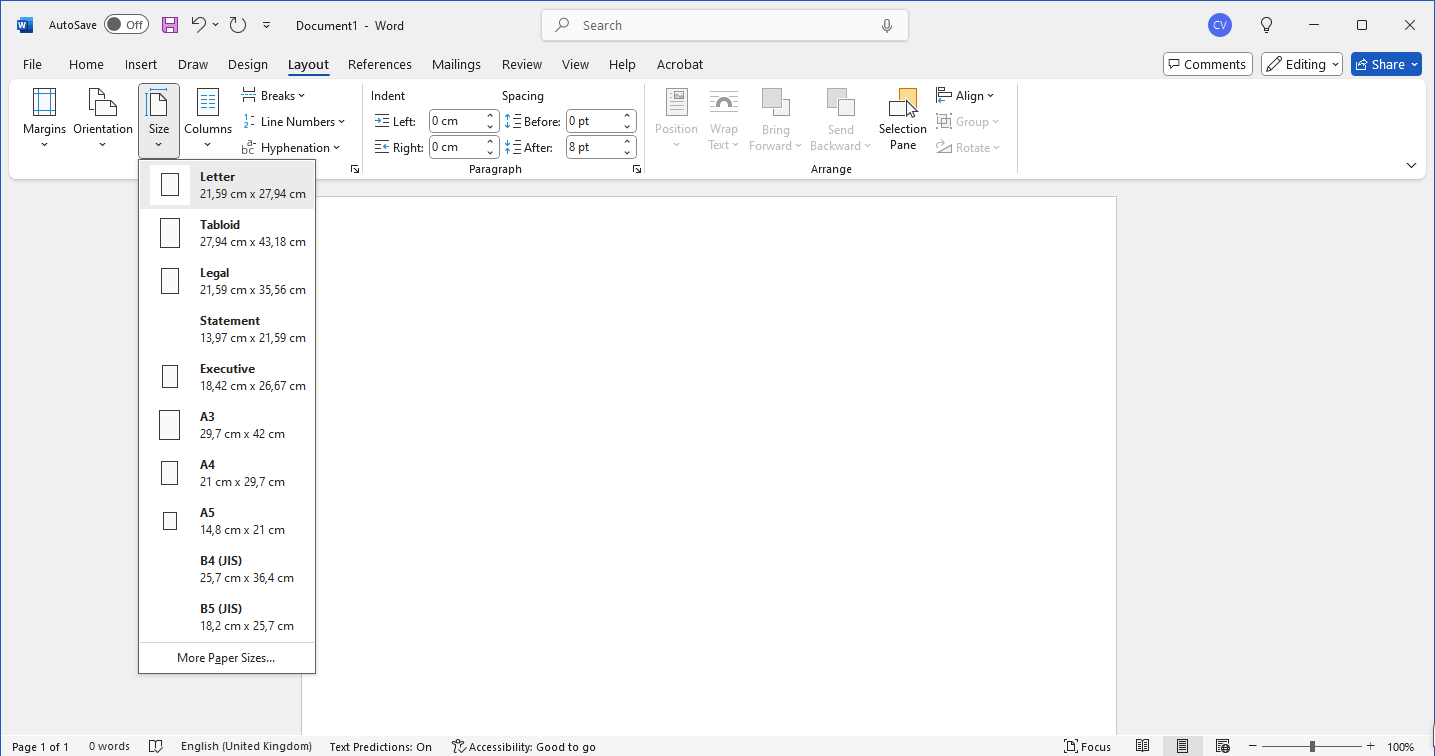
If your document uses sections, apply the size to the full document so every page matches.
Step 3: Fix Page Breaks and Margins Before Saving
Scroll the document from top to bottom once. Look for spots where content gets pushed down or split.
Common quick fixes that keep things readable:
Reduce margins slightly if lines get clipped.
Move a table to the next page if it breaks mid-row.
Shrink oversized images so they don’t force extra page breaks.
Step 4: Save Back to PDF
In Word, export or save as PDF so the final file is true letter size.
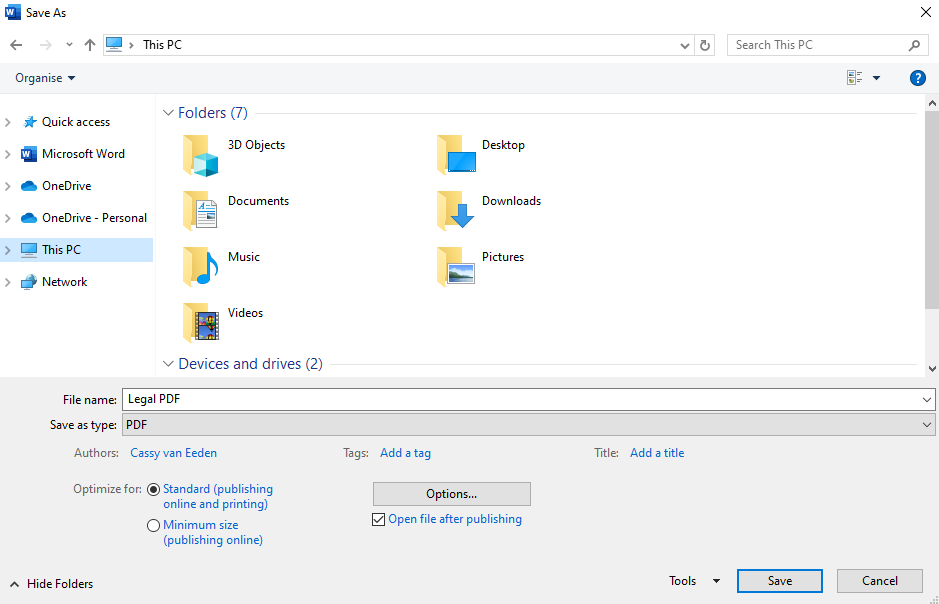
Now you’ve got a letter-size PDF that prints cleanly and matches standard US filing.
Step 5: Compress the Final PDF if Needed
If your resized PDF is now too large for an upload portal, run it through Compress PDF to bring the file size down without making text fuzzy.
Direct PDF-to-PDF Resizing Options
Sometimes you don’t need full layout control. If the PDF is mostly text and you just need it to fit letter paper, these options can work.
Print to PDF Using Letter Paper Settings
Use your system print dialog to “reprint” the PDF as letter size.
Open the PDF in your usual viewer.
Press “File” > “Print” (or Cmd + P / Ctrl + P).
Set Paper Size to “Letter.”
In scaling, choose “Fit” or “Shrink to Printable Area.”
Print to a PDF destination, then save.
This is fast, but it can shrink your document content. It also won’t rebuild the layout the way the Word method does.
Use an Online Page Resizer for Simple Files
Some online services can resize pages directly from PDF to PDF. Results vary a lot on complex files, so it’s best for:
Plain text pages
Simple single-column layouts
Documents where small scaling is acceptable
If the output looks cramped, switch back to the Word method.
Which Method Should You Use for Your Situation?
Use this as your decision shortcut.
Use PDF to Word when you need clean formatting, readable text, and page breaks that make sense.
Use Print to PDF when you just need the content to fit on letter paper, and a little shrinkage is fine.
Use an online resizer when the PDF is simple, and you only care about speed.
Common Problems When Converting Legal to Letter
Most issues happen because the content was designed for a taller page.
1. Content Gets Cut Off
This usually means margins are too tight after resizing. In Word, reduce font size slightly or adjust margins so nothing touches the printable edge.
2. Tables Split Across Pages
Try moving the table to a new page, or reduce column width. Long tables often need a quick cleanup after the page height changes.
3. Headers, Footers, and Page Numbers Shift
After resizing, check the first few pages and the last few pages. If the footer drops too low, bring it up slightly so it doesn’t collide with body text.
4. File Size Jumps After Export
That’s normal after a conversion round-trip. If you need a smaller upload, compress the final PDF with Compress PDF.
Privacy and Security When You Resize PDFs
If you’re resizing contracts, legal documents, or HR files, privacy matters.
Smallpdf uses HTTPS and TLS encryption, and it’s GDPR compliant and ISO/IEC 27001 certified.
Smallpdf automatically deletes your files after one hour of processing for most tasks and workflows.
Convert to Letter Size and Keep Your Layout Clean
If your PDF needs to look professional after resizing, start with Smallpdf PDF to Word, switch the page size to “Letter,” then export back to PDF.
You’ll spend an extra minute, but you’ll avoid the usual print-and-scale mess that causes rejections and rework.
Frequently Asked Questions
Can I convert a legal PDF to letter size without Word?
Yes. Use the Print to PDF method and set paper size to “Letter,” then choose “Fit” or “Shrink.” It’s faster, but layout control is limited.Will converting Legal to Letter make my text smaller?
It can. Print-to-PDF resizing often shrinks everything to fit. The Word method gives you more control, so text stays readable.Why does my layout change after switching to letter size?
Legal pages are taller, so Word needs to reflow content to fit the shorter page height. Tables, images, and headers usually need a quick check.How do I keep signatures and form fields in the right place?
Convert with Smallpdf PDF to Word, switch to letter, then review the pages that contain signature lines. If placement must be exact, adjust spacing before saving back to PDF.Can I convert multiple PDFs at once?
Yes, but batch workflows and higher usage limits can depend on your plan level. If you’re converting a stack of files daily, Smallpdf Pro is typically the smoother setup.What if my PDF is scanned?
A scanned PDF is image-based, so conversion quality depends on text recognition. If you need editable text, OCR may be required, which can be plan-limited depending on your setup.Convert legal documents between formats using Smallpdf Pro