- Home
- ›
- ›How To Convert PDF To Excel Without Software For Free
How To Convert PDF To Excel Without Software For Free
Need Excel data from PDF without installing anything? We’ll show the fastest online method, plus manual options for tables, scans, and messy layouts.
More on PDF to Excel
More on Excel to PDF
More on PDF Converter
Before we start, it helps to clarify what “without software” means. It can refer to not installing a PDF converter, or simply using the tools you already have. This guide explains both approaches.
If you want the fastest route, use the Smallpdf PDF to Excel converter in your browser. If you only need one small table and you already have Excel, a manual import can work too.
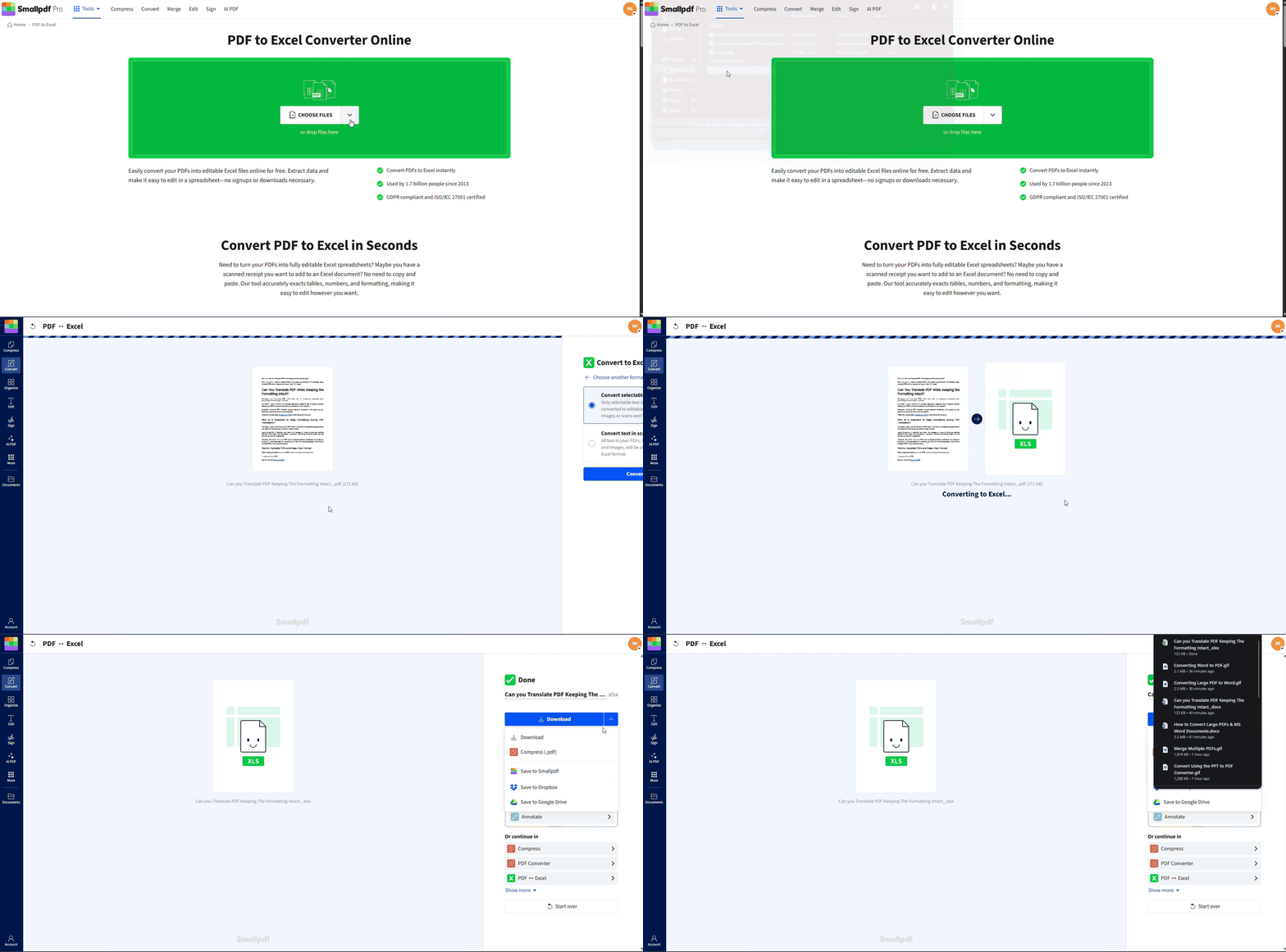
How To Convert PDF to Excel Online With Smallpdf
Smallpdf PDF to Excel runs in your browser, so you can convert from Mac, Windows, or Linux without installing anything. You can upload from your device, Google Drive, Dropbox, or OneDrive, then download an XLSX file when it’s ready.
Step 1: Upload Your PDF
Open Smallpdf PDF to Excel.
Drag and drop your file into the upload area, or select it from your device or cloud storage.
Quick start: Use the converter below to drop in your PDF and convert it to Excel.
Step 2: Choose the Right Conversion Mode
If you can select and copy text inside the PDF, a normal conversion usually works well.
If the PDF is a scan or image-based, choose OCR so Smallpdf can read the text before converting it. OCR is a Pro feature.
Step 3: Download and Check the Spreadsheet
Click “Convert,” then download the XLSX file.
Open the spreadsheet and do a fast check on column alignment, decimals, and headers.
If something looks off, jump to the fixes section below. A second pass, plus a small cleanup, often beats starting over.
When Manual Methods Work Better
Manual options can be useful if you’re dealing with a small amount of data, or you need a quick table extraction, and you already use Excel daily. They’re also the main workaround if you can’t upload a document due to internal policy.
Here are two manual routes people use most.
Copy and Paste for Small Tables
This is the simplest manual method, and it’s fine when the PDF table is clean and short.
Step-By-Step: Copy and Paste Into Excel
Open the PDF in any viewer and highlight the table.
Copy it, then paste it into a blank Excel sheet.
Use “Text to Columns” or “Remove Duplicates” if the paste comes in messy.
Expect some cleanup. PDFs store content as positioned elements, not true rows and columns, so pasted data often needs rearranging.
Import From PDF in Excel
Some versions of Excel include a “From PDF” import option through Power Query. It can extract tables surprisingly well, but it’s not available in every Excel license, and it works best with clearly defined tables.
Step-By-Step: Excel “From PDF” Import
Open Excel, then go to “Data” > “Get Data” > “From File” > “From PDF.”Select your PDF.
Pick the detected table in the navigator, then load it into the workbook.
If columns look wrong, open Power Query and clean them before loading.
If Excel doesn’t detect tables, it usually means the PDF is a scan, the table is visually styled, or the data is embedded as an image.
Which Option Should You Use?
If your goal is a usable spreadsheet fast, Smallpdf PDF to Excel is usually the most direct choice because it’s built for conversion instead of “data extraction only.”
Manual methods make sense in three situations:
You only need a small table, and you don’t care about formatting.
The PDF is internal and can’t be uploaded anywhere.
You already use Excel’s “From PDF” connector, and the tables are clean.
Fix Common PDF-To-Excel Problems
Even great conversions can need small cleanup. Here are the issues we see most, plus quick fixes.
1. Numbers Show Up as Text
If you see left-aligned numbers or formulas fail, Excel probably read them as text.
Select the column, then use Excel’s “Convert to Number” prompt.
If commas and periods are flipped, change the regional number format in Excel settings.
Re-run the conversion and ask for values in a consistent format if you’re using OCR.
2. Columns Shift or Don’t Line Up
This usually happens with multi-line cells, wrapped headers, or uneven spacing in the PDF.
Remove empty columns first, then re-check alignment.
If the PDF has grouped headers, move them into a single header row.
If the PDF is a scan, OCR plus a second conversion can improve structure.
3. Merged Cells and Complex Layouts Break Tables
PDFs with merged cells, side notes, or nested tables are harder to map into rows.
Try converting again, then rebuild the table structure inside Excel.
If you have the original file (Word or Excel), export a cleaner PDF, then convert that version.
4. The PDF Is a Scan
If you can’t select text in the PDF, it’s image-based.
Use OCR during conversion so text becomes readable data. OCR is included with Pro plans.
If the scan is crooked or low contrast, re-scan or re-export before converting.
Real-Life Scenarios Where This Helps
If you’re copying monthly invoice totals into a budget tracker, a browser conversion saves you from retyping dozens of line items.
If you’re pulling price tables from supplier PDFs, Excel’s “From PDF” import can work well when the tables are consistent.
If you’re reviewing a scanned report, OCR is the difference between having largely useless data and being able to filter and sort it in Excel.
Privacy and Safety When You Convert Online
If your PDF contains sensitive information, it’s normal to worry about uploads. Smallpdf uses TLS encryption during file transfer and is ISO/IEC 27001 certified, with compliance coverage including GDPR.
For most tools, files are automatically deleted after one hour of processing, which helps reduce exposure if you’re converting something time-sensitive.
If you need to process files without going online at all, Smallpdf also offers a desktop app option for offline workflows, with Pro access unlocking premium features.
Convert Your PDF to Excel Without Installing Anything
If you want the quickest path, start with Smallpdf PDF to Excel, then choose OCR if your PDF is a scan.
If you only need a small table, copy and paste can work, and Excel’s “From PDF” import is worth trying for clean, structured tables.
When formatting breaks, don’t panic, it usually takes a few small Excel tweaks to make the spreadsheet usable.
If you’re ready to try it, upload your PDF to Smallpdf PDF to Excel and convert it in a couple of clicks.
Want to Convert PDF to Excel for Free?
Frequently Asked Questions
How do I convert a PDF to Excel without software for free?
Use a browser-based option like Smallpdf PDF to Excel. Upload the PDF, convert it, then download the XLSX file.Can I convert a scanned PDF to Excel?
Yes, but you’ll need OCR so the scan becomes readable text first. OCR is a Pro feature in Smallpdf.Will the Excel file keep the same formatting as the PDF?
Often, you’ll keep the table structure, but complex layouts can shift columns or break merged cells. Plan on a quick cleanup pass in Excel for best results.Is converting PDF to Excel accurate?
Accuracy depends on the PDF. Clean tables convert well. Scans, merged cells, and multi-column layouts may need manual fixes after conversion.Can I convert PDF to Excel with Excel only?
Sometimes. Excel’s “From PDF” connector can import tables through Power Query, but availability depends on your Excel version and license.Can I convert multiple PDFs to Excel at once?
Batch conversion is typically part of paid plans. If you convert lots of files, Pro access can save time.Is it safe to upload a PDF for conversion?
Smallpdf uses TLS encryption and follows recognized security standards like ISO/IEC 27001, with automatic file deletion after processing.Convert PDF tables to Excel accurately using Smallpdf