How to Lock a PDF From Editing or Copying
Protect PDF from editing and copying in minutes. Use two simple methods to lock your file before you share it.
More on Protect PDF
More on Edit PDF
More on Unlock PDF
Lock your PDF: Click “Choose file” above to upload your document, then protect it from unwanted editing or copying.
Saving a document as a PDF keeps the layout intact, but it doesn’t make the file secure.
Anyone who opens it can still copy your text, change numbers, or edit key details.
To really protect PDF from editing, you need one of two approaches:
Turn the content into an image so it’s read-only.
Add password protection so only approved people can open it.
With Smallpdf, you can do both in your browser. Our features run with strong encryption, automatic file deletion, and certified security standards, so you can share documents with confidence.
Quick Ways To Protect A PDF From Editing
If you just need a fast answer, here are the two main options.
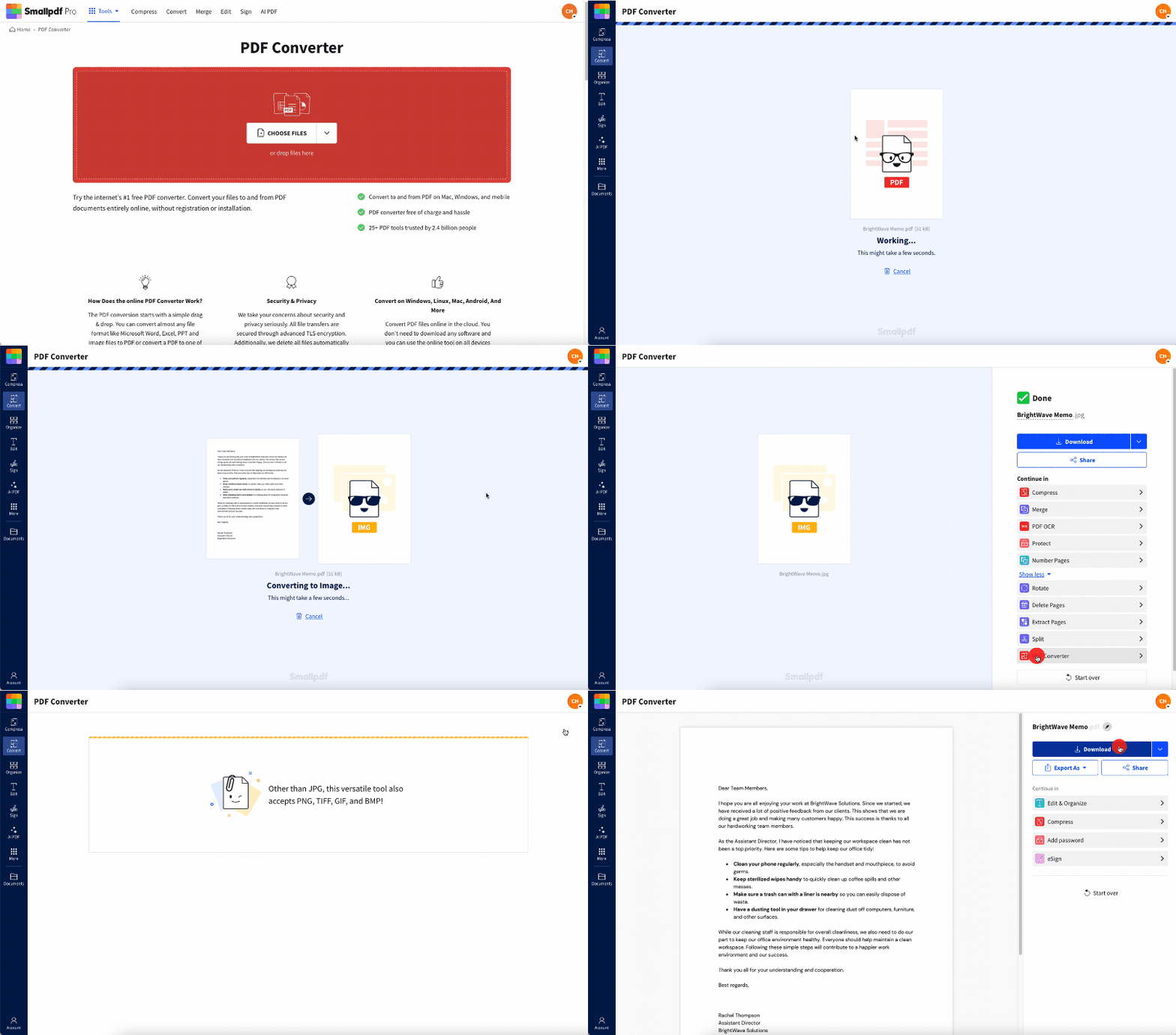
1. Convert your PDF content to images, then back to PDF
Use PDF Converter.
Choose image output, then convert back to PDF.
Result: text cannot be selected, copied, or easily edited.
2. Add a password to control who can open the PDF
Use Protect PDF.
Set a strong password.
Result: only people with the password can open the file.
For maximum protection, you can use both methods together.
How To Protect PDF From Editing Using Image Conversion
This method creates a read-only PDF by turning each page into an image, then wrapping those images back into a PDF. No one can copy or edit the text directly.
Step 1: Upload Your File to PDF Converter
Open PDF Converter.
Drag and drop your document into the page, or pick a file from Google Drive, Dropbox, or OneDrive. You can start with a PDF, Word, PowerPoint, or Excel file.
Step 2: Convert Your Document to Images
Under “Convert to” select “Image.”
This turns each page into a static image file, which is not directly editable and doesn’t allow text selection.
Step 3: Convert Images Back to PDF
When the image conversion is finished, choose “PDF Converter.”
If needed, click “Show more” to see all options. Then select “Convert” to package your images back into a PDF file.
Step 4: Download Your Locked PDF
Click “Download” to save the new PDF.
This version now behaves like a scanned document. The content is visible, but the text cannot be highlighted, copied, or edited like a normal digital PDF.
If you only need the JPG files, you can stop after the image step and download those instead. Either way, your content is locked into a visual format by the time you save the file.
Why Lock a PDF From Editing
Turning your PDF into a locked or read only version helps in several common situations:
Protect sensitive data, like financial figures or personal details.
Maintain document integrity when sending contracts or reports.
Prevent silent changes to terms, pricing, or conditions.
Keep your creative work from being reused without permission.
Locking your PDF is about control. You decide what others can see and how far they can go with it.
How To Lock A PDF From Editing With a Password
Password protection encrypts your file so only people with the password can open it. Encryption means the file is mathematically scrambled and can only be read after the correct password is entered.
Note: Password protection does not block editing for someone who already has the password. If you want to stop editing completely, combine password protection with the image conversion method above.
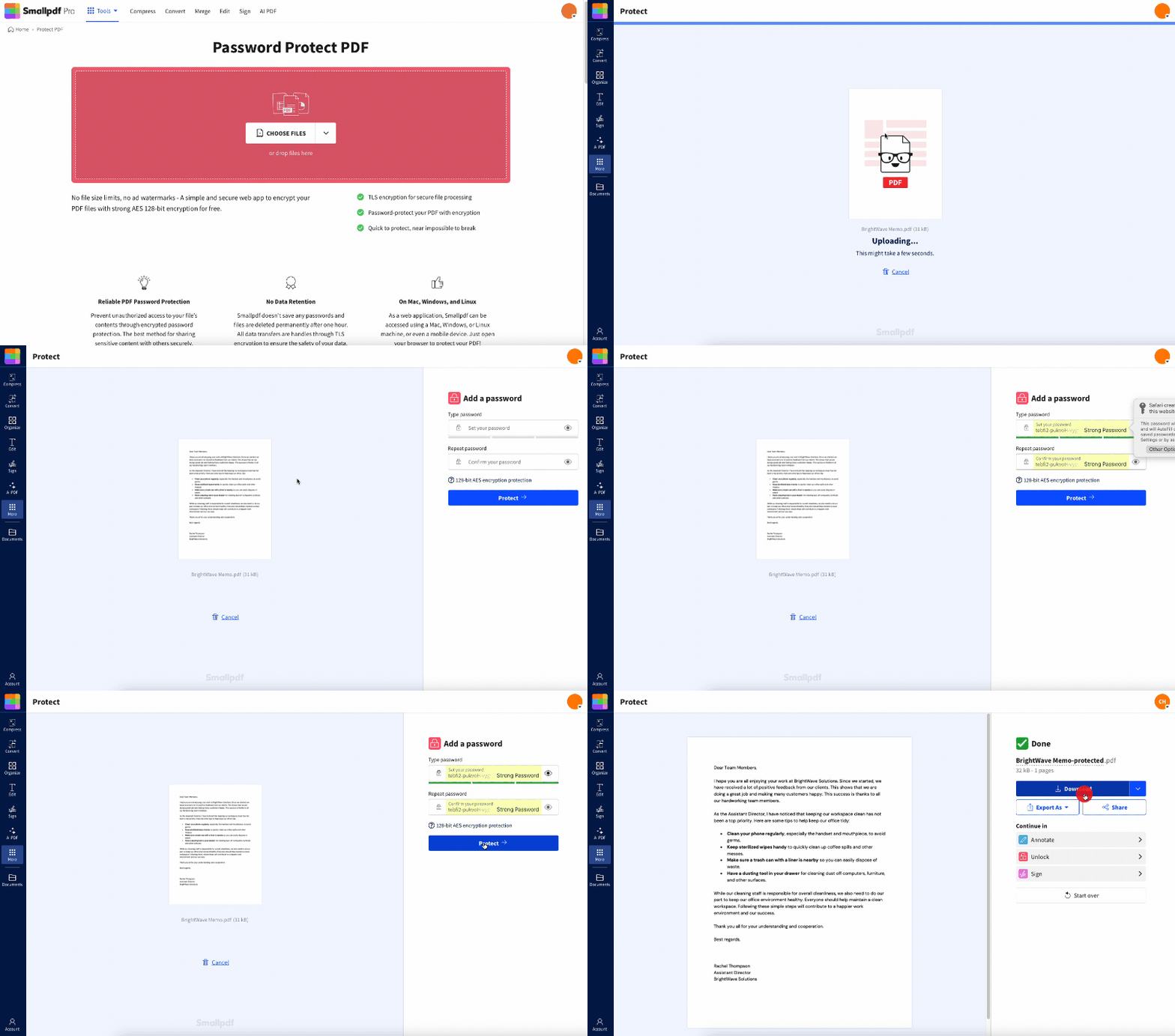
Step 1: Open Protect PDF
Go to Protect PDF.
Upload your file, either from your device or from Google Drive, Dropbox, or OneDrive.
Step 2: Choose a Strong Password
In the password field, type the password you would like to set. Use a mix of letters, numbers, and symbols, and avoid anything easy to guess, like names or common words.
Step 3: Apply Protection and Download
Click “Protect” to encrypt your PDF with the password you set. Then download your encrypted PDF and share it only with people who should have access.
For best results, send the password through a separate channel, for example, a text message or chat, instead of in the same email as the file.
Can I Make A Locked PDF Editable Again?
Yes, you can, but the method depends on how you protected the file in the first place.
Making an image-based PDF Editable Again
When you lock a PDF by converting it to images, the text becomes part of the picture. To turn it back into editable text, you need OCR, which stands for Optical Character Recognition.
Here’s how to do it:
Open PDF Converter and upload the image based PDF.
Choose an editable format, such as Word, PowerPoint, or Excel.
If you have Smallpdf Pro, enable OCR so the converter reads the text inside the images.
Download the converted file, make your edits, then convert it back to PDF when you are done.
Unlocking a Password Protected PDF
If you protected your PDF with a password, you can remove that password as long as you know it:
Open Unlock PDF.
Upload your password-protected PDF.
Enter the current password when prompted, then click “Unlock.”
Download the unlocked PDF, or open it in another Smallpdf feature to edit or convert it.
Lock your PDF: Click “Choose file” above to upload your document, then protect it from unwanted editing or copying.
Other Ways To Lock A PDF
If you work with other software, you might already have some basic options to lock a PDF.
These can be helpful, but they are not always as strong or convenient as online features.
1. Lock a PDF on Mac Using Preview
Open your PDF in Preview.
Go to “File” > “Export” as PDF.
Click “Security Options” and set an owner password.
Adjust permissions so printing and copying are restricted.
2. Set Windows Files to Read Only
Right-click the PDF in File Explorer.
Select Properties and go to the General tab.
Check “Read only,” then click “OK.”
This Windows setting is basic and can be bypassed easily, so it is not a substitute for real encryption or the image conversion method.
Are My Files Secure With Smallpdf?
Your files are processed under several layers of security by design.
TLS encryption protects files during upload and download.
Strong 256-bit encryption secures files at rest on our servers.
Files are automatically deleted after a short period, usually 60 minutes after processing.
Smallpdf is ISO/IEC 27001 certified for information security management.
We adhere to GDPR, which safeguards your privacy rights.
For more details, you can always check our Terms and Privacy pages, but the short version is that both your content and your personal data are handled with strict safeguards.
Lock Your PDFs Easily With Smallpdf
You have more than one way to protect PDF from editing.
Use PDF Converter to turn your pages into images and create a truly read only PDF, or add password protection with Protect PDF to control who can open the file.
If you need to work with many documents or scanned files, a Smallpdf Pro trial lets you try OCR and batch processing to see what fits your workflow.
How to Lock a PDF From Editing or Copying FAQs
How do I lock a PDF from editing after signing?
Sign your PDF document using our Sign PDF. Download the document. Follow the steps under “How to Lock a PDF From Editing for Free” at the top of this article. Download your PDF, which is now protected from any further edits and copying.How do I lock a PDF from editing without a password?
Use the image conversion method. Convert your PDF to image format, then convert those images back into a PDF. The result is a file where the content behaves like a scan, so it cannot be copied or edited in a standard way, and you do not need a password.Can I lock specific pages of a PDF?
Not directly in one move, but you can split the PDF first, protect the pages you care about, then merge everything again. Use Split PDF to separate pages, lock the parts you need with image conversion or password protection, then use Merge PDF to bring them back together.How do I encrypt a PDF for email?
Open Protect PDF, upload your file, set a strong password, and click “Protect.” Download the encrypted PDF and attach it to your email. Share the password with the recipient through a separate channel so it is not in the same message as the file.How can I protect a PDF without Acrobat?
You can use Smallpdf instead of Adobe Acrobat Pro. Open Protect PDF, drag and drop your document, set a password, click “Protect,” then download the secured file. For edit blocking, combine this with the image conversion method using PDF Converter.Can someone remove the lock from my PDF?
A password protected PDF can be opened by anyone who knows the password, which is why strong passwords and careful sharing are important. An image based PDF is much harder to unlock, because the text is embedded in images and usually requires OCR to extract.Lock PDFs to prevent editing or copying using Smallpdf Pro