- Home
- ›
- ›How to Compare Two PDF Files and Track Every Change
How to Compare Two PDF Files and Track Every Change
Skip expensive PDF comparison tools—convert your PDFs to Word with Smallpdf. Then use Word’s “Compare Documents” feature for fast, accurate results.
More on Word to PDF
More on PDF to Word
PDF Reading Tools & Guides
Comparing PDFs might not seem like the most exciting task, but it’s crucial. The problem is that PDFs aren’t like Word docs—you can’t track changes automatically. That’s why knowing the right comparison methods can save you a ton of time.
If you need to compare two PDF files online, the fastest approach is to first convert them, then let a comparison tool highlight every change for you.
Smallpdf helps you get those PDFs into an editable format quickly, so you can use Word’s built-in “Compare Documents” feature to spot changes in seconds instead of scrolling through both files manually.
Comparison Methods for Checking Differences Between Two PDFs
| Method | How It Works | Pros | Cons |
|---|---|---|---|
| Smallpdf + Word Comparison | Convert both PDFs to Word, then use Word’s “Compare Documents” feature. | Very accurate text comparison. Highlights insertions, deletions, and moves, and creates a single results file. | Requires conversion first. Complex layouts may need “text-only” mode. |
| Side-by-Side View in Browser | Open each PDF in separate windows and review them visually. | Quick for simple documents. Good for spotting layout or image changes. | Manual, and easy to miss small wording updates. Slow for long files. |
| Side-by-Side View in Preview (Mac) | Open both PDFs in Preview and arrange the windows. | Good for visual checks. Works well with short documents. | Still requires manual review. No automatic change tracking. |
| Online PDF Comparison Tools | Upload two PDFs to a web-based viewer that highlights differences. | Fast setup and may show visual or text differences. | Accuracy varies. Some tools struggle with scans or layered PDFs. File size limits may apply. |
| Manual Print-Out Review | Print both versions and check line by line with a marker. | Helpful when layout is complex or digital tools misread elements. | Time-consuming. Prone to human error, and not ideal for long or detailed documents. |
For the most reliable results, the Smallpdf and Microsoft Word method gives the clearest text comparison, while side-by-side views help when layout differences matter.
Want to Chat With Your PDF?
How to Compare Two PDF Files (Free, With Smallpdf + Word)
Automated comparison is the way to go if you want accuracy and speed. The right tool can highlight changes for you, so you’re not left playing a guessing game. But most PDF comparison tools make you register first and pay a subscription.
With Smallpdf and Microsoft Word—or Pages, Google Docs, or LibreOffice—you can get it done quickly, and for free!
Sure, you can try to compare two PDFs manually by opening them both side by side using your favorite PDF reader. But this can be slow, and mistakes are possible.
For a faster, more accurate comparison, start with PDF Converter:
Upload your PDFs to our PDF Converter.
Choose Word as the “Convert to” format.
Wait for Smallpdf to finish.
Download your fresh Word documents—easy!
Pro tip: If you’re working with scanned documents, run them through PDF OCR first, then choose “Word (.docx)” under the “Export As” options.
Open one of the documents in Word.
Go to “Tools” and under “Track Changes,” choose “Compare Documents...”
Find and select both the original and the revised document.
Enter a name or phrase you want to use to highlight the differences.
Click “OK.”
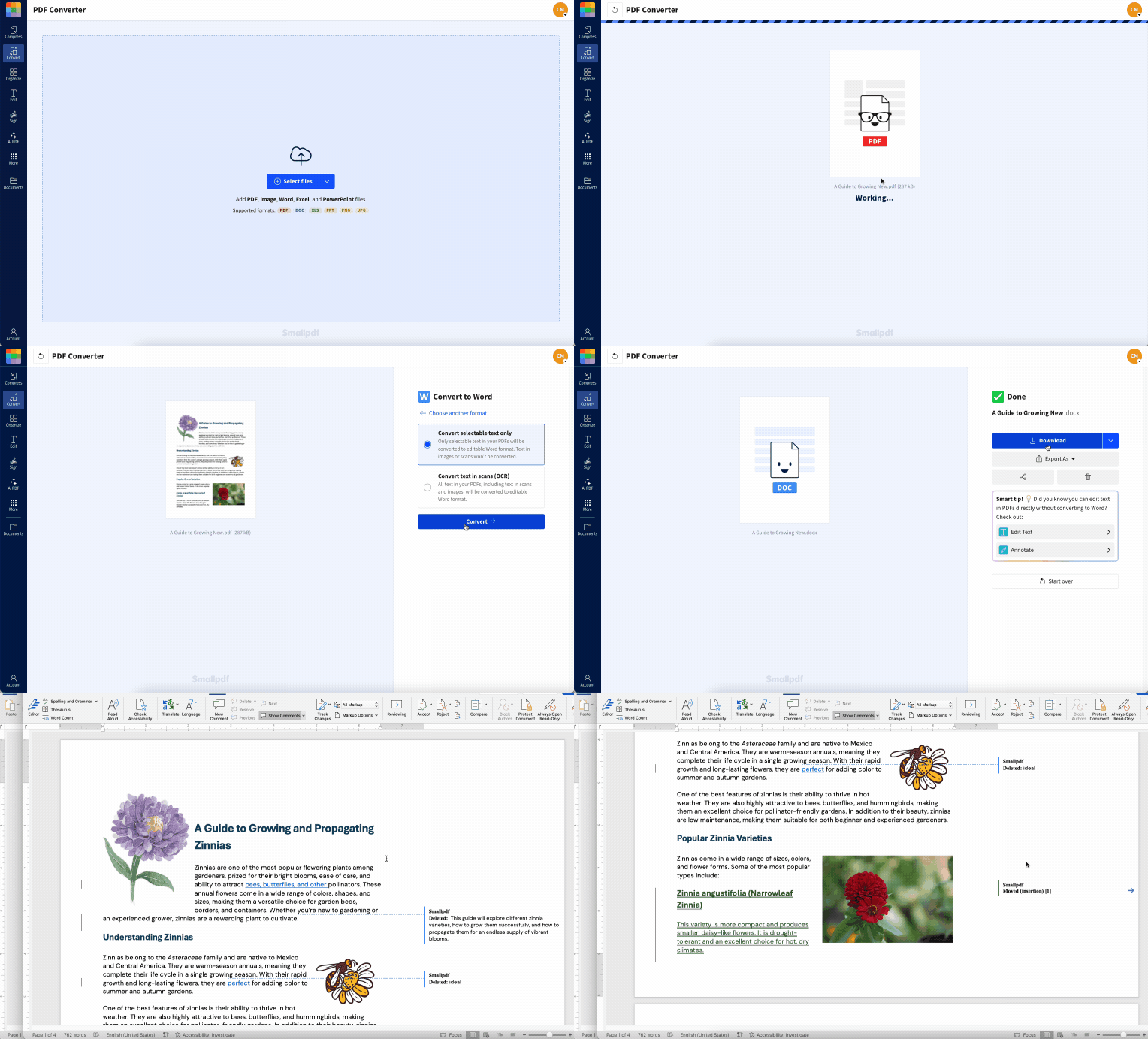
A new document will open, highlighting all the differences between the two. Once you’re happy with the changes, you can save the original and the revised documents as PDFs again.
What Changes You Can Detect in a PDF Comparison
When you compare PDFs, you can spot several types of differences that might otherwise go unnoticed:
Text changes - Added, deleted, or modified words and sentences
Formatting differences - Font changes, spacing, alignment, or styling updates
Image modifications - New images, removed graphics, or repositioned visuals
Annotations - Comments, highlights, or markup that’s been added or removed
Layout changes - Page breaks, margins, or overall document structure shifts
The side-by-side view makes it easy to see exactly what’s changed between versions. You’ll get a results summary showing the distribution of changes throughout your document.
Compare PDFs Side by Side (Browser, Preview, or Word)
Visual comparison gives you the big picture view of what’s different between your documents.
Browser Method
Open both documents in your browser, then right-click on one of the tabs. Select “Move Tab to New Window.” Arrange the windows so you can view both at the same time. Most browsers include annotation tools, so you can manually highlight changes and add notes about what has changed.
Preview (Mac)
If you’re on a Mac, Preview lets you open two PDFs at once in separate windows. This gives you a clean side-by-side view where you can easily spot visual differences.
Word Compare Feature
After converting your PDFs to Word format, the “Compare Documents...” feature creates a single-page view with highlighted changes. This method shows you exactly where text has been added, removed, or modified.
Adjust Comparison Settings (Filters, Page Ranges, Text-Only)
Fine-tune your comparison to focus on what matters most:
Compare text only - Ignore formatting and focus purely on content changes
Page ranges - Compare specific sections instead of entire documents
Annotations filter - Include or exclude comments and markup in your comparison
Formatting filter - Choose whether to detect styling changes or skip them
These settings help you avoid getting overwhelmed by minor changes when you’re looking for substantial content differences.
Review and Navigate Changes (Summary, Next/Previous, Comments)
Once your comparison is complete, here’s how to review the results effectively:
Check the results summary to see how many changes were detected.
Use previous/next change buttons to jump between differences quickly.
Review the comments pane for detailed explanations of each change.
Mark change status as you review (accepted, rejected, or pending).
Export or save your comparison results for future reference.
Tips for Accurate Comparisons (OCR for Scans, Complex Layouts, Large Files)
Get the best results from your PDF comparisons with these pro tips:
Use OCR for scanned documents: Convert image-based text to searchable text first.
Try text-only mode for complex layouts that might confuse comparison tools.
Consider file size: Large files may need to be split into sections for faster processing.
Check for moved pages: Reordered content can throw off automatic comparisons.
Remove background artwork if it’s interfering with text comparison accuracy.
Alternatives to Compare PDFs (Dedicated Apps)
While our Smallpdf + Word method works great, you might also consider:
Web-based tools - Several online services specialize in document comparison.
Enterprise solutions - Larger organizations might need dedicated comparison software.
The automated comparison feature in Word, Google Docs, Pages, and LibreOffice offer the most efficient—and affordable—way to compare multiple PDFs. This method will give you faster, more accurate results, saving you the headache of flipping between documents and wondering if you missed something.
Start your free trial to access all Smallpdf tools.
Frequently Asked Questions
Can I compare PDFs without converting to Word?
Yes, but it’s manual and error-prone. You’ll need to convert the PDFs to Word format first for the most accurate automated comparison. Once converted, use the “Compare Documents...” feature in Word to highlight differences. It’s a handy trick, especially if you’re used to tracking changes in Word already.Is it safe to upload PDFs for comparison?
Absolutely. We use industry-standard encryption and automatically delete your files after processing. Your documents are never stored permanently on our servers. For details on security and data handling, visit our Trust Center.How are complex PDFs handled during comparison?
Complex PDFs—including files with heavy design, forms, mixed text and images, or layered elements—can behave differently during comparison. Automated tools may miss changes hidden inside images or background layers. For the most accurate results, convert the PDF to Word first so the text can be extracted properly. If your file uses advanced layout features or lots of graphics, run it through OCR (for scans) and compare in “text-only” mode to focus on wording rather than visual layout shifts.What’s the difference between visual and text comparison?
Visual comparison shows you layout and formatting differences, while text comparison focuses purely on content changes. Text-only comparison is better for detecting subtle wording changes in complex documents.Can I compare password-protected PDFs?
You’ll need to remove password protection first before comparing. Most comparison tools can’t access encrypted content directly.How do I compare scanned PDFs?
Run scanned documents through PDF OCR first to convert images to searchable text. Then choose “Word (.docx)” under the “Export As” options before comparing.What file size limits apply when comparing PDFs?
Most online tools have size restrictions, typically around 100MB per file. Smallpdf has much more generous file size limits. For larger documents, try splitting them into smaller sections or use desktop software instead.Wrapping Up: More Ways to Compare PDFs
Now you know how to compare two PDF files without losing your sanity. Go ahead and try it out!
If you’re working with lengthy documents, you might also find it useful to generate an AI-powered summary before comparing versions. Smallpdf’s AI tools can summarize the key points of a PDF, making it easier to focus on what’s changed.
And if you need to do more than just compare, Smallpdf’s AI tools can help you interact with PDFs in other ways—like creating multiple-choice or open-ended questions for tests, translating documents, or even chatting with a PDF to clarify key details.
Review PDF revisions and highlight changes with Smallpdf