What Is Optical Document Security
Need PDFs that look official and are harder to misuse? Use optical document security like watermarks and visible cues, then lock your PDF.
More on Watermark PDF
More on Edit PDF
More on Protect PDF
Optical document security is the set of visible features that help people spot tampering, copying, or fakes at a glance. Watermarks, holograms, microtext, and other marks that are easy to notice but hard to replicate cleanly.
For PDFs, optical security usually means adding clear, intentional visual cues to discourage misuse, show ownership, and signal sensitivity. It won’t replace real access control, so the best results come from layering optical cues with digital protections like password encryption, redaction, and flattening.
In this guide, we’ll show you how to add optical safeguards to your PDFs.
Key Takeaways
Optical security helps people visually verify a document and spot obvious tampering.
For PDFs, the most practical optical layer is a watermark plus consistent visual controls.
Digital controls still matter most for real protection, like password encryption and permanent redaction.
Flattening can help reduce easy undo edits to overlays, comments, and form layers.
What Optical Document Security Means
Optical document security uses visual elements to protect documents from fraud, copying, or undetected changes. These help to easily confirm if a document is authentic, or has at least been handled properly.
Common optical security features include:
Watermarks. Visible text or patterns that signal sensitivity or ownership.
Holograms and DOVIDs. Angle-dependent effects designed to resist counterfeiting.
Optically variable inks. Color-shifting effects used in secure printing.
Microtext and fine-line patterns. Details that degrade quickly when copied.
In a PDF workflow, you rarely add true holograms or special inks. Instead, you use the same idea: Add visual cues that discourage misuse and make suspicious edits easier to spot.
How Optical Document Security Applies to PDFs
PDFs get emailed, uploaded, and re-shared across teams with ease. That speed is useful, but it also makes it easy for a sensitive file to end up in the wrong place.
Optical security helps with the human side of trust:
It signals intent. A diagonal ‘CONFIDENTIAL’ watermark changes how people treat a file.
It reduces casual misuse. Watermarked pages are less tempting to screenshot and repost.
It adds fast context. A watermark like ‘DRAFT’ or ‘FOR REVIEW’ prevents mistakes.
Still, a watermark won’t stop a determined attacker. That’s why we treat optical security as the outer layer, then we add real controls underneath.
Optical Security vs Other PDF Protection Methods
Here’s how the main options stack up in a PDF workflow:
| Method | What It Does Best | Where It Falls Short |
|---|---|---|
| Optical security (watermarks, visible cues) | Deters casual misuse, supports quick visual verification. | Doesn’t control access or stop copying by itself. |
| Password encryption | Controls who can open the PDF with AES 128-bit encryption. | Passwords can be shared, and it doesn’t remove sensitive content. |
| Redaction | Permanently removes sensitive text or areas. | Needs careful review so you don’t miss hidden data. |
| Flattening | Bakes layers into the page, so simple edits become harder. | Makes future editing harder for you, too. |
| DRM | Controls printing, copying, and forwarding after access. | Often adds complexity and can frustrate recipients. |
How To Implement Optical Document Security for PDFs
This section gives you a practical, repeatable workflow. Use all the steps for high-risk documents. Use a few steps for everyday files.
Step 1: Add a Clear Watermark
Watermarks are the most practical optical feature for a PDF. Smallpdf Watermark PDF lets you place a consistent label across pages, then adjust font, size, and opacity so it stays readable but not distracting.
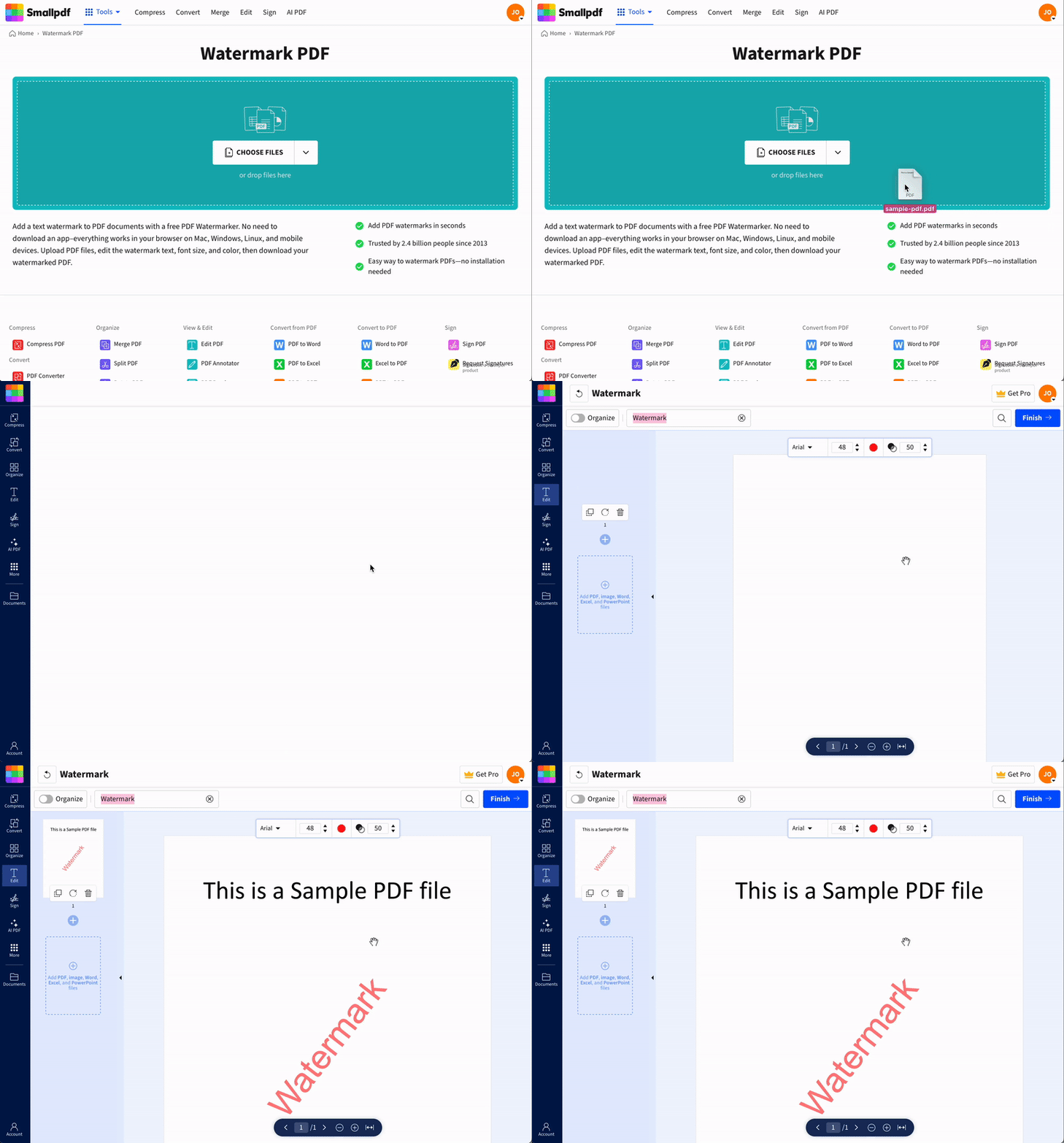
Use watermarks like:
‘CONFIDENTIAL’ for sensitive internal documents.
‘DRAFT’ for review rounds.
A department name or project code for traceability.
Keep the text short. Big, simple words work best.
Step 2: Remove Sensitive Details First
A watermark warns people. It doesn’t remove the risk.
If a PDF contains account numbers, IDs, addresses, or anything you’d regret leaking, redact it before you share it. Redact PDF removes information permanently, and the page stays clean and readable.
If the detail shouldn’t exist in the shared copy, redact it. Don’t cover it with boxes and hope it holds.
Step 3: Flatten Layers That Don’t Need Editing
If you added annotations, form fields, stamps, or overlays, flattening can help lock the visual result into the page. Flatten PDF permanently embeds layers like annotations and form fields into the document.
Flattening is useful when:
You’re sending a final version for viewing.
You don’t want recipients removing visible marks easily.
You want printing to match what you see on screen.
Step 4: Add Password Protection for Access Control
Optical security is visible. Password protection is enforced. Protect PDF encrypts PDFs using AES 128-bit encryption and adds a password in a few clicks.
Use it when:
You’re emailing a confidential PDF.
You’re uploading a file to a shared space.
You need one extra gate before anyone can open it.
Step 5: Share the PDF Using a Link, Not a Chain of Attachments
Attachments multiply fast. Links stay cleaner.
Share Document lets you upload a PDF and generate a shareable link, which helps you avoid passing around many copies.
For sensitive files, pair link sharing with redaction, flattening, and password protection, depending on the risk.
Step 6: Standardize It so Your Team Uses the Same Playbook
Optical security fails when it’s random. Consistency is the point.
Set simple rules like:
Always watermark drafts as ‘DRAFT.’
Always redact personal data before external sharing.
Always flatten the final review copy.
Always protect documents that include client or financial details.
Then make it part of onboarding, not a one-time reminder.
Limitations to Know Before You Rely on Optical Security
Optical security is helpful, but it’s not magic.
A watermark can be cropped out or covered if someone tries hard enough.
Screenshots ignore many PDF controls, so you still want redaction for sensitive text.
Over-watermarking can hurt usability and readability.
Use optical security as a signal and deterrent. Use digital controls for real protection.
Keep PDFs Safer and Easier to Verify With Smallpdf
Optical document security works best when it’s part of a repeatable workflow, not a one-off trick.
When you add a clear watermark, remove sensitive details, and lock access with a password, you reduce both accidental leaks and sloppy sharing habits.
Frequently Asked Questions
Is optical document security only for printed documents?
No. Many optical features come from print security, but PDFs still benefit from visible cues like watermarks and consistent labeling.What optical security feature works best for PDFs?
A clear watermark is usually the best starting point because it’s visible, consistent, and fast to apply across pages.Can optical security stop someone from editing a PDF?
Not by itself. If you need stronger control, use flattening to reduce easy layer edits, and use password encryption to restrict access.What’s the safest way to remove sensitive info from a PDF?
Use true redaction, not overlays. Redact PDF removes the content permanently so it can’t be recovered.How do we protect PDFs when sharing online?
Start by removing sensitive data with redaction, then add a watermark for visibility, and apply password protection for access control. If you’re sharing by link, keep one official shared copy instead of multiple attachments.Add visual security elements to PDFs using Smallpdf Pro
Related Articles