- Home
- ›
- ›Signed Without Reading: Inside the Workplace Skim Habit
Signed Without Reading: Inside the Workplace Skim Habit
A new study reveals how time pressure and information overload are pushing professionals to approve documents they haven't fully read.
As a platform built to simplify document workflows, Smallpdf wanted to understand how document review happens today. We surveyed 1,003 U.S. workers and found that many professionals rely on quick scans instead of careful reading. Here's what else we uncovered.
Key takeaways
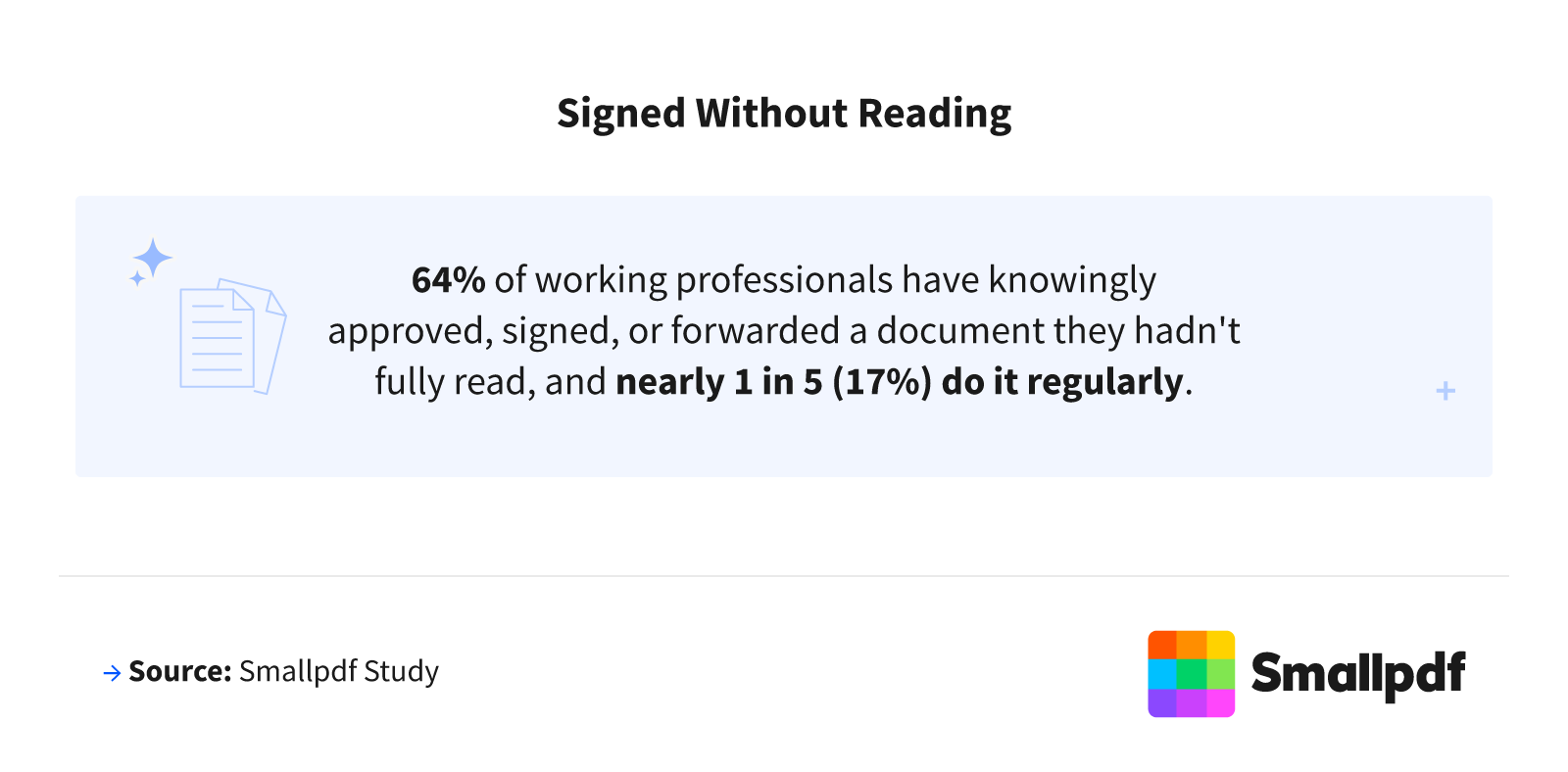
64% of working professionals have knowingly approved, signed, or forwarded a document they hadn't fully read, and nearly 1 in 5 (17%) do it regularly.
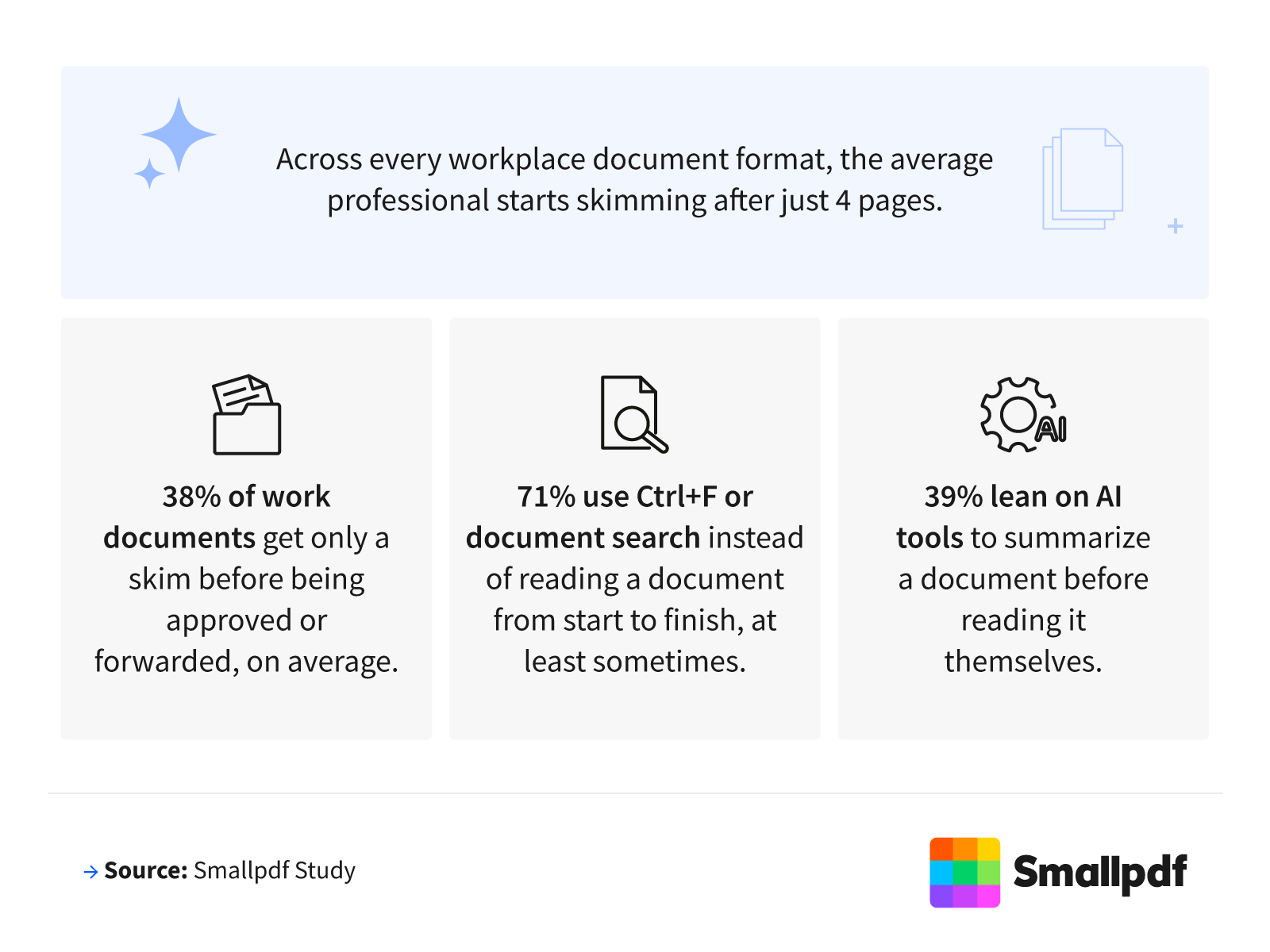
Across every workplace document format, the average professional starts skimming after just 4 pages.
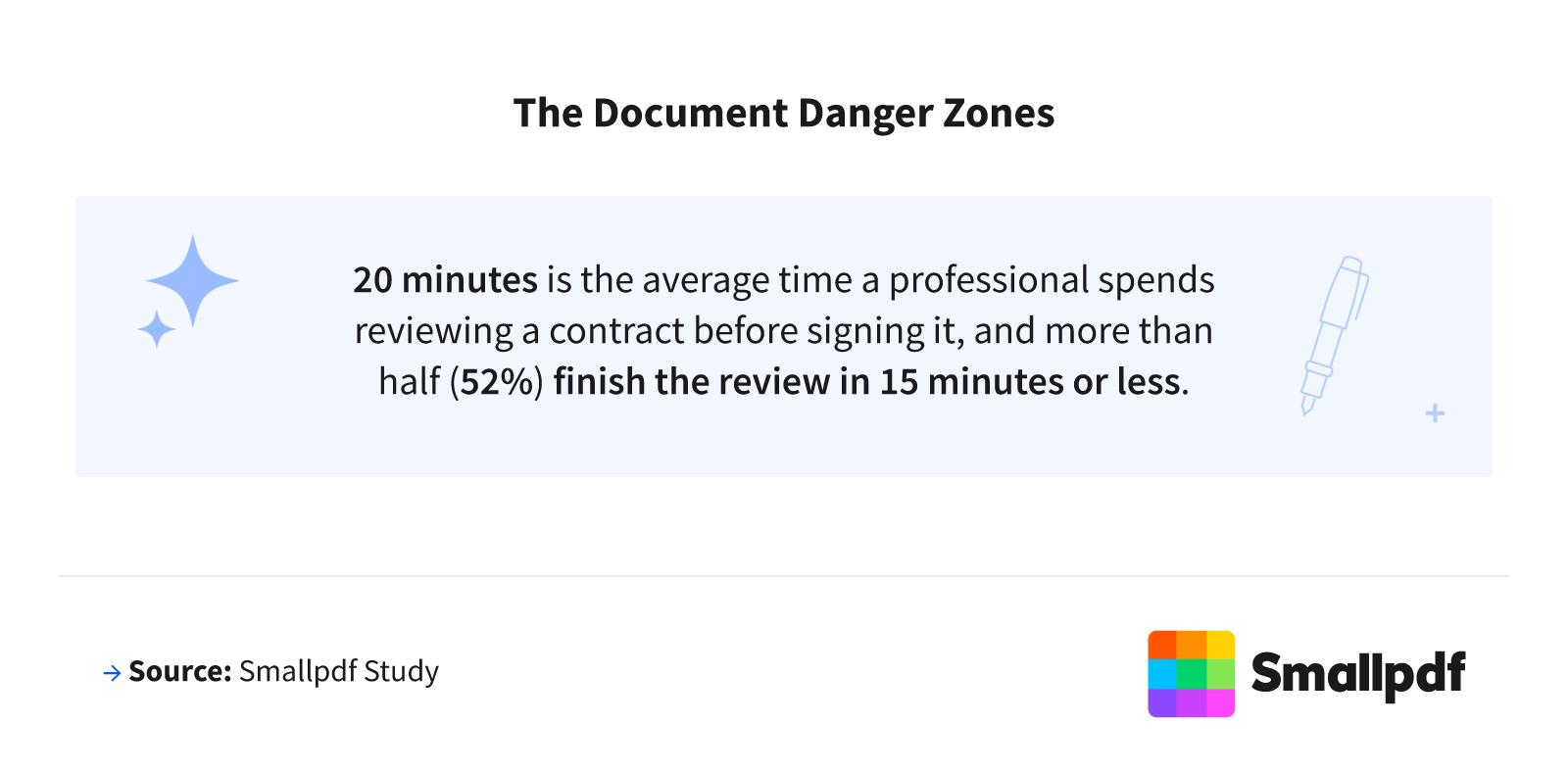
Working professionals spend an average of 20 minutes reviewing a contract before signing it.
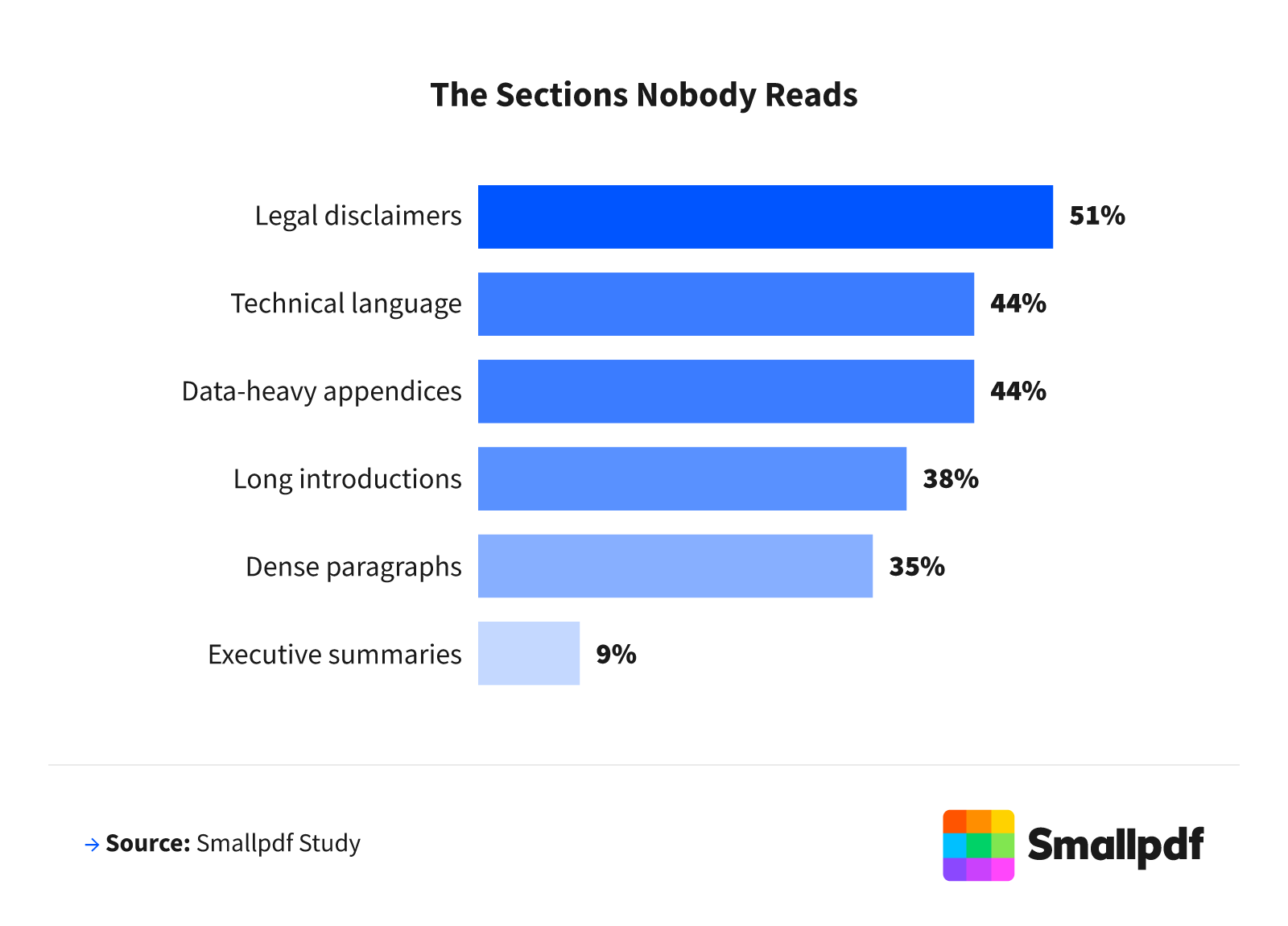
51% of working professionals skip legal disclaimers entirely.
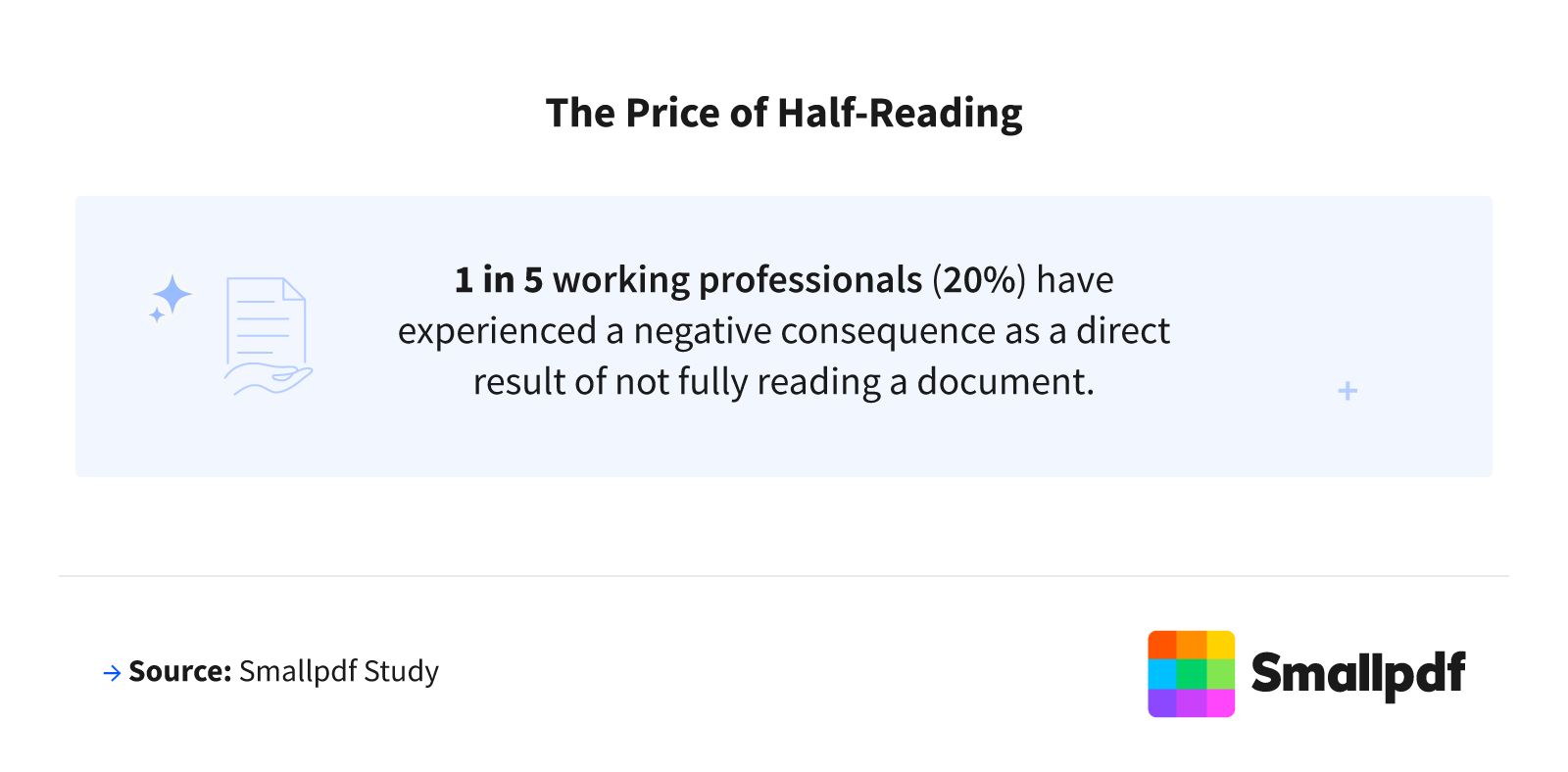
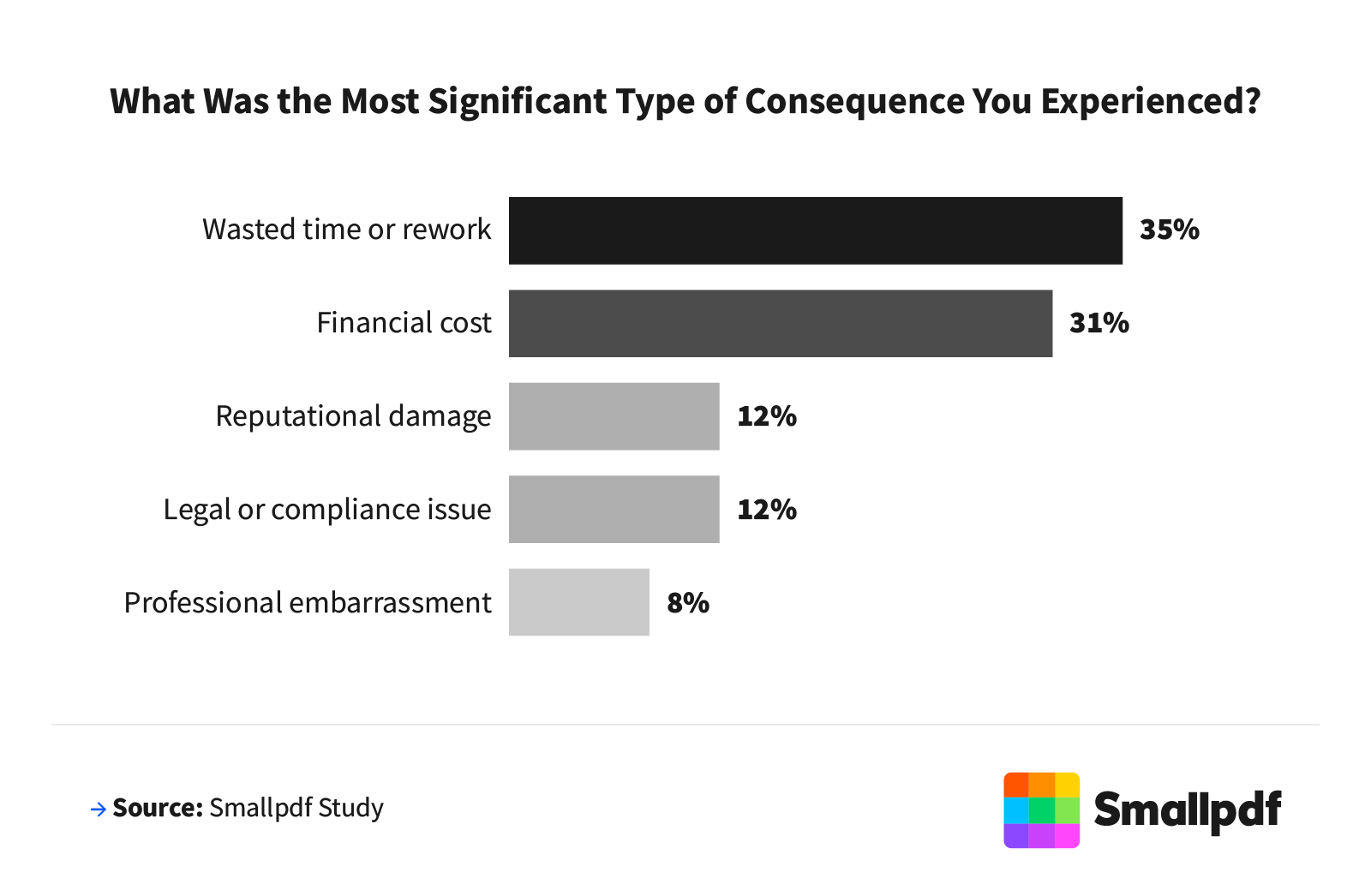
1 in 5 working professionals (20%) have experienced a negative consequence as a direct result of not fully reading a document.
The Skim Habit at Work
Fast-paced workflows are shaping how professionals interact with documents, often pushing thorough reading aside.
Information technology (68%)
Finance (67%)
Healthcare (65%)
Education (63%)
Government roles (59%)
These rates show that this habit is widespread regardless of the sector.
Generational differences revealed how professionals navigate documents. Gen Z was the most likely to rely on search functions, with 48% saying they use it always or often instead of reading a document from start to finish, compared to just 12% of baby boomers. Millennials were the most likely to approve documents without fully reading them (68%), while baby boomers were the least likely (39%), highlighting a divide in both habits and risk exposure.
The Skim Map of the Modern Workplace
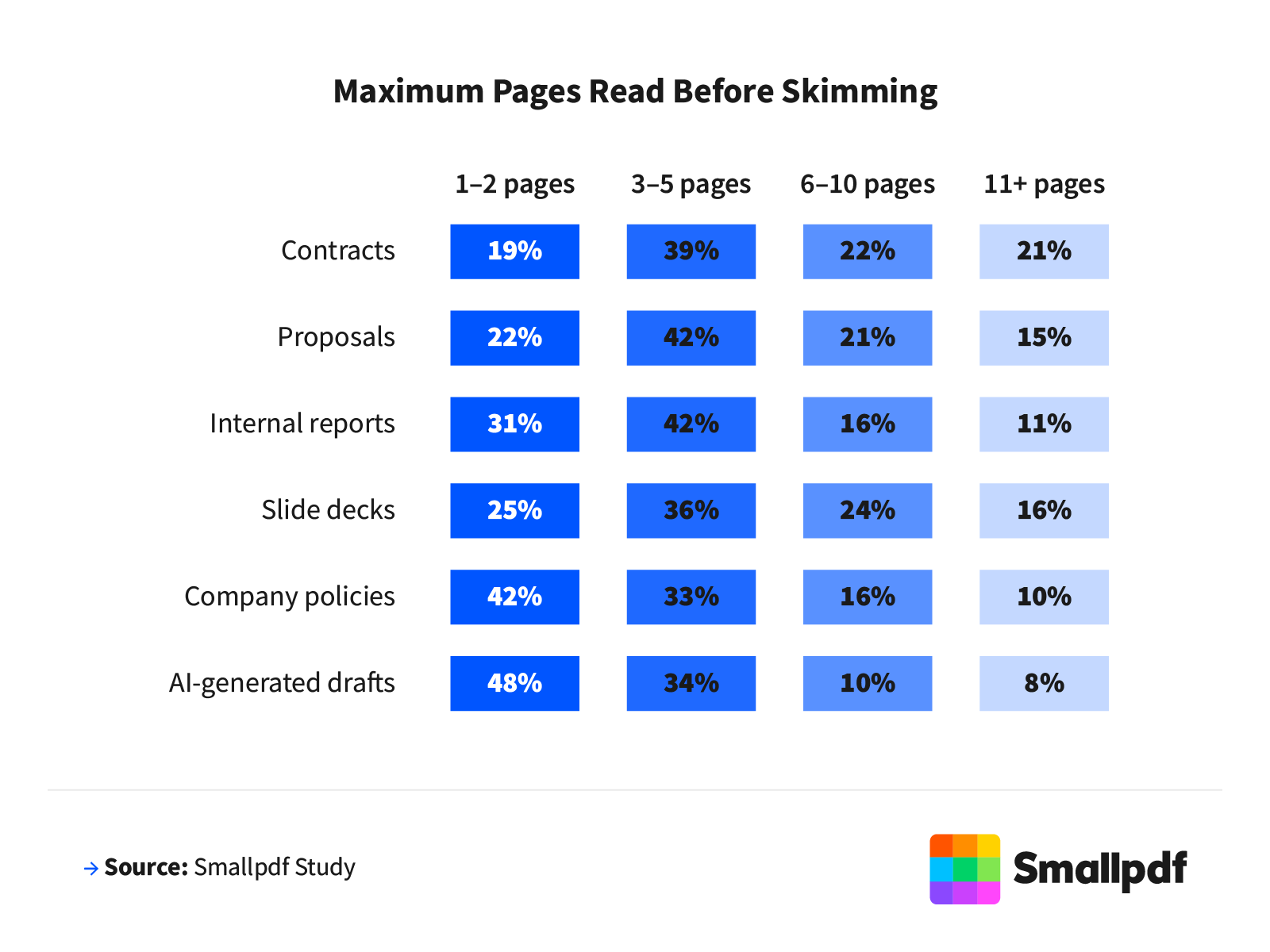
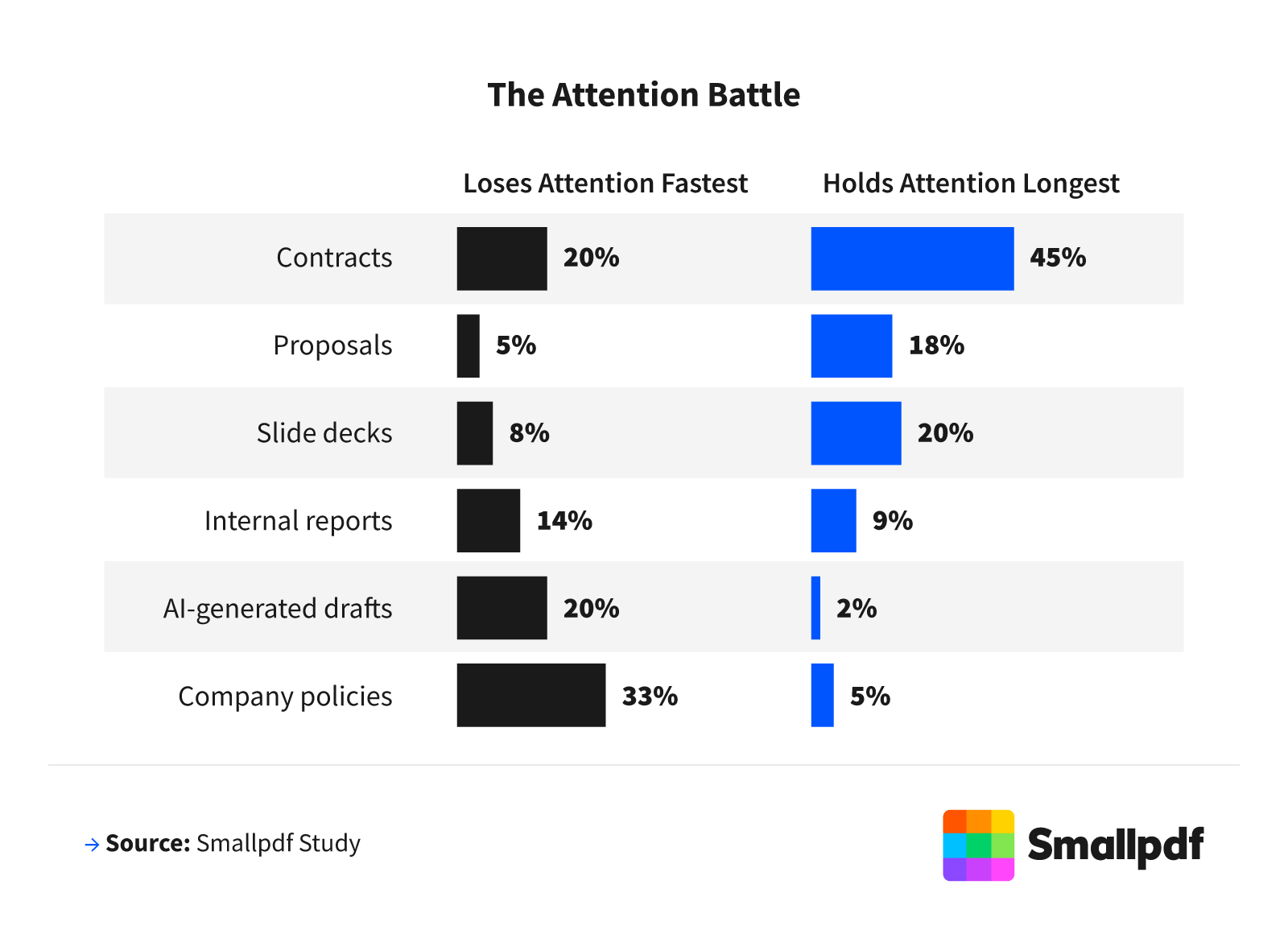
What professionals choose to read, or skip, often depends on document type, time constraints, and workplace norms.
Government roles (64%)
Finance (57%)
Education (51%)
Information technology (49%)
Healthcare (48%)
Skipping these sections can leave professionals unaware of important terms, obligations, or risks.
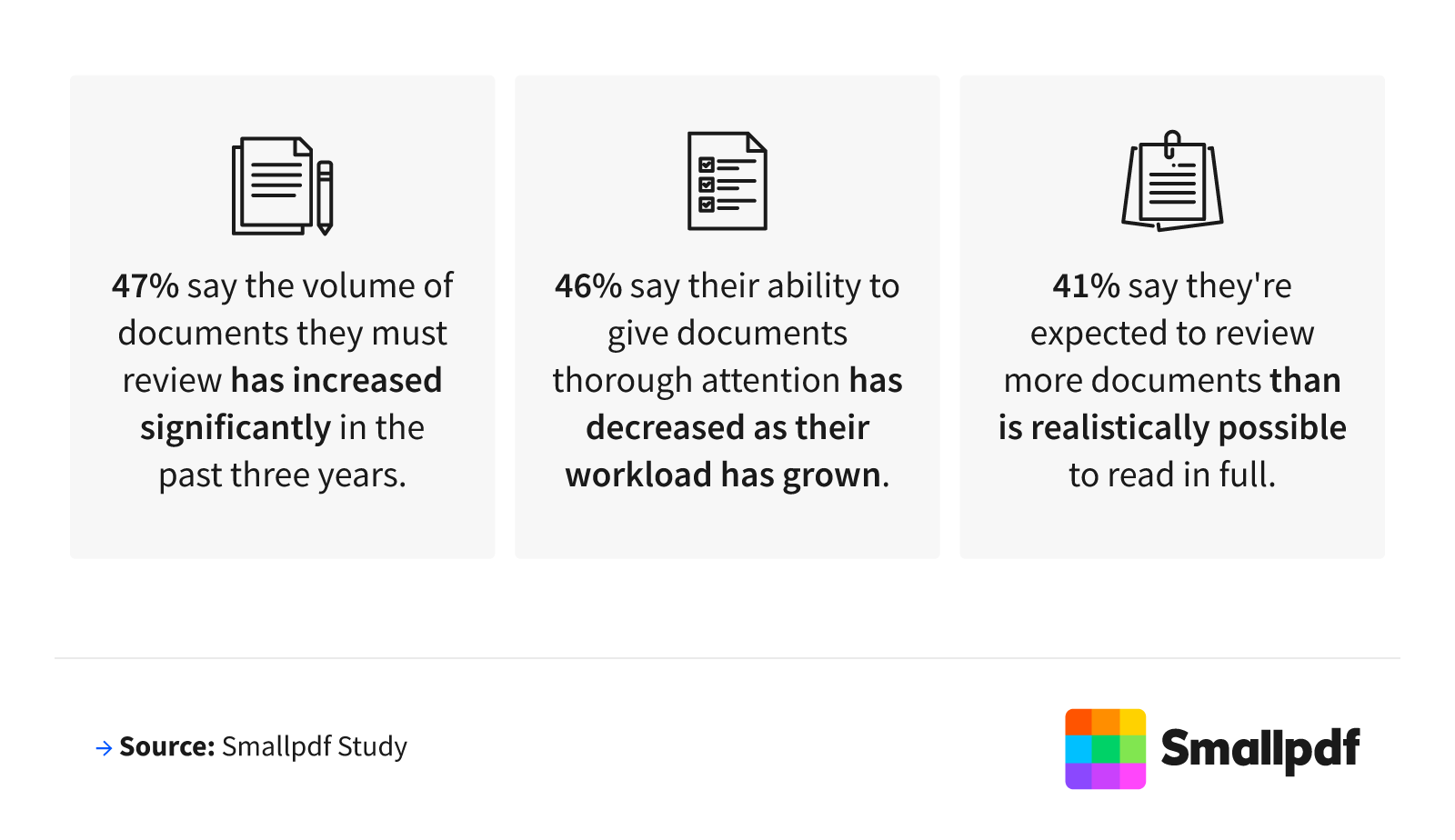
The Cost of Not Reading
When quick approvals become routine, the consequences can extend beyond small oversights.
Sharper Reviews, Fewer Mistakes
Better document review doesn't require an overhaul, just a few deliberate habits:
Read contracts in sections rather than all at once to avoid attention fatigue.
Use a checklist for high-stakes approvals to ensure nothing gets missed.
Set aside dedicated review time instead of scanning documents on the go.
Slowing down slightly now beats cleaning up mistakes later.
Methodology
Smallpdf surveyed 1,003 U.S.-based working professionals about how they actually read, review, and approve documents in the modern workplace. Participants spanned a range of job levels, from individual contributors (53%) and managers (32%) to senior leaders including directors, vice presidents, C-suite executives, and company owners (15%).
The sample was balanced across generations, including Gen Z (16%), millennials (54%), Gen X (25%), and baby boomers (5%). Methodology percentages not totaling 100% are due to rounding. The data was collected in April 2026.
About Smallpdf
Smallpdf makes working with documents simple, fast, and stress-free. From compressing and converting to editing and eSigning, Smallpdf helps professionals and businesses streamline document workflows and avoid common file-related slowdowns. Whether you’re reviewing contracts or sharing important files, Smallpdf helps you stay efficient and in control.
Fair Use Statement
This information may be used for noncommercial purposes only. If shared, please include proper attribution with a link back to Smallpdf.