How to Edit Bank Statements Online
Need to correct or annotate a bank statement? Smallpdf lets you make safe edits online, from fixing small errors to redacting sensitive data. This guide explains what’s allowed, what’s risky, and how to protect your file.
PDF Tips & Resources
More on Edit PDF
PDF Reading Tools & Guides
You may need to edit a bank statement PDF to correct typos, remove duplicates, or add context.
Below, we’ll show you how to make safe edits, what to avoid, and how to lock in your changes securely.
Quick Summary on How to Edit a Bank Statement Safely
You can fix small errors, add notes, or hide personal details on a bank statement PDF using Smallpdf’s online tools. Just remember to keep your original copy, make only legitimate edits, and use redaction—not rewriting—when you need to protect sensitive information.
Checklist (Before You Start)
Make sure you only edit for legitimate, personal reasons.
Keep the original statement untouched.
Decide what you need: fix a typo, add notes, or redact sensitive info.
If the file is scanned, run OCR first so you can edit text.
Use Redact PDF when removing account numbers or addresses.
Save the updated version with a new filename.
Never submit altered statements for official purposes.
How to Edit Bank Statements: Step-by-Step Guide
You don’t need advanced software to edit a bank statement. Here’s how to edit bank statement PDFs using trusted browser-based tools.
Important: Only make edits for legitimate purposes like correcting typos or adding personal notes.
Step 1: Open your bank statement in Smallpdf Edit PDF
Go to Edit PDF
Click on "Choose Files" below to upload your bank statement from your computer or cloud
Let the file load fully before making any changes.
Make sure your statement isn’t password-protected. If it is, you’ll need to unlock it first.
Step 2: Make safe edits (text, highlights, notes)
Select the Text tool to correct typos or add notes.
Use white shapes to hide personal data (like account numbers).
Add arrows, highlights, or boxes to draw attention to key entries.
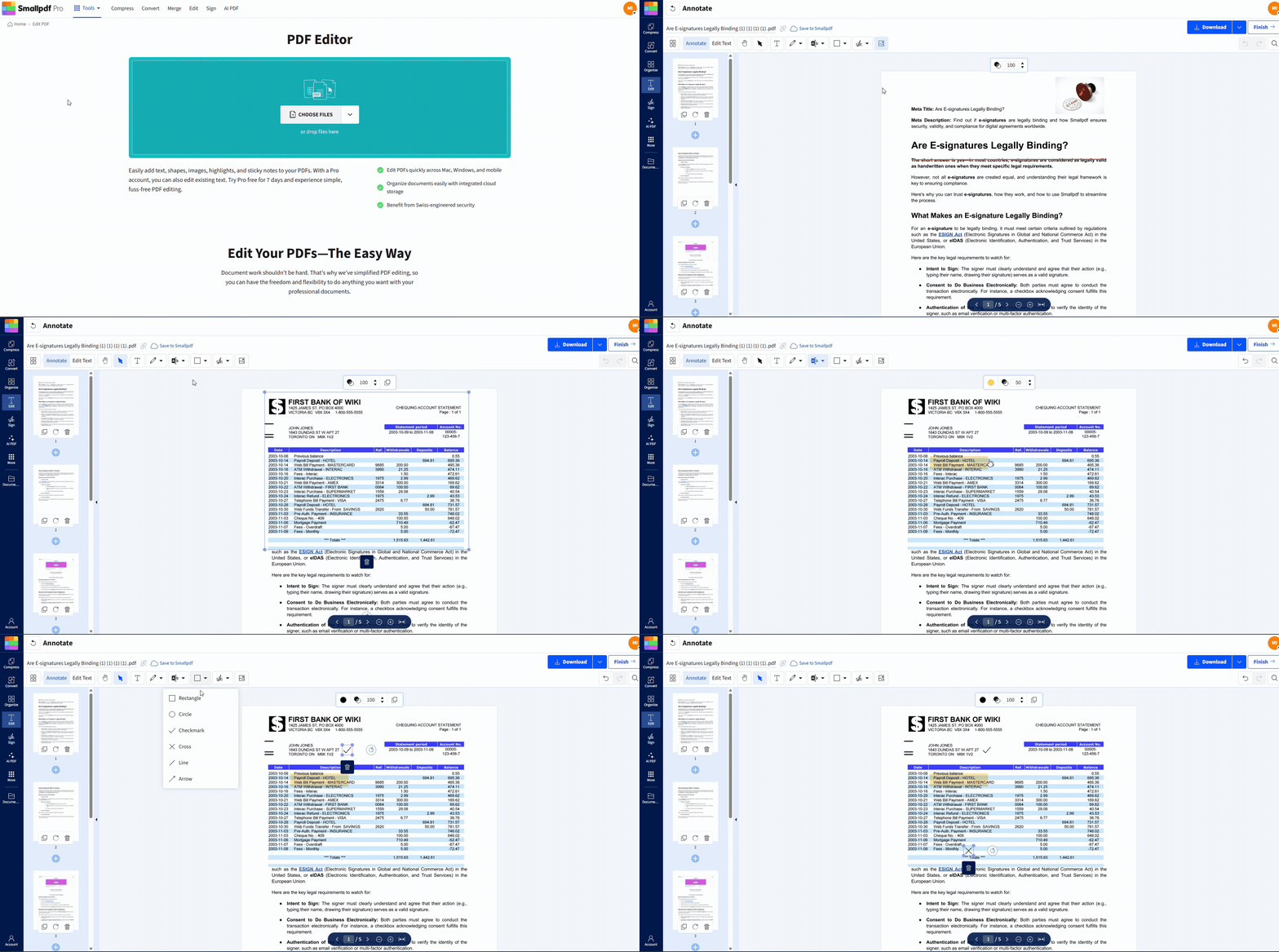
This is how to edit a bank statement without converting the file or damaging the layout.
Step 3: Redact sensitive information properly
Use Redact PDF to permanently remove account numbers or addresses.
Apply white shapes over PII (personally identifiable information) you want to hide.
Double-check that sensitive data is completely covered.
Step 4: Review formatting and save a new copy
Open the file in PDF Reader to double-check spacing and formatting.
Finalize the edit.
Save with a new filename like “BankStatement_Edited.pdf” to preserve the original.
If you plan to share the edited version, use Protect PDF to add a password.
Examples of Common Edits (and Which Tool to Use)
Different tasks call for different tools. These quick examples show which option fits your situation.
Fixing a Spelling Mistake in Your Name or Address
Open the file in Edit PDF, choose the Text tool, and type the corrected wording directly over the error. Keep the original unchanged in case you need a clean copy later.
Adding Notes for Budgeting or Tax Prep
Use Edit PDF to add small text boxes next to transactions. This helps when you’re sorting monthly expenses or preparing documents for your accountant.
Hiding Account Numbers Before Sharing the File
Use Redact PDF to remove the numbers permanently. If you prefer a visual cover, you can place a white shape over the text, but redaction is safer because the information can’t be recovered.
Highlighting Entries You Want Someone To Review
Choose the Highlight or Box tool in Edit PDF to mark specific transactions. This works well when you’re sending the statement to a business partner, bookkeeper, or support team member.
Working With a Scanned or Photo-Based Statement
If your statement is an image, run it through PDF OCR first. This converts the picture into real, selectable text so you can fix errors or add notes without retyping the whole thing.
Legitimate Reasons to Edit or Redact a Bank Statement
Before editing, understand these legitimate reasons. People often edit bank statements for valid purposes like:
Correcting a misspelled name before filing taxes
Adding context notes for business expense tracking
Redacting personal info in back statements, like account numbers or addresses
Highlighting items for accounting or tax prep
Combining data from multiple accounts into one document
While editing is fine for personal use, avoid making changes that could misrepresent financial data.
Editing vs Redacting a Bank Statement: What’s the Difference?
Many people search for “edit bank statement” when they need redaction. Here’s the key difference: Editing changes information (risky), redaction removes it (safer).
Editing: Changing account balances, transaction amounts, or dates—risky and potentially illegal
Redacting: Removing or hiding account numbers, addresses, or other sensitive data—safer for privacy
Adding notes: Including personal annotations or highlights—generally acceptable for personal records
For most privacy needs, redaction is the better choice than editing.
Editing Bank Statements on Web and Mobile (and Scanned PDFs)
Smallpdf works across all your devices. Here’s how to edit bank statements on different platforms:
Edit on the web (Smallpdf Edit PDF)
Works in any browser with no downloads required.
Offers full editing tools including text, shapes, and annotations.
Lets you upload from your computer, OneDrive, Google Drive, or Dropbox.
Edit on mobile (Smallpdf iOS/Android)
Lets you download the Smallpdf app for on-the-go editing.
Provides basic text editing and annotation features.
Syncs with cloud storage for easy access.
Scan/OCR for image-based statements (Smallpdf OCR)
Uses OCR (Optical Character Recognition) technology for scanned statements.
Converts image text to editable format before making changes.
Delivers the best results with clear, high-contrast scans.
Risks of Editing Bank Statements (and How Banks Detect Tampering)
Banks now use AI to detect even minor alterations. Editing bank statements is legal only when used for personal or professional clarity, not misrepresentation.
How banks detect tampering:
AI-driven detection software analyzes font inconsistencies.
Metadata anomalies reveal editing history.
Forensic analysis checks for kerning and spacing irregularities.
Serious consequences include:
Falsifying a statement is illegal and could lead to fines or prosecution.
Edited files may lose metadata used for official validation.
Some institutions may reject PDF statements that show signs of modification.
Always label edited versions clearly (e.g., “For Personal Reference”). If needed, lock your edits using Protect PDF before sending.
Is It Legal to Edit a Bank Statement PDF?
It depends on your intent and use. Editing a bank statement for personal use, like correcting errors or adding notes, is perfectly legal.
DO use edited statements for:
Personal record keeping and organization
Adding notes for tax preparation
Highlighting transactions for bookkeeping
Correcting obvious typos in your personal copy
DON’T use edited statements for:
Changing balances or transaction amounts
Submitting to banks, employers, or legal entities
Loan applications or financial verification
Any form of misrepresentation
If in doubt, use the bank’s original document for anything official.
Final Thoughts and Safe Next Steps
Remember these key points when editing bank statements:
Always save the original, and don’t overwrite it.
Use clear labeling like “Personal Reference Only.”
Stick to redaction over editing when possible.
Never submit altered documents for official purposes.
Ready to make legitimate edits? Edit Bank Statement Online for Free with Smallpdf’s trusted tools.
Why do banks warn about editing bank statements?
Because even small changes to balances or transaction records can be seen as misrepresentation. Editing for personal organization is fine but avoid changing anything that alters how the bank originally recorded the information.
Frequently Asked Questions
Can I edit a bank statement for official use?
No. Any edit that changes balances, dates, or transaction details shouldn’t be used for banking, employment, legal, or verification purposes. For anything official, always submit the original version issued by your bank.What’s the safest way to hide account numbers or personal details?
Use a dedicated redaction tool, such as Redact PDF, to remove sensitive information permanently. White boxes cover text visually, but redaction removes it from the file so it can’t be recovered.Can I edit a scanned bank statement?
Yes. If your statement is image-based, run it through OCR first so the text becomes editable. After that, you can fix typos, add notes, or redact information as needed.Does Smallpdf keep a copy of my bank statement?
Files are processed securely and removed automatically after one hour. For more details on encryption, storage, and deletion policies, you can visit the Trust Center.Make quick statement edits and updates in seconds with Pro