How To Open PDF in Chrome
Learn how to open PDF in Chrome quickly and reliably, change your default viewer, and fix common issues that stop PDFs from opening in your browser.
More on Smallpdf Extensions
PDF Sharing Tool & Guides
Document Workflow Guides
Chrome comes with a fast, built-in PDF viewer that opens files right in your browser—no extra software, no delays. Whether your PDF is saved on your computer or you’re opening it from a link, Chrome can handle it in a click.
This guide shows you how to open PDFs in Chrome, change your default viewer on Windows or Mac, and fix common settings that cause files to download instead of display. You’ll also pick up quick tips for zooming, searching, copying text, and working on your PDFs with online tools when you need more than simple viewing.
Open a PDF in Chrome
Chrome can open PDFs in two ways: from files saved on your computer or from PDF links on websites.
Open a Local PDF File
Right-click on a PDF.
Choose “Open with,” and select Google Chrome.
If you don’t see Chrome, click “Other...” and search for the program.
Click “Open” and that’s pretty much it.
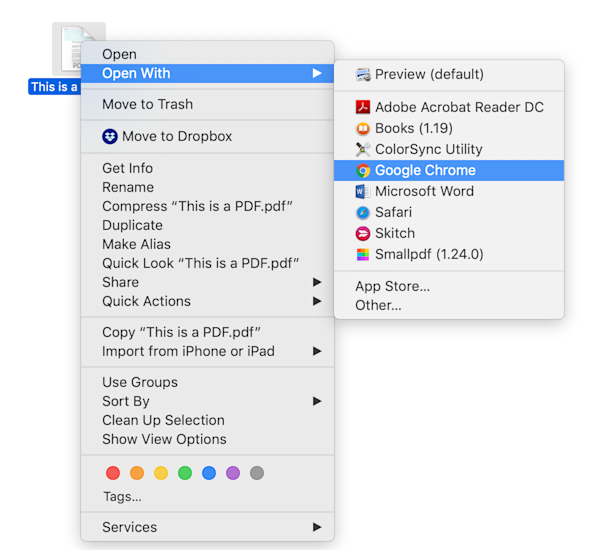
The exact wording for this flow may vary a bit on different operating systems, but rest assured it all works in the same manner.
To open multiple PDF files at once in Chrome, simply highlight all of them before doing a right-click.
Open a PDF From a Website
Click the PDF link on the website.
Chrome will automatically open and display the PDF in a new tab.
Note: If you’re browsing in Incognito mode, Chrome will prompt you to download the file instead of opening it directly.
Before You Start: Printing Kindle Books Requires a PDF
You can’t print directly from a Kindle device or app—you’ll need to convert your book to PDF first on a computer. Amazon applies digital rights management (DRM) protection to most of its e-books, preventing users from doing whatever they want with them.
Don’t worry—it’s easier than it sounds! Here’s what you’ll need to get started:
A computer (Windows, Mac, or Linux)
USB cable to connect your Kindle
Calibre software (free e-book management program)
DeDRM plugin for Calibre
Important: Remember to only print books for personal use to respect copyright laws.
Can You Print from the Kindle App or eReader?
Unfortunately, this isn’t an option. The Kindle apps available on iOS, Android, Mac, and PC are designed solely for reading and managing your e-book library. Because of DRM protection on most Kindle books, these apps do not give users the ability to print e-books directly.
How to Print a Kindle Book (Step-by-Step)
Publishers use DRM technology to control how their digital content is used and distributed. Most Amazon Kindle books come with DRM protection, which prevents unauthorized copying and sharing.
This means you cannot print a Kindle book until its DRM has been removed. Follow these steps to print Kindle books:
Connect your Kindle to your computer via USB cable and wait for it to appear as a drive.
Navigate to your Kindle’s Documents or Content folder to locate your book files (they’ll have .azw or .azw3 extensions).
Download and install Calibre (free e-book management software) and add the DeDRM_tools plugin to remove copy protection.
Import your Kindle book into Calibre and convert it to PDF format using the built-in conversion tool.
Open your new PDF file and print it using any PDF reader, adjusting settings like duplex printing and paper size as needed.
Alternative: Use Kindle for PC/Mac to Capture Pages
If you prefer not to connect your Kindle device directly, there’s another method using the desktop Kindle app:
Download and install the Kindle for PC or Mac app from Amazon.
Sign in with your Amazon account and download the book you want to print.
Open the book in the app and navigate to the pages you need.
Use your computer’s “Print to PDF” function (available in most operating systems) to save pages as a PDF file.
Print the resulting PDF using your preferred settings.
Edit and Convert PDFs Online With Smallpdf
If you prefer to just have one window open, whether you’re looking at one PDF or 30, Chrome is the way to go.
Need to do more than just view? Smallpdf tools work right in your browser and offer capabilities like:
Edit text and images directly in your PDFs.
Add electronic signatures with our Sign PDF tool.
Convert between formats: PDF to Word, Excel, PowerPoint, and more.
Compress large files to reduce file size.
Browse our full tool list to see what’s possible. If you need more advanced features or want unlimited tasks, you can try Smallpdf Pro, which comes with a free 7-day trial.
Smallpdf also has a free Chrome Extension that allows you to access our free tools directly from your PDF opened in Chrome.
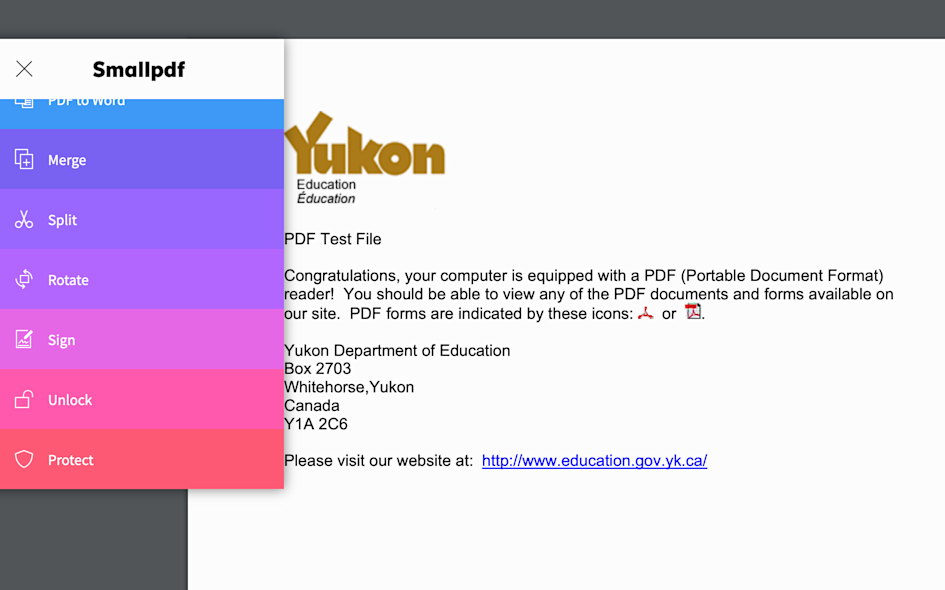
Download Chrome Extension
If you’re looking at a contract that needs to be signed, our Sign PDF tool helps you create and place electronic signatures in just a few clicks. Join the millions of users who have installed the Chrome extension and work on-the-go with PDFs today.
Change Chrome Settings to Open PDFs in Browser
If Chrome downloads PDFs instead of opening them in your browser, you can change this behavior in your settings.
Open Chrome and click the three vertical dots (⋮) in the top-right corner.
Go to “Settings.”
Select “Privacy and security” from the menu on the left.
Click “Site settings.”
Scroll down to “Additional content settings” and click on PDF documents.
Select the option that says, “Open PDFs in Chrome.”
Pro tip: You can also navigate directly to chrome://settings/content/pdfDocuments to access these settings quickly.
Set Chrome as Your Default PDF Viewer
Going through those steps every time you want to open a PDF in Chrome is a pain—and it’s not necessary. If you always want to read PDFs in Chrome, you can simply change the default PDF reader on your machine. It just takes a few simple steps.
How To Always Open PDF in Chrome on Windows:
Right-click on any PDF on your system.
Click “Properties,” then “Open with...”
Choose Google Chrome and hit “Ok.”
Doing this should switch the default reader.
How To Always Open PDF in Chrome on MacBooks:
Similarly, do the right-click (or control + click) on the PDF.
Click “Get Info,” then “Open with.”
Choose Google Chrome from the program list.
And this should do the trick.
Navigate and Search PDFs in Chrome
Once your PDF is open in Chrome, you’ll have access to several handy navigation tools:
Zoom in and out: Use Ctrl + and Ctrl – (or pinch on touchscreen devices).
Find text: Press Ctrl+F to search within the document.
Select and copy text: Click and drag to highlight text, then Ctrl+C to copy.
Navigate pages: Use the scroll handle on the right or click the page counter to jump to specific pages.
Explore Other PDF Options in Chrome
Chrome offers a few extra viewing controls that can help when you need a closer look at your document:
Print to PDF: Open the menu (⋮), choose Print, then select Save as PDF.
Save a PDF opened in Chrome: Click the download icon in the top-right of the viewer to save a local copy.
Rotate view: Use the rotate button in the toolbar to turn pages left or right.
Two-page view: Select the side-by-side page option when you want a wider reading layout.
Chrome keeps things simple, but its PDF features are basic. You can zoom, search, and copy text, but have limited annotation options.
If you need to add notes, highlight text, or even add shapes or images, Smallpdf has got you covered with the PDF Annotator tool.
Frequently Asked Questions: Open PDF in Chrome
How do I make Chrome my default PDF viewer?
Right-click any PDF file, select “Properties” (Windows) or “Get Info” (Mac), then choose Chrome under “Open with” and set it as default.Why won’t PDFs open in Chrome?
Try updating Chrome, clearing your browser cache, or checking your PDF settings in Chrome’s Site Settings to ensure PDFs are set to open in the browser.Can I open PDFs in Chrome on a Chromebook?
Yes! Chromebooks have built-in support for opening PDFs in Chrome—just click any PDF file or link and it’ll open automatically.Can I edit PDFs directly in Chrome?
Chrome allows basic text selection and copying, but for editing you’ll need tools like Smallpdf’s Chrome extension for full editing capabilities.How do I stop Chrome from downloading PDFs automatically?
Go to Chrome “Settings,” then choose “Privacy and security.” Select “Site settings,” scroll to “Additional content settings,” and click on “PDF documents.” Choose “Open PDFs in Chrome” instead of downloading the file.View PDFs in Chrome, then convert or edit them using Smallpdf Pro