The Real Estate Paperwork Problem
Learn how closing documents are burning out pros and confusing buyers, and what can be done about it.
Buying or selling a home is already one of life's most stressful milestones. But behind every closing is a mountain of paperwork that many professionals say is harder than it needs to be.
Smallpdf commissioned this study to better understand how document workflows are affecting real estate professionals and homebuyers alike. As a company focused on simplifying PDF management, editing, and eSigning, Smallpdf wanted to explore whether paperwork friction is quietly slowing down deals.
To find out, Smallpdf surveyed 151 U.S. real estate professionals and 850 homeowners about their experiences with closing documents. The findings reveal how administrative burden may be one of the biggest bottlenecks in today's transactions.
Key Takeaways
3 in 4 real estate professionals say closing paperwork is a major contributor to burnout.
Real estate professionals spend an average of 6.5 hours per week on closing documents.
36% of real estate closings are delayed each month due to document errors.
53% of real estate professionals have considered leaving the profession due to the burden of document management.
The average real estate transaction requires 3.3 document revisions before the closing is finalized.
Nearly half of homebuyers (45%) signed documents they didn't fully understand.
1 in 10 homebuyers discovered an error in their paperwork after they had already signed.
Closing Chaos: Why Paperwork Is Slowing Down Deals
Even smooth transactions can unravel when documents pile up. For many agents, brokers, and transaction coordinators, paperwork management has become a major challenge.
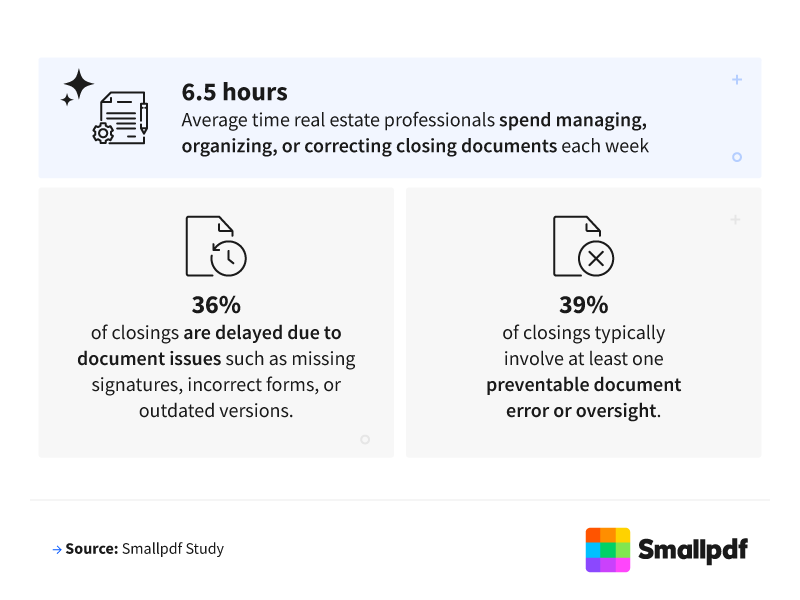
Real estate professionals typically spend an average of 6.5 hours per week managing, organizing, or correcting closing documents. Each transaction requires an average of 3.3 document revisions before everything is finalized, adding repeated back-and-forth to an already tight timeline.
The most common reasons why documents require corrections are:
Missing or incorrect signatures: 21%
Poor communication between parties: 20%
Lender-side errors or last-minute changes: 14%
Document errors are more than minor inconveniences. More than a third of closings (36%) were delayed by issues such as missing signatures, incorrect forms, or outdated versions, and 39% involved at least one preventable document error or oversight.
Nearly three-quarters (74%) had experienced a client backing out of a transaction — or seriously considering it — because of confusion, frustration, or delays tied to closing documents. Of those, 52% said it has happened more than once.
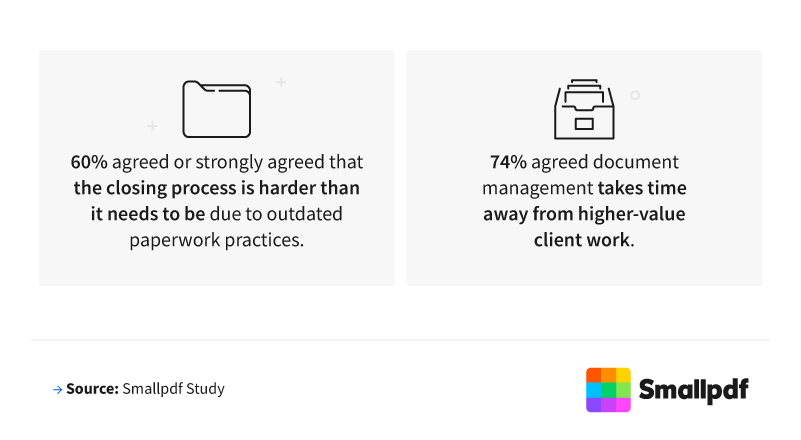
A majority (75%) said paperwork complexity increases their feelings of stress and burnout, and 60% said the closing process is harder than it needs to be. When asked what would help most to reduce their document workload, they pointed to these fixes:
A single centralized platform for all closing documents: 36%
Automated error-checking before submission: 34%
Broader acceptance of eSignatures/remote notarization: 32%
Document management has become such a burden that 53% of professionals have considered leaving the industry. For teams handling multiple contracts, even small improvements in version control, error detection, and signature collection can save hours each week, reducing both the risk of costly delays and worker burnout.
Top Barriers to Wider Adoption of eSignatures
According to real estate professionals, the biggest roadblocks to eSigning closing documents are:
State or local legal requirements mandating wet signatures or in-person notarization: 43%
Lender requirements that do not yet accept eSignatures: 40%
Client discomfort or unfamiliarity with digital signing: 40%
Title company or escrow limitations: 33%
Technology access or reliability issues: 29%
The Homebuyer Signing Experience
For buyers, closing day should feel exciting. Instead, many described it as overwhelming and confusing.
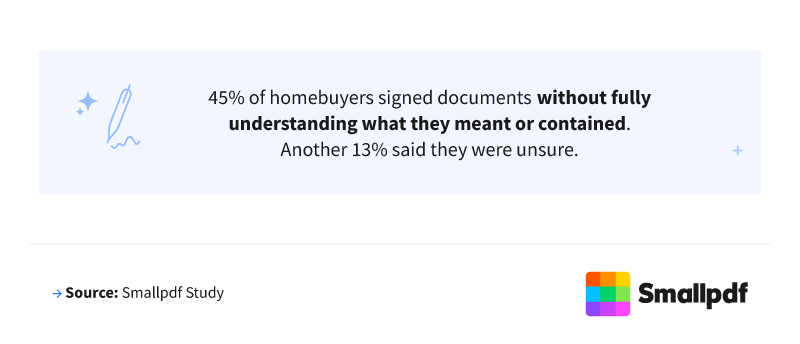
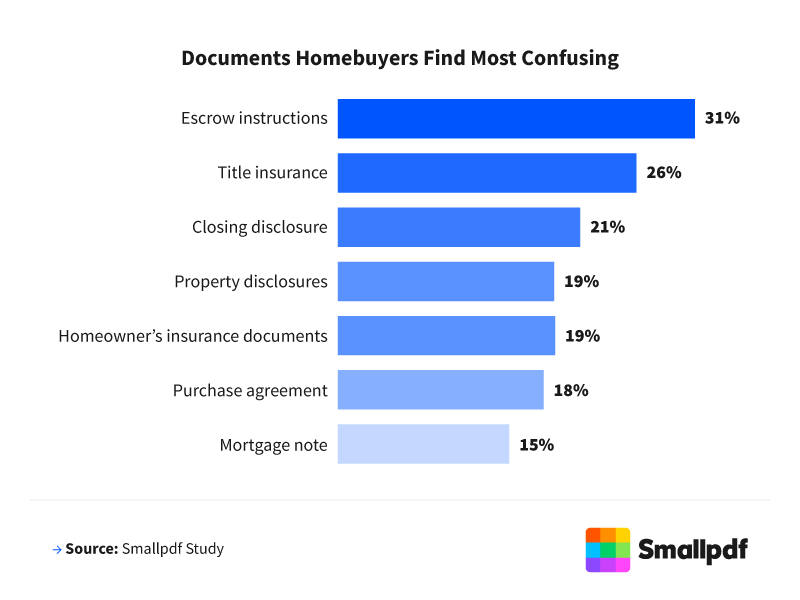
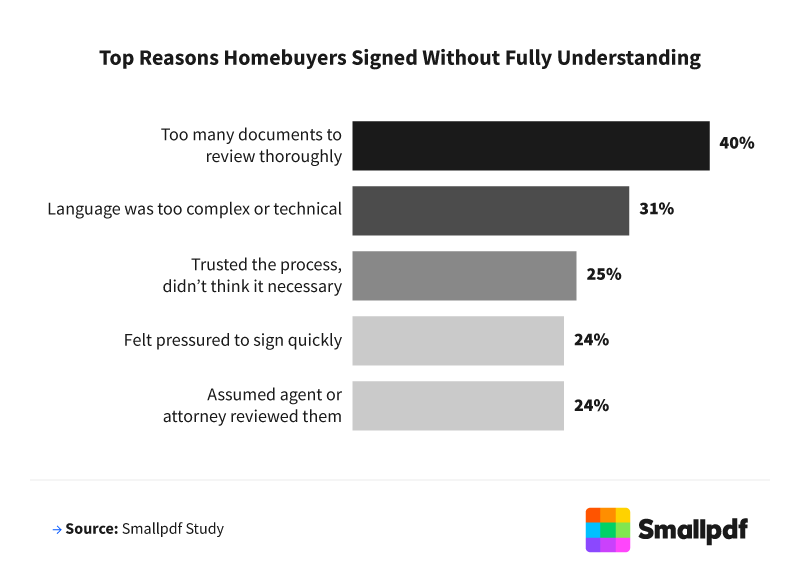
Nearly half of homebuyers (45%) admitted they signed closing documents they didn't fully understand, and 24% felt pressured to sign quickly. Escrow instructions stood out as the most confusing document in the closing packet, followed by title insurance.
Homebuyers spent an average of 7 hours reviewing, signing, and managing closing documents, but they actually read only 61% of documents during closing. About a quarter of buyers (24%) said they signed without understanding because they assumed their agent or attorney had already reviewed everything.
Document overload can overshadow what should be a milestone moment. More than one in four buyers (27%) described the paperwork aspect of buying a home as very or extremely stressful.
Errors, Overload, and the Call for Simpler Documents
Even after the ink dries, paperwork problems can linger. Many buyers discovered issues only after it was too late.
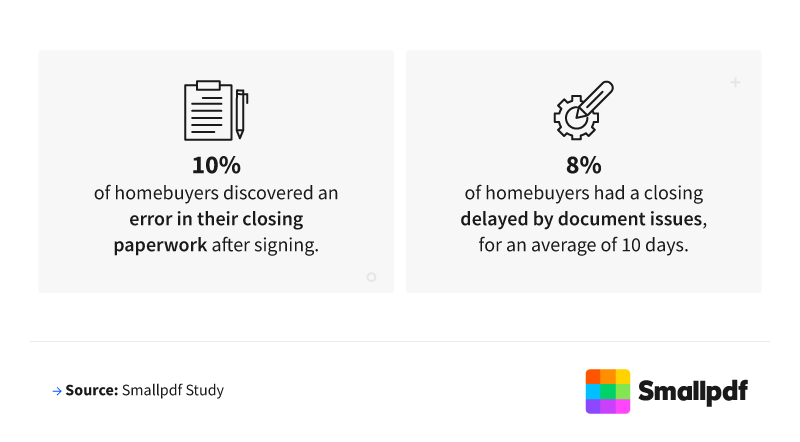
One in 10 homebuyers found an error in their closing paperwork after they had already signed. Unexpected fees showing up in documents caught 16% of buyers off guard, adding another layer of frustration.
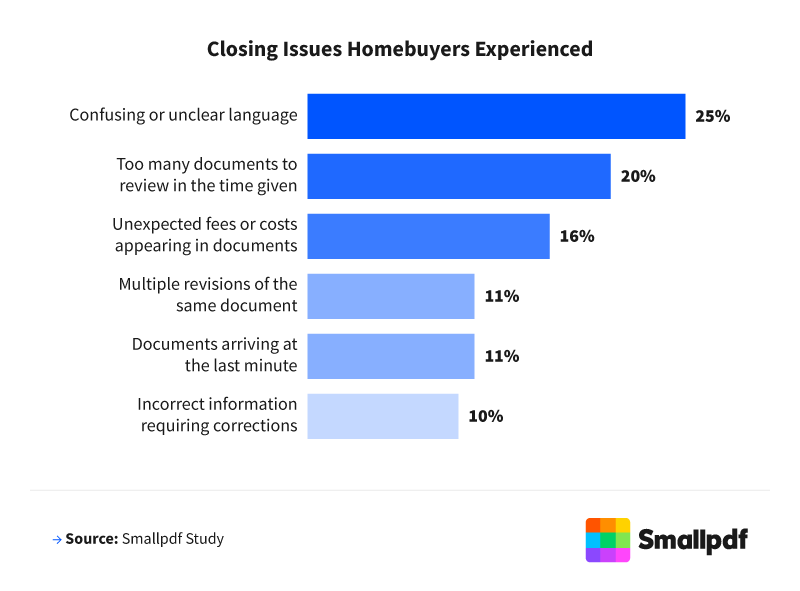
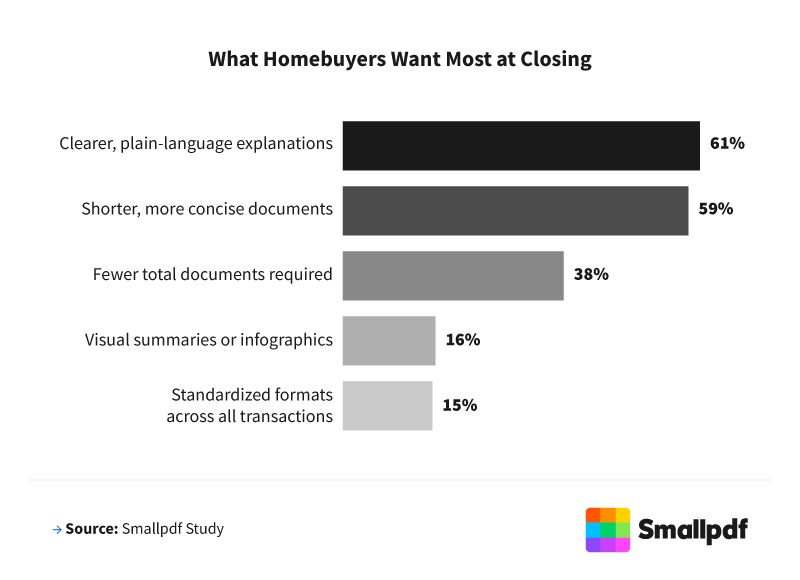
Overall, 76% said there was simply too much paperwork involved in the process, and only 56% felt confident in what they were signing. More than half (62%) agreed that eSignature options made the process easier, and 81% think the closing process could be more streamlined.
How to Reduce Closing Friction
Real estate teams can reduce delays and stress by centralizing documents in one secure platform, standardizing templates to limit unnecessary revisions, and using automated tools to catch missing signatures or incomplete fields before submission. Expanding eSignature adoption where legally permitted can also shorten timelines and reduce in-person bottlenecks.
For buyers, clarity matters just as much as speed. Providing plain-language summaries, sharing digital copies in advance, and giving clients time to review documents can increase confidence and reduce last-minute confusion. With the right tools for editing, organizing, and securely signing PDFs, real estate professionals can spend less time correcting paperwork and more time guiding clients through one of the most important decisions of their lives.
Methodology
Smallpdf conducted original research to examine how document workflows impact real estate transactions across the United States. The survey included 151 U.S.-based real estate professionals, including agents (54%), transaction coordinators (19%), and brokers (14%), as well as 850 U.S. homeowners who recently completed a home purchase. Participants answered detailed questions about document revisions, signing processes, errors, delays, and overall stress related to closing paperwork. By collecting firsthand insights from both professionals and buyers, this study captures the real-world impact of document management on today's housing market.
About Smallpdf
Smallpdf makes working with documents simple, fast, and stress-free. From compressing and converting to editing and eSigning PDFs, Smallpdf helps professionals streamline document-heavy workflows like real estate closings. With secure, easy-to-use tools, teams can reduce errors, centralize paperwork, and keep transactions moving forward.
Fair Use Statement
The information in this article may be used for noncommercial purposes only. If you share these findings, please include proper attribution and a link back to Smallpdf.
Related Articles