How To Save a Webpage as a PDF
Learn how to quickly convert any webpage to PDF on any device—perfect for offline access, note-taking, and sharing web content without internet.
PDF Sharing Tool & Guides
More on HTML to PDF
More on PDF Converter
Need to save a webpage for offline access or sharing? Here’s how to quickly convert a webpage to a PDF on any browser, iPhone, or Android.
These days, saving and sharing web pages is pretty straightforward. In most cases, you can bookmark a site on your favorite web browser. This makes it easy to return to it later or share it with a friend or colleague.
But what if you need to access a page when there’s no Wi-Fi, or you want to mark it up with notes or comments?
Annotating a web page isn’t possible—and that’s where PDFs come in. They keep everything intact, whether you need it for work, school, or just personal reference. And you’ll always have a copy, even when you have no internet access.
If you’ve ever needed to save a page to PDF for offline use or quick sharing, the process is easier than most people expect.
Save a Webpage as a PDF on Windows or Mac (Print to PDF)
The quickest way to save any webpage as a PDF is using your browser’s built-in print function. It works on both Windows and Mac computers.
To save a webpage as a PDF, press Ctrl+P (Windows) or Cmd+P (Mac), select “Save as PDF” or “Microsoft Print to PDF” from the printer dropdown, then click Save and choose your file location.
Windows steps:
Mac steps:
Save a Webpage as a PDF in Your Browser
While the print-to-PDF method works across all browsers, each browser has slightly different menu locations and options. Here’s how to save webpages as PDFs in the most popular browsers:
Google Chrome
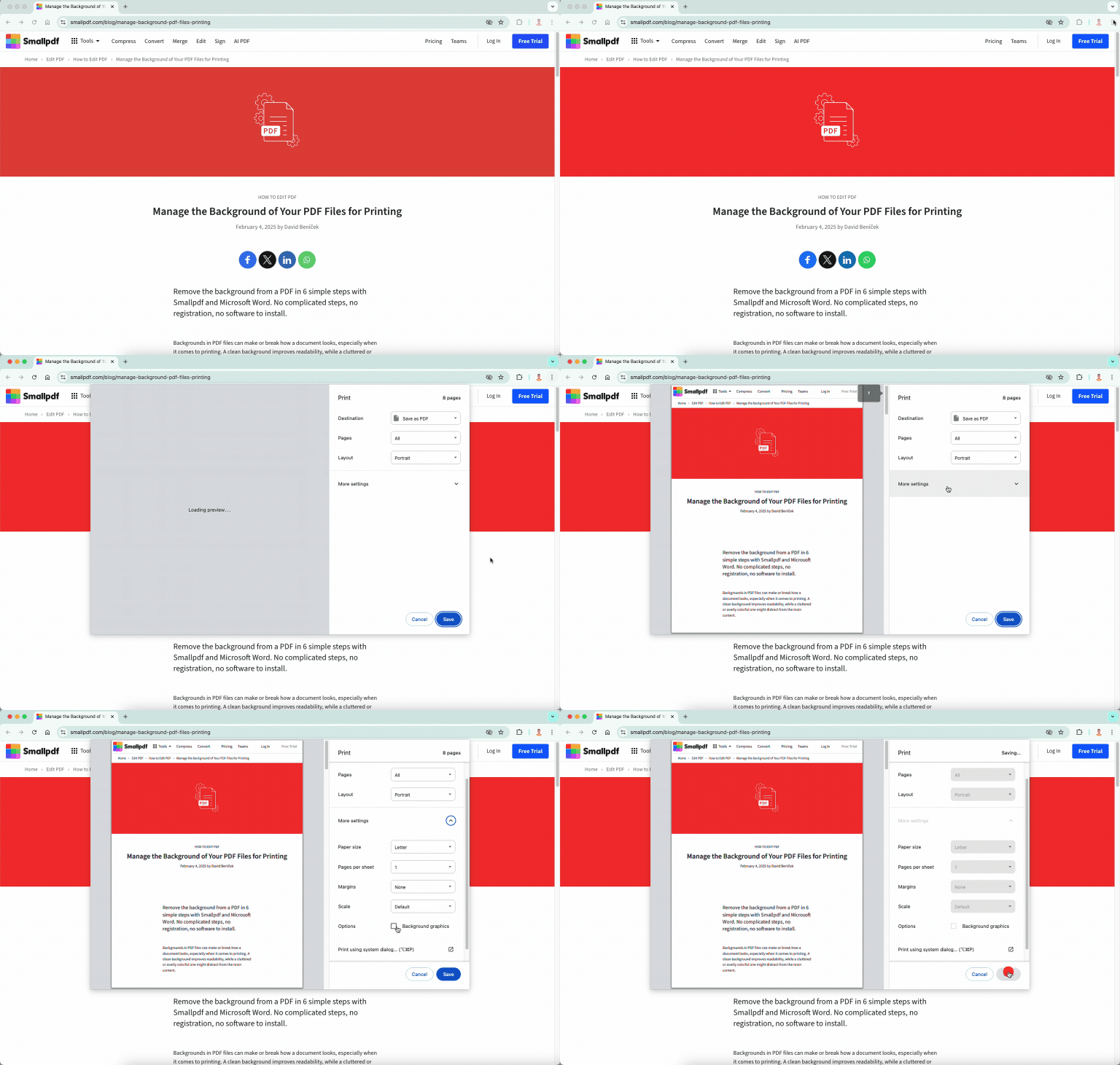
Microsoft Edge
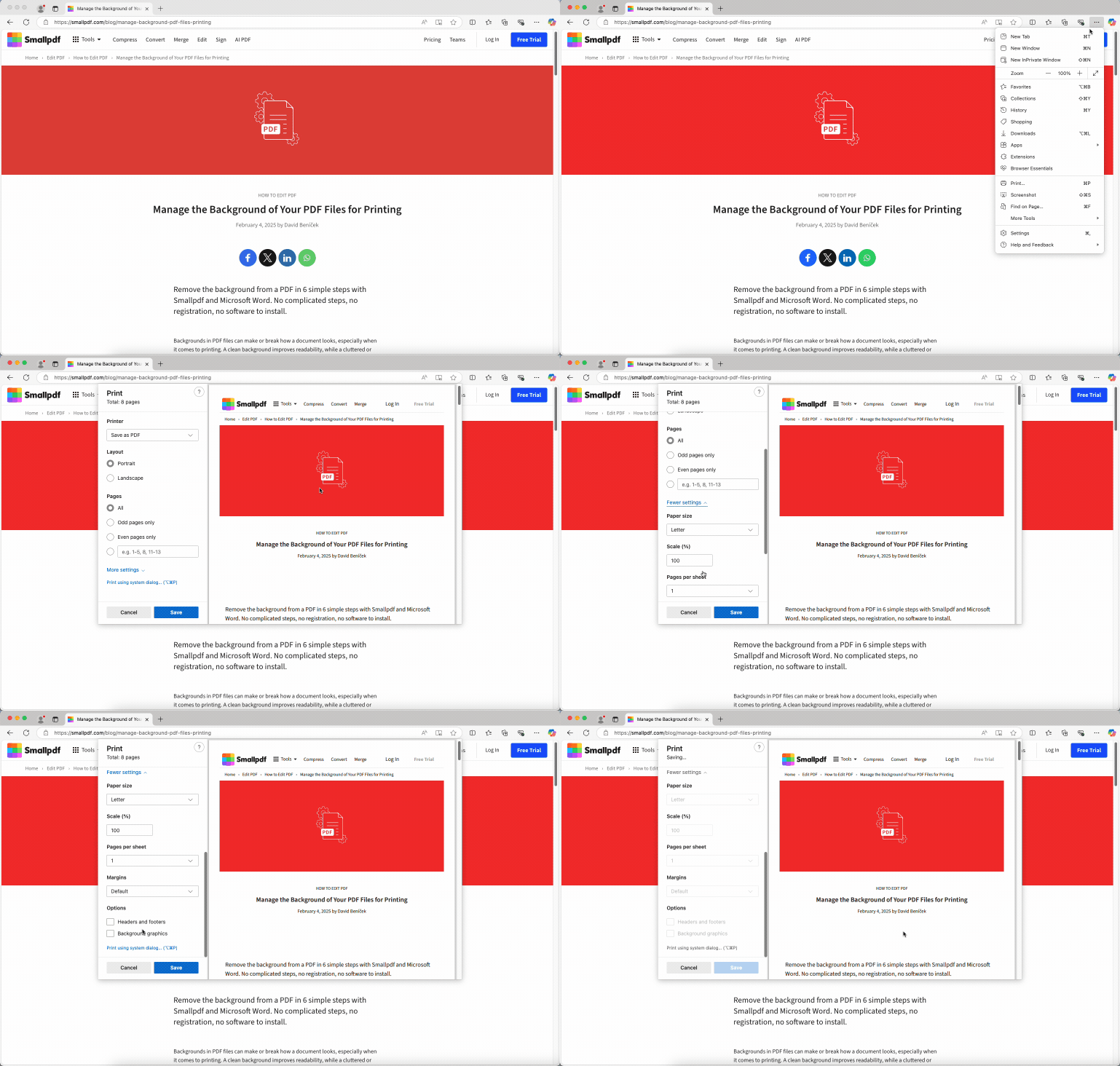
Mozilla Firefox
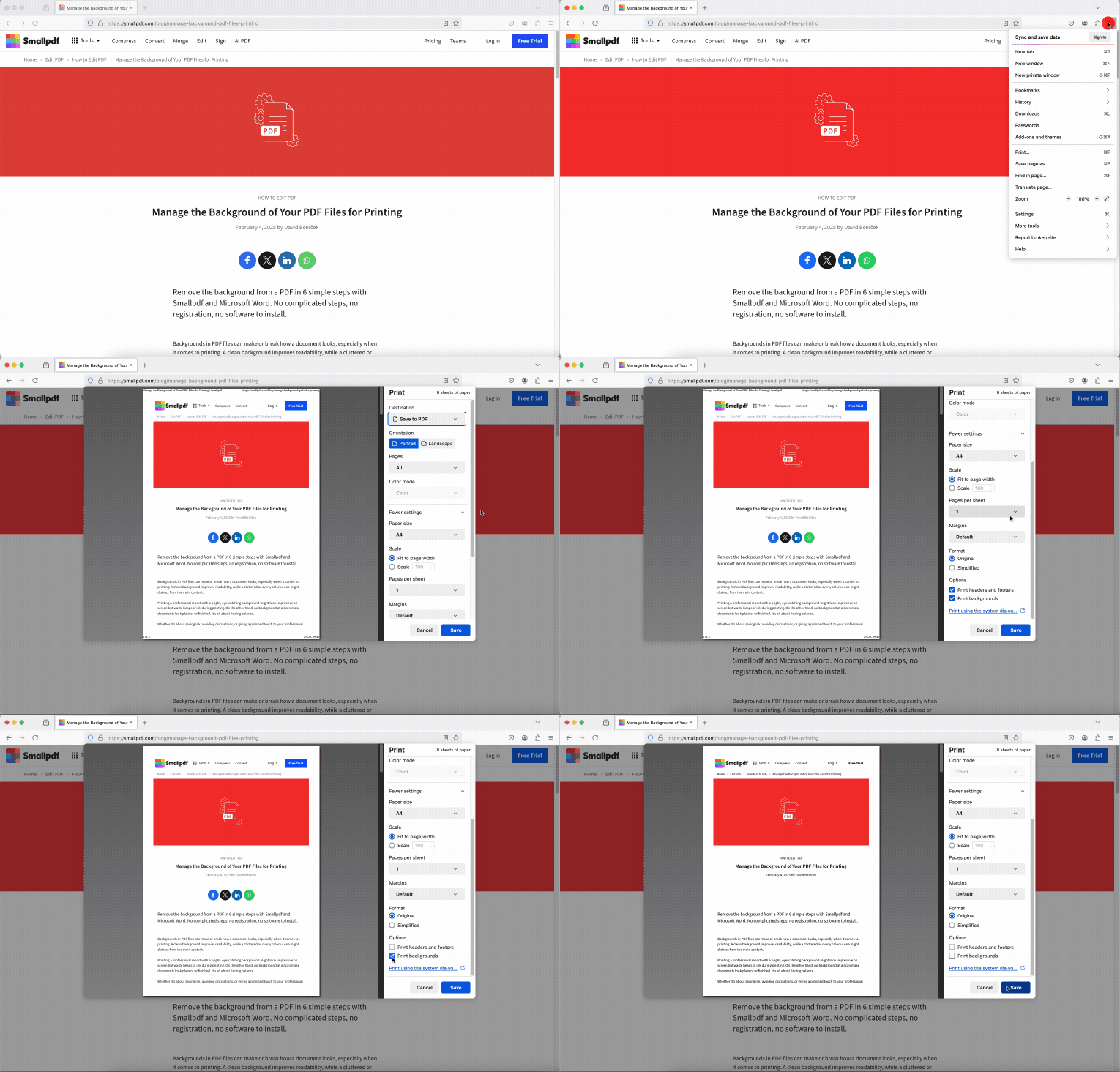
Apple Safari
Safari gives you two ways to turn a webpage into a PDF, so pick the one that’s best for you.
Using the Print Menu
Open the webpage.
Press Cmd + P (Mac).
In the Print menu, click the drop-down arrow in the bottom left.
Select “Save as PDF,” choose a location, and hit “Save.”
Using Export as PDF
With the webpage open, click “File” in the top menu bar.
Select “Export as PDF.”
Choose where to save it, then click “Save.”
Both methods work, but “Export as PDF” is the fastest if you’re using a newer Safari version. Safari’s macOS integration makes saving PDFs especially smooth.
Fix Cut-Off and Formatting Issues When Saving a Webpage to PDF
Sometimes webpages don’t convert perfectly to PDF—text gets cut off, images disappear, or formatting looks wrong. Here’s how to fix common issues:
Common problems:
Text or images cut off at page edges
Missing background colors or images
Broken layouts on multi-column sites
Pop-ups or ads included in the PDF
Solutions:
Switch to landscape orientation in print settings
Adjust scale percentage (try 80-90%)
Use print preview to check before saving
Enable “Print backgrounds” option
Use reader mode before converting (if available)
Note that you can’t save password-protected pages like online banking, email inboxes, or shopping carts as PDFs for security reasons. These pages typically block printing to protect sensitive information.
As you can see, whether you’re using Google Chrome, Microsoft Edge, Safari, or Firefox—on your laptop or mobile device—converting a web page to PDF involves following a similar process.
Before you export the webpage to PDF, don’t forget to check the customization options. Depending on your browser, you may be able to set a new page title, margins, color, sizes, and even background graphics for your PDF.
FAQ: Saving a Webpage as a PDF
How do I save an entire webpage as a PDF without cutting off content?
Switch to landscape orientation in your print settings and adjust the scale to 80-90%. Use print preview to check how everything looks before saving, and enable “Print backgrounds” if you want to keep colors and images.Why does my saved PDF look different from the webpage?
Webpages often use flexible layouts, scripts, or responsive designs that don’t always translate cleanly to a static PDF. When this happens, try switching to landscape mode, lowering the scale a little, or enabling “Print backgrounds” so images and colors appear as expected.Why is part of the page missing or cut off in the PDF?
This usually happens when the browser scales the page incorrectly or tries to force everything into portrait mode. Adjust the scale (80–90% works well), change the orientation, or use your browser’s print preview to fine-tune how the PDF will look before saving it.How do I fix layout issues when converting a webpage to a PDF?
Layout problems—shifting columns, overlapping elements, missing images—are common on pages that use complex designs. You can fix most issues by: Turning on “Print backgrounds.” Switching to landscape orientation. Lowering the scale percentage. Enabling Reader Mode (if supported) for a cleaner, simplified view.Can I remove ads or pop-ups before saving a page as a PDF?
Yes. Close any pop-ups before printing, refresh the page if needed, or switch to Reader Mode in supported browsers. Reader Mode strips most ads and extra elements so your saved PDF contains only the main content.Can I save a webpage as a PDF on my phone?
Yes! On iPhone and iPad, open Safari, tap “Share,” select “Print,” then tap “Share” again to save the PDF. On Android, open Chrome’s menu and choose “Share,” then “Print,” and finally “Save as PDF.” The steps are similar in most mobile browsers.Why can’t I save certain webpages as PDFs?
Password-protected pages like online banking, email inboxes, or shopping carts block PDF saving for security reasons. Some dynamic content or JavaScript-heavy sites might also not convert properly.What’s the difference between print to PDF and using a PDF converter?
Print to PDF captures the webpage exactly as it appears in your browser, while dedicated PDF converters might offer more formatting options and better handling of complex layouts. Print to PDF is faster and works everywhere, though.Can I edit the PDF after saving a webpage?
Yes! You can edit your webpage PDF using tools like Smallpdf’s PDF Editor to add text, images, annotations, or signatures. You can also convert it to Word for more extensive editing.How do I save multiple webpages as one PDF?
Save each webpage as a separate PDF first, then use Smallpdf’s Merge PDF tool to combine them into a single document. This is perfect for creating research compilations or reference materials.Turn webpages into PDFs easily with Pro features