TIFF to JPG - Convert TIFF to JPEG Images
Convert TIFF and TIF files to JPG online in seconds. Shrink image sizes for web, email, and storage while keeping them clear and easy to share.
More on Image Conversion Tools & Guides
More on JPG to PDF
More on PDF to JPG
If you’ve got big TIFF or TIF files from a scanner, camera, or design workflow, they can be hard to share or upload. JPG fixes that. It’s lighter, works almost everywhere, and still looks good for everyday use.
Smallpdf converter runs in your browser, handles single images and batches, and doesn’t ask you to install anything.
Convert TIFF And TIF To JPG Online
We process files with HTTPS encryption, and our servers delete them automatically after a short time, so your images don’t stay online longer than needed.
How To Convert TIFF (TIF) to JPG With Smallpdf
Converting is a simple, three-step flow. You don’t need image software or special settings.
Convert TIFF to JPG Directly
This is the fastest path when you just need clean JPGs.
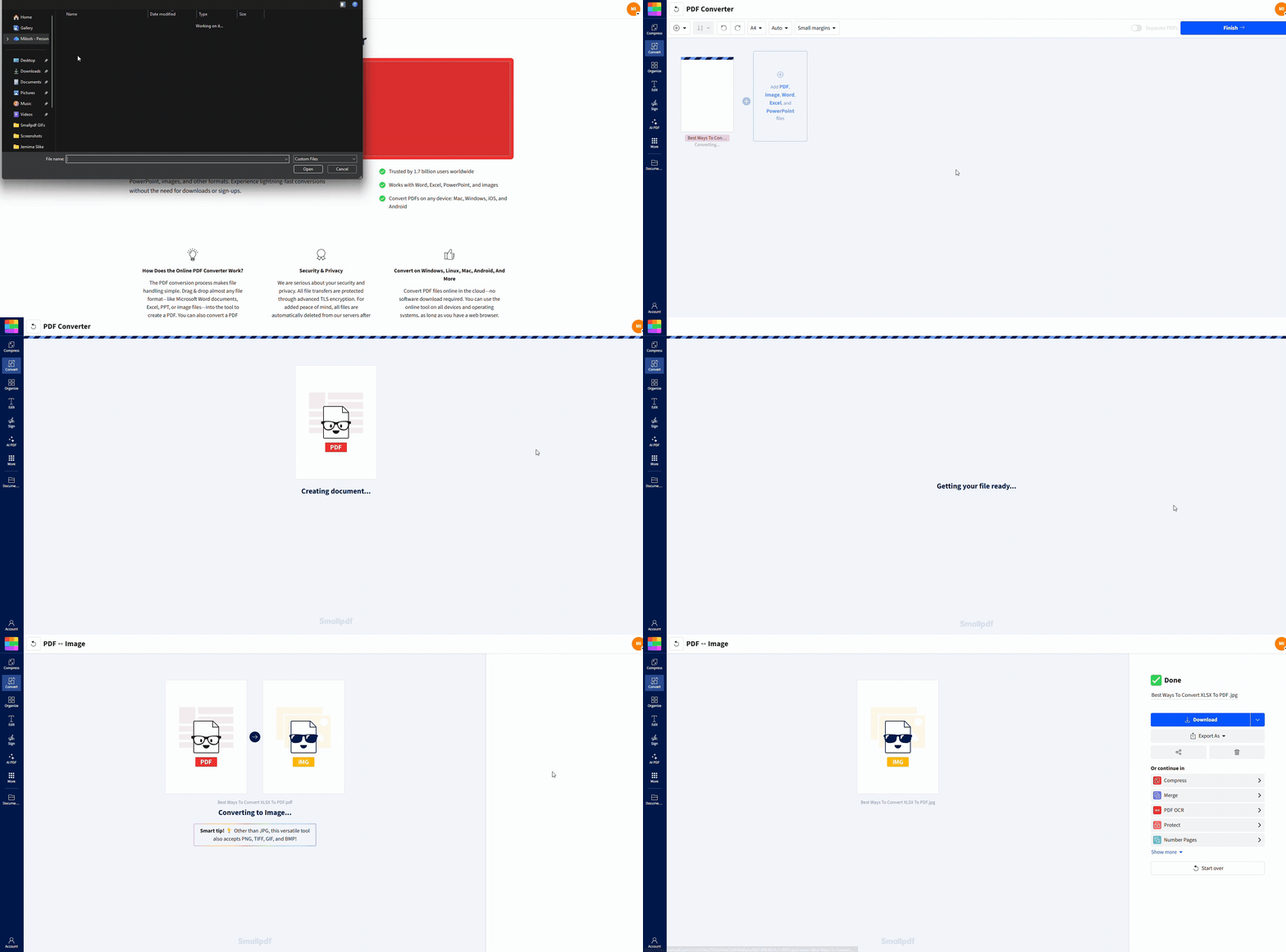
Drag and drop your TIFF or TIF files into the converter.
Click “Finish.”
Then, in “Export As,” choose “JPG.”
Download the JPG files or a ZIP if you uploaded more than one.
You’ll end up with smaller images that still look great on screens and in most everyday documents.
Convert TIFF to JPG via PDF (Fallback Flow)
If you’re already working with PDFs or a direct option isn’t available in your region, you can use this two-step path:
Convert TIFF to PDF using our Image to PDF feature.
On the result page, select “to JPG” if you see the option.
If you don’t see it, download the PDF and open our PDF to JPG converter.
Upload the PDF and save the result as a JPG.
This route still keeps things online and fast, without extra software.
Batch-Convert TIFF and TIF Files
You don’t have to convert images one by one.
Upload several TIFF or TIF files at the same time.
We process them together.
Download a ZIP with all your JPGs inside.
Free users can convert a limited number of tasks per day, while Pro users get unlimited batch work plus other features across the site.
Limits, Speed, and Supported Formats
You don’t need to tune anything, but it helps to know what the converter can handle.
File Size and Speed
Maximum file size: up to several gigabytes per file (exact limits can vary).
Typical processing time: usually under 30 seconds, even for large images.
If your internet connection is stable, the slowest part is often the upload, not the conversion.
Supported Image Formats
Our image conversion supports more than TIFF and TIF. You can also bring in:
PNG
GIF
BMP
That’s handy if you want to standardize everything to JPG for a web gallery or shared folder.
When To Use JPG Instead of TIFF
You don’t always need TIFF for day-to-day work.
Where JPG Works Better
JPG is a smart choice when you care more about speed and sharing than perfect, lossless quality:
Web sharing: JPG loads faster in browsers and galleries.
Email: Smaller attachments are less likely to bounce.
Storage: JPG often uses 5 to 10 times less space than TIFF.
Compatibility: It works on almost every phone, laptop, and app.
For social media posts, quick previews, or internal docs, JPG is usually more than enough.
When You Should Keep TIFF
TIFF is still useful when:
You’re preparing images for professional printing.
You need maximum detail for editing or retouching.
You want to store an archive master at the highest quality.
In those cases, you can keep a TIFF as your original and convert a JPG copy just for sharing.
TIFF vs JPG: What’s The Difference?
Understanding the formats helps you pick the right one for each job.
What Is a TIFF File?
TIFF (Tagged Image File Format) is a flexible image format that can:
Store images with lossless compression or no compression at all.
Hold multiple pages in one file (common in scanners and fax systems).
Keep high color depth and detail.
That’s why designers, photographers, and print teams often start with TIFF.
What Is a JPG File?
JPG (or JPEG) trades a bit of quality for a lot of saved space:
Uses lossy compression to shrink file size
Keeps images looking good for most everyday use
Works almost everywhere by default
It’s the standard format for web photos, phone camera images, and casual sharing.
Image Quality, Transparency and Security
A few things change when you move from TIFF to JPG, so keep the following in mind.
What Happens to Image Quality?
TIFF to JPG conversion compresses the image, which means some detail gets removed. In practice, for most screens and normal viewing distances, the difference is hard to spot unless you zoom in or print at large sizes.
We use tuned compression to keep images clear while making them lighter to share and store.
What About Transparent Backgrounds?
JPG doesn’t support transparency.
Any transparent area in your TIFF becomes a solid color, usually white.
If you need to keep transparency, convert to PNG instead of JPG.
You can use our PNG converter when a logo, overlay, or design needs a clear background.
How Secure Is the TIFF to JPG Converter?
We design Smallpdf to keep your files safe while you work.
Conversions run over HTTPS with TLS encryption.
Files are removed from our servers after a short period of document processing.
Our infrastructure and practices follow strict security and privacy standards.
That means you can convert scans, photos, and documents without leaving them online for long periods.
Smallpdf Features That Help Beyond Conversion
TIFF to JPG is often just one step in a longer workflow. You can chain features together without leaving your browser.
Clean up and Compress PDFs
If your images are going into a PDF:
Use PDF Compress to shrink the final document.
Merge converted JPGs into a single PDF with Merge PDF.
Edit text or add notes with PDF Editor
This works well when you scan a stack of pages to TIFF, convert to JPG, then turn those into a compact PDF report.
Work Across Devices and Cloud Storage
You can convert and manage files:
On desktop browsers for heavy work.
On phones or tablets when you’re away from your desk
Directly from Google Drive, Dropbox, or Smallpdf storage
Everything stays in sync, so you don’t have to move files back and forth manually.
Convert TIFF and TIF to JPG Fast With Smallpdf
Switching TIFF or TIF files to JPG doesn’t need to be slow or complicated. With our online converter, you can shrink file sizes, improve compatibility, and prep images for web, email, or everyday sharing in just a few clicks. Everything runs securely in your browser, and your files stay private from upload to deletion.
If you want to keep your workflow simple, from converting images to organizing, compressing, or turning them into PDFs, our full suite of tools is ready whenever you need them.
Start your free trial to unlock unlimited conversions, batch processing, and advanced features that make working with images and documents even easier.
Frequently Asked Questions
Can I convert multiple TIFF or TIF files at once?
Yes. Upload several TIFF or TIF files in one go to batch-convert them. We’ll process them together and give you a ZIP containing all the JPGs. Free users have task limits, while Pro users can run larger or more frequent batches.What’s the maximum file size for conversion?
You can usually convert files up to several gigabytes each, which is more than enough for large scans or high-resolution images. If an upload fails, check your internet connection or try splitting very large batches.Do you support multipage TIFF files?
Yes. Multipage TIFFs are split into separate JPG images. You can download each page on its own or grab them all together in a ZIP.Can I convert TIFF to JPG on mobile?
Yes. Our TIFF and TIF to JPG converter works in any modern mobile browser. Just open the site on your phone or tablet, upload your images, and download the JPG files when they’re ready.Will my EXIF or camera data stay in the JPG?
In many cases, basic EXIF data such as timestamps and camera settings stay with the image after conversion. Some specialized metadata may be trimmed during processing, especially if it isn’t needed for normal viewing.What JPG quality does Smallpdf use?
We use optimized compression settings that aim to keep the image looking clear while cutting file size significantly. It’s tuned for web, email, and everyday document use rather than extreme compression.Is there any difference between TIF and TIFF?
No. TIF and TIFF are just two extensions for the same format. Older systems used the shorter “.tif” due to three-letter limits, but both represent the same kind of image file and both work in our converter.Convert TIFF images to JPG format using Smallpdf Pro