- Home
- ›
- ›Troubleshooting PDF Tables in Google Docs: Tips and Tricks
Troubleshooting PDF Tables in Google Docs: Tips and Tricks
Format PDF tables in Google Docs without losing structure, using conversion steps and table-specific fixes that keep rows and columns aligned.
PDF Tips & Resources
More on Edit PDF
More on PDF to Word
PDF tables often break the moment they land in Google Docs. You can fix spacing, borders, and headers today with a few smart steps and Smallpdf.
When tables come from a PDF, Google Docs usually struggles with one thing: Structure. Cells turn into random line breaks, columns drift, and merged headers split into a mess.
In this guide, you’ll learn how to move a PDF table into Google Docs while keeping rows and columns intact. Then, you’ll see how to fix the most common table formatting problems using a practical workflow and Smallpdf where it helps most.
Quick Start: Pick the Right Table Fix
If you want the fastest path, start here and jump to the matching section.
| Your Goal | Best Starting Point | Why It Works |
|---|---|---|
| Edit the table (numbers, columns, totals) | Convert PDF to Excel, then open in Google Sheets/Docs | Spreadsheets hold table structure best |
| Edit text and keep a clean table layout | Convert PDF to Word, then open in Google Docs | Docs handles DOCX tables better than pasted PDF text |
| Table is scanned or not selectable | Use OCR during conversion | OCR creates real text you can place into cells |
| Table looks fine, but alignment is off in Docs | Use Table properties fixes | You can standardize widths, padding, and borders fast |
Quick Fix Checklist for PDF Tables in Google Docs
Before you redo anything, try these table-specific checks. Most broken tables come from one of these.
Confirm the PDF table is selectable text, not a scan. If you can’t select text, you’ll need to use OCR (Optical Character Recognition).
Avoid copying directly from a PDF viewer into Google Docs. Convert first, then copy from Word or Excel.
Open “Table properties” and set a consistent cell padding and alignment across the whole table.
Use “Distribute columns” after conversion to remove uneven column widths.
Fix merged headers early. If headers break, the rest of the table usually follows.
Reapply borders last. Borders hide spacing problems until you print or export.
If the table spans pages, turn the top row into a pinned header row.
How To Troubleshoot PDF Tables in Google Docs: Step-by-Step Guide
This is the most reliable workflow for tables you need to keep editable.
Step 1: Decide If You Need an Editable Table or a Visually Good-Looking Table
If you need to sort, calculate, or move columns around, treat the table like data and convert to Excel first.
If you only need to make light edits and keep the table layout readable, convert to Word and finish in Google Docs.
If you only need the table to look correct, you can also keep it as an image and place it in your doc, but you won’t be able to edit cell content.
Step 2: Convert the PDF Using a Table-Friendly Format in Smallpdf
Use Smallpdf PDF to Word for document-style tables, or Smallpdf PDF to Excel for data-heavy tables.
Upload from your device, or pull the file from Google Drive, Dropbox, or OneDrive, then run the conversion and download the result.
Step 3: Open the Converted File in Google Docs
In Google Docs, go to “File” > “Open” > “Upload,” then select the converted DOCX or XLSX.
Google will convert it into an editable document, and the table usually comes through with far fewer structural issues than a direct paste.
Step 4: Use Table Properties To Standardize the Table
Click inside the table, then open “Table properties” from the right-click menu or from “Format” > “Table” > “Table properties.”
This is where you fix most of the weird table problems like padding, alignment, border thickness, and row height.
Step 5: Export Cleanly When You’re Done
If you need to send it as a PDF again, export from Google Docs and compress afterward if the file gets large. Keep your final pass focused on page width, margins, and header behavior so the table stays readable.
Convert a PDF Table So It Stays a Table
Conversion is the difference between a table and a pile of text. Here’s how to choose the right path.
Convert PDF to Word for Readable Tables in Docs
Pick this route when the table is part of a report, proposal, or contract, and you care about layout.
Open Smallpdf PDF to Word and upload the PDF. Use the PDF to Word area below to add your file and start converting it.
2. Download the DOCX once conversion finishes.
3. Upload the DOCX into Google Docs and review column widths and cell padding.
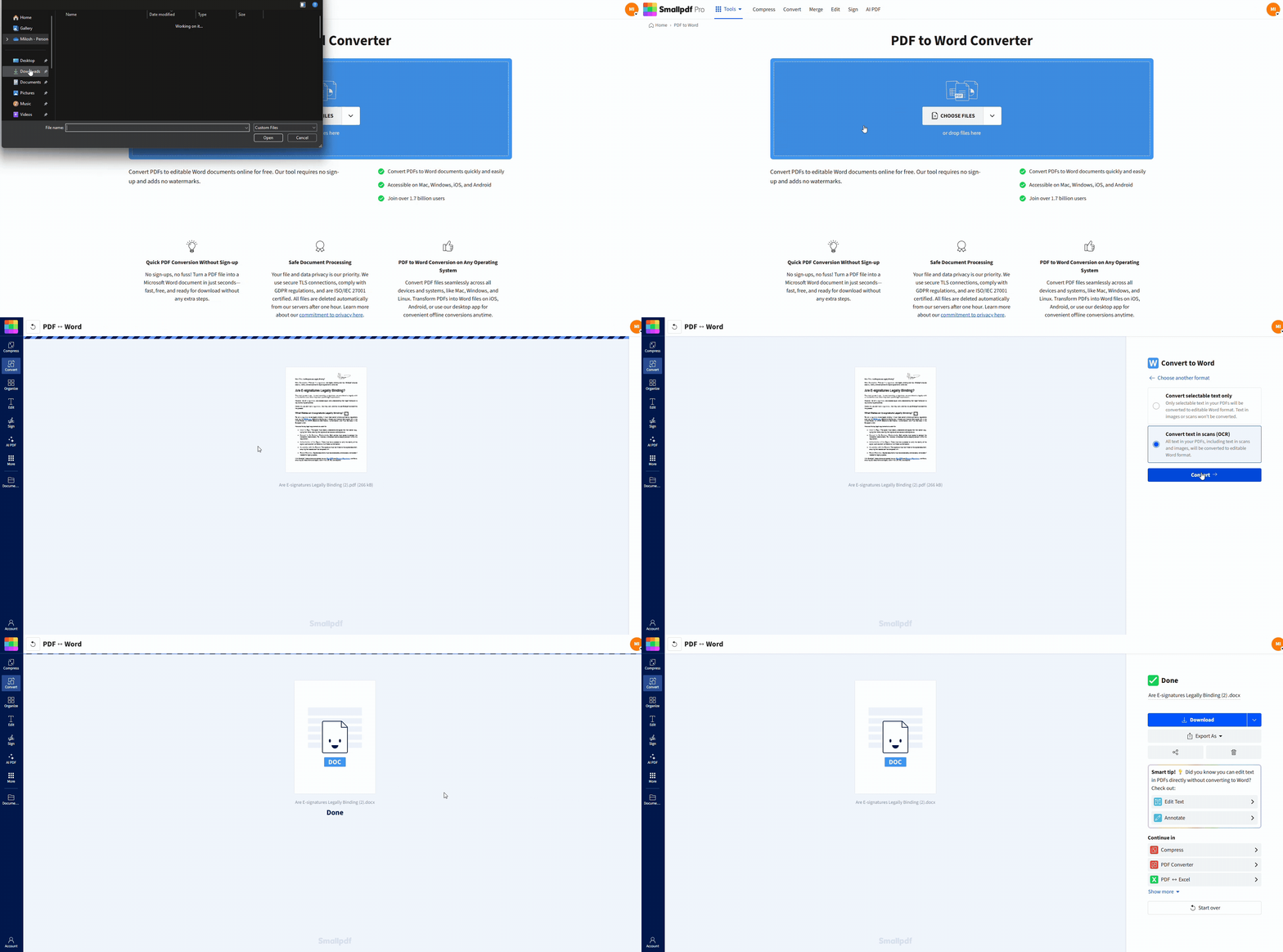
If the PDF table has merged headers, check those first. They’re usually the first thing to break.
Convert PDF To Excel for Data-Heavy Tables
Pick this route when the table is mostly numbers, line items, or anything you’ll filter and sort.
Convert the PDF to Excel. Upload your file in the PDF to Excel area below to extract the data into a spreadsheet.
2. Open it in Google Sheets first to confirm the structure.
3. Copy the table into Google Docs only after it’s clean.
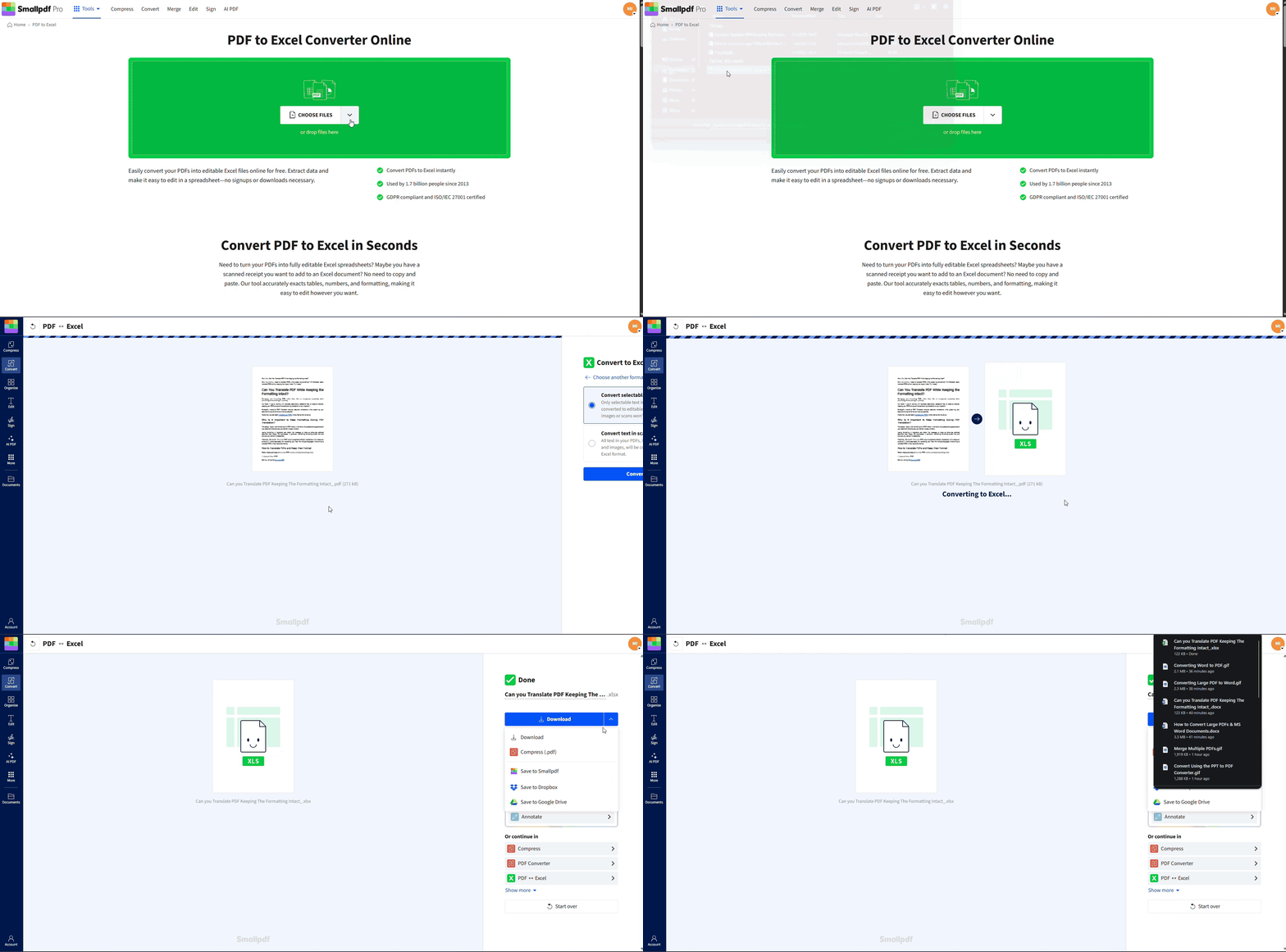
This avoids the classic problem where Docs tries to wrap long numbers and breaks the grid.
Use OCR for Scanned PDF Tables
If the PDF table is a scanned image, Google Docs can’t preserve the structure without text recognition.
When converting a scanned PDF with Smallpdf, select the OCR option during conversion. OCR is a Pro feature, so you may see it behind a trial or plan.
After OCR, expect some cleanup. Scanned tables often need column width fixes and a quick pass for misread characters like “0” vs “O.”
Fix Table Formatting Problems Inside Google Docs
Once the table is in Google Docs, use this section like a menu. Find your issue and apply the matching fix.
1. Misaligned Columns and Uneven Spacing
This shows up when one row has extra spaces or different padding. To fix it:
Open “Table properties” and set a consistent cell padding.
Select the table, then use “Distribute columns” to normalize widths.
Remove manual line breaks inside cells. Those force odd row heights.
2. Rows Are Too Tall or Text Looks Vertically Off
This usually happens after conversion when Docs adds extra spacing. To fix it:
Set vertical alignment for the table cells to “Middle” or “Top” in “Table properties.”
Reduce paragraph spacing inside cells. Tables inherit paragraph settings.
If one row is the problem, fix that row first, then match others.
3. Borders Disappear, Look Doubled, or Don’t Print Correctly
Borders often look fine on screen and break on export. To fix it:
In “Table properties,” set border width to a real value, not zero.
Pick a border color that contrasts with the page background.
Reapply borders after you finish spacing and widths.
4. Merged Header Cells Break Into Separate Columns
Merged cells don’t always survive conversion cleanly. To fix it:
Re-merge the header cells first, then adjust column widths.
Keep header text short so it doesn’t wrap and push the grid out of shape.
If the table is complex, rebuild only the header row instead of the whole table.
5. Long Tables Lose Context Across Pages
If your table spans multiple pages, scrolling and printing become painful. To fix it:
Open “Table properties” and use “Pin header row(s),” then choose how many header rows to repeat.
Keep header rows simple. Heavy formatting increases export glitches.
Test with print preview before sending the file out.
6. Pasted PDF Content Breaks the Table Grid
This happens when you paste from a PDF viewer, and Docs tries to guess the columns. To fix it:
Convert the PDF to Word or Excel first, then copy from that file.
If you must paste, paste without formatting, then insert a new table and place values cell by cell for the smallest section only.
7. Column Widths Don’t Fit the Page
Docs will squeeze columns, wrap text, and ruin readability. To fix it:
Reduce page margins for the document section that contains the table.
Shorten content in the widest column, or split the table into two stacked tables.
If the table is wide by design, keep it in landscape by exporting that page separately.
Table-Specific Troubleshooting Checklist
Use this checklist when the table looks fine at first glance, then falls apart on export or print.
Check pinned header rows for multi-page tables.
Verify borders and spacing in print preview, not just on screen.
Scan for wrapped numbers in narrow columns, especially currency and totals.
Confirm merged headers still align with the right columns.
If the source PDF was scanned, confirm OCR didn’t misread key values.
How Smallpdf Fits Into a Table-Heavy Workflow
If you work with PDF tables often, the smoothest approach is to convert the table into the right editable format first, fix the structure, and then export it.
Smallpdf helps at the points where PDF tables usually cause problems:
Converting tables to DOCX or XLSX so Google Docs doesn’t have to guess
Handling scanned tables through OCR when the PDF has no selectable text
Keeping your files protected during transfer, with short retention and strong security controls
Security and File Handling for Table Conversions
Tables often contain invoices, pricing, employee lists, or contract terms, so security matters.
Smallpdf secures file transfers with TLS encryption, supports ISO 27001 certification, and states that files are automatically deleted after one hour of processing for most features.
Start Fixing PDF Tables in Google Docs
If your table keeps breaking, don’t wrestle with copy-paste. Convert the PDF table into a format Google Docs handles cleanly, then use Table properties to standardize spacing, borders, and headers.
Frequently Asked Questions
Why do PDF tables break when I paste them into Google Docs?
Most PDF viewers copy text in reading order, not cell order. That turns a grid into a stream of lines, so Docs can’t rebuild the columns reliably.What’s the best way to keep a PDF table editable in Google Docs?
Convert the PDF to Word or Excel first, then upload that file into Google Docs. DOCX and XLSX carry structure in a way Docs understands.Should I convert a PDF table to Word or Excel?
Use Word if you care about layout inside a document. Use Excel if you need accurate data behavior like sorting, filtering, or formulas.How do I handle a scanned table that isn’t selectable?
Use OCR during conversion so the table becomes editable text. OCR is the step that turns an image-based scan into content you can work with.Why are my column widths uneven after conversion?
One cell usually contains extra spaces, a line break, or a longer string. Fix padding first, then use “Distribute columns,” then adjust the one problem column.How do I keep table headers visible on every page?
Use “Pin header row(s)” in Google Docs “Table properties” for tables that span multiple pages.My borders look fine on screen but wrong when printed. How do I fix that?
Check border width and color in “Table properties,” then confirm in print preview. Borders can render differently between screen and PDF output.How do I preserve merged header cells from a PDF table?
Convert to Word first, then open in Google Docs and fix merges at the header row before you touch column widths.Can I extract only one table from a long PDF?
Yes, but your best results come from isolating the pages that contain the table, then converting that smaller file so the converter focuses on the right content.When should I use a table image instead of an editable table?
Use an image when layout matters more than editing, like a report snapshot or a locked statement. If you need to edit values, keep it as a real table instead.Prepare PDF files for accurate table conversion with Smallpdf Pro
Related Articles