Convert JPG to 200 KB PDF or Less
Convert JPG to PDF, then compress to get under a 200 KB PDF limit. It’s fast, free, and works on any device with no sign-up needed.
More on JPG to PDF
More on PDF to JPG
More on PDF Converter
Need a 200 KB PDF for a strict upload limit? Convert your JPG to PDF, compress it, and download a clean file in a few clicks.
A lot of portals cap uploads at 200 KB. That’s common for job forms, visa portals, school systems, and government sites. Your JPG might look small, but once it becomes a PDF, it can jump past the limit.
We’ll show you a reliable workflow using Smallpdf.
Quick Steps to Make a 200 KB PDF From a JPG
If you want the fastest path, follow this checklist.
Open JPG to PDF.
Upload your JPG from Google Drive, Dropbox, or OneDrive.
Click “Finish” to convert it to PDF.
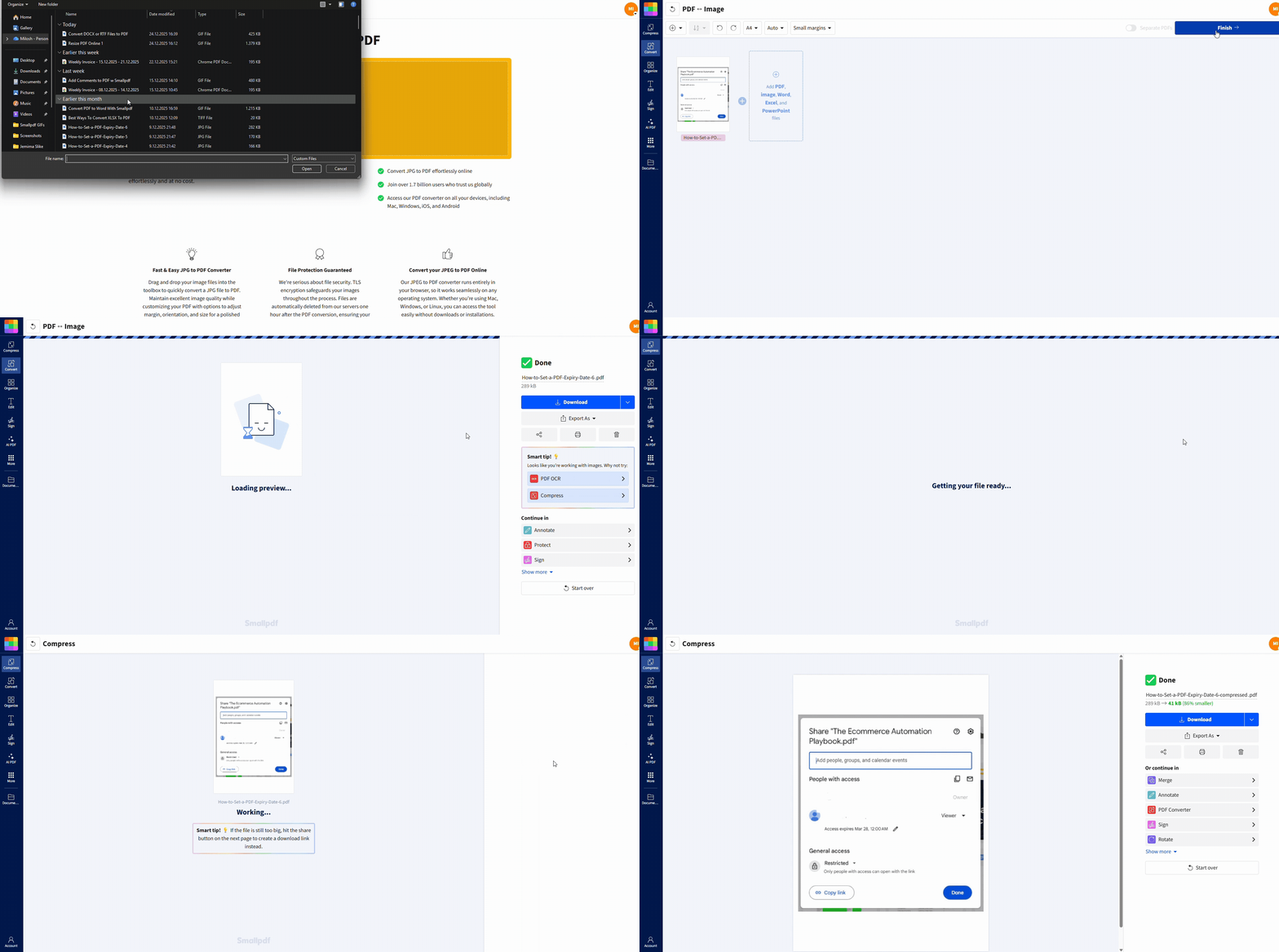
In “Export As,” choose Compress PDF.
Pick “Basic” first, then try “Strong” if needed.
Download and check file size on your device.
Convert JPG to PDF Online With Smallpdf
Start by converting your image into a PDF. This gives you a consistent format that uploads cleanly on most platforms.
Step 1: Open JPG to PDF
Go to JPG to PDF and choose where your file comes from:
Your device
Google Drive
Dropbox
OneDrive
Smallpdf also accepts common formats like PNG and TIFF, but JPG usually compresses best for tight limits.
Step 2: Upload One JPG or Multiple Images
Drag and drop your file into the page, or click “Choose Files.”
If you upload multiple images, Smallpdf turns them into a multi-page PDF. That can still work for a 200 KB PDF limit, but you’ll need stronger compression and cleaner images.
Step 3: Finish and Save Your File
Click “Finish.” Your PDF generates in seconds.
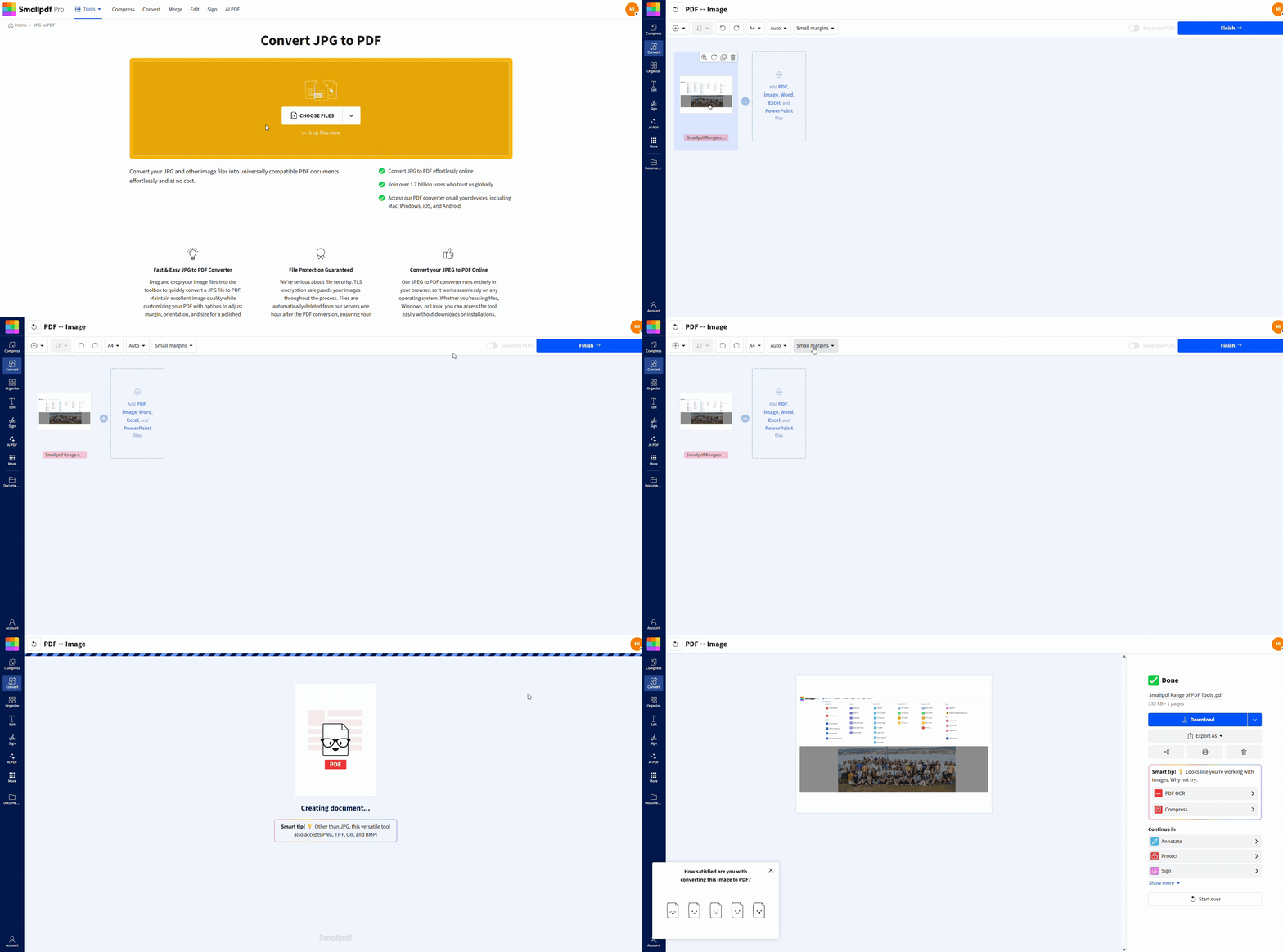
Download it, or save it back to your connected cloud storage.
Compress Your PDF Toward a 200 KB PDF Target
After conversion, compression is what gets you close to 200 KB.
Smallpdf gives you two compression levels. Pick the light one first, then step up only if you need it.
Step 1: Open Compress PDF From the Result Page
After you create the PDF, you can jump straight into Compress PDF on the result screen. You can also open Compress PDF separately and upload the PDF you just made.
Step 2: Choose the Right Compression Level
You’ll usually see two options:
Basic Compression - Good for light reductions when your PDF is only slightly over the limit.
Strong Compression - Better for strict limits like 200 KB PDF uploads. Strong compression is available with a free trial or Pro.
Start with Basic. If the file is still too large, run Strong next.
Step 3: Download and Confirm the File Size
Download the compressed PDF.
Then check the size on your device:
Windows: Right-click the file > “Properties.”
Mac: Right-click the file > “Get Info.”
Mobile: Open the file details in your Files app
If you’re under 200 KB, you’re done.
If you’re still over, use the fixes in the next section.
What Affects PDF Size After You Convert a JPG
A simple JPG can still create a big PDF. This happens for a few common reasons.
The image has very high resolution, like phone camera photos.
The image has lots of fine detail, like dense text or textures.
The file includes extra metadata.
The page size is larger than needed, with big margins.
Compression helps, but you’ll get better results when you also reduce what the PDF has to store. This matters most when you must hit a 200 KB PDF limit.
Fixes That Help You Get Under 200 KB
If Basic compression doesn’t reach the limit, don’t guess. Use a controlled set of changes.
1. Use Strong Compression for Tight Limits
Strong compression usually makes the biggest difference for image-based PDFs. It reduces image data more aggressively.
Use it when:
Your PDF is far above 200 KB.
Your JPG is a photo scan.
Your document has shading, stamps, or backgrounds.
2. Crop Extra Space Before You Compress
Blank space still costs file size, especially with scans. Cropping can cut down the pixel area that needs compression.
If your image has wide margins, try one of these options:
Crop the source image before conversion.
Convert first, then crop pages, then compress again.
A simple crop can be the difference between 280 KB and 180 KB.
3. Reduce Image Resolution Before Converting
This is the most reliable fix for stubborn files.
If your JPG comes from a camera or scanner, it may be much larger than the upload needs. Many portals display documents at screen size, not print size.
A practical target for many uploads:
Around 150 to 200 DPI for scans
A smaller pixel width for photos, instead of full camera resolution
You can do this by resizing the JPG on your device before you upload it to JPG to PDF.
4. Avoid Color If You Don’t Need It
Color adds data. If the upload only needs readable text, grayscale often compresses better.
A simple approach works well:
Convert the JPG to PDF.
Compress with Strong.
If it’s still too large, redo the JPG as grayscale before converting again.
5. Keep It to One Page When You Can
A multi-page PDF made from multiple JPGs will almost always exceed a 200 KB PDF limit unless the images are very clean and low-resolution.
If your portal allows multiple uploads, it’s often easier to:
Compress each one under 200 KB.
If you must upload one file only, keep the pages minimal and use Strong compression.
Convert Multiple JPGs Into One PDF and Still Stay Small
You can merge several images into one PDF, but you need to manage expectations.
A good rule: More pages usually mean a bigger file.
Step 1: Upload Images in the Right Order
In JPG to PDF, upload all JPGs at once.
Then drag thumbnails to reorder them. If the order matters a lot, rename files before upload:
01.jpg
02.jpg
03.jpg
Step 2: Create the PDF, Then Compress Immediately
Create the PDF first. Then open Compress PDF right away.
If you’re aiming for 200 KB PDF or less, Strong compression is often required for multi-page files.
Step 3: Check Quality Before You Submit
After Strong compression, zoom in on the smallest text. Make sure it’s still readable.
If text looks fuzzy, go back and use one of these adjustments:
Lower the resolution slightly.
Crop margins are tighter.
Convert the JPG to grayscale first.
Keep Text Readable When You Compress to 200 KB
At very small sizes, quality control matters. You don’t want a PDF that uploads but fails review.
These tips keep readability high.
Use high-contrast images. Dark text on a clean background compresses better.
Avoid shadows and gradients. They add noise that inflates size.
Don’t use screenshots of screenshots. Each generation adds blur and artifacts.
Capture documents in good lighting if you use your phone.
Keep the page straight. Skewed scans create extra edge detail.
If your file is a form or ID scan, clarity matters more than perfection. Aim for clean text first.
Make a 200 KB PDF on iPhone, Android, Mac, or Windows
The workflow stays the same on every device.
Convert and Compress in Your Browser
You can do everything in a mobile or desktop browser:
Upload JPG
Create PDF
Compress
Download or save to cloud storage
This is usually the fastest option.
Use the Smallpdf Mobile App for Quick Scans
If you’re starting from a paper document, the Smallpdf mobile app helps you capture it cleanly, then export it as a PDF you can compress.
This works well for:
Receipts
Signed forms
Handwritten pages
ID scans for uploads
After you export, compress right away so you can meet the 200 KB PDF requirement.
How We Handle Security and Privacy During Conversion
If you’re compressing sensitive documents, you need to know what happens to your file.
Here’s what you can count on with Smallpdf:
TLS encryption protects the file during transfer.
Files are deleted automatically after processing, unless you choose to save them to your account.
You stay in control of downloads and sharing.
If you’re working with personal documents, avoid public Wi-Fi when possible. Download to a private device, then upload to your portal.
Convert JPG to 200 KB PDF and Upload With Confidence
If your upload limit is strict, use a workflow you can repeat. Convert the JPG to PDF first, compress with Basic, then use Strong and a few smart tweaks if you still need to push under 200 KB.
Ready to unlock advanced compression and our complete PDF toolkit? Start your free trial today and get access to Strong Compression, unlimited conversions, and 30+ professional PDF tools.
Frequently Asked Questions
Can I set an exact size like 200 KB?
You can’t type in an exact number and force it, because every file compresses differently. You can usually get close by using Strong compression and the fixes above.Why is my PDF still over 200 KB after compression?
Your JPG is probably high-resolution or full of detail. Crop margins, lower resolution before converting, and use Strong compression.Will compression make my PDF blurry?
Basic compression usually keeps text sharp. Strong compression can reduce clarity a bit, especially on small text. Always zoom in and check readability before you upload.Is it better to compress the JPG before converting to PDF?
Sometimes, yes. If your JPG is huge, compressing or resizing it first can make the final PDF much easier to push under 200 KB.Can I combine multiple JPGs and still stay under 200 KB?
Sometimes, but it depends on page count and image quality. If you need multiple pages, keep each image clean, crop margins, and expect to use Strong compression.Is my file safe while converting and compressing?
Yes. Transfers are encrypted, and files are deleted automatically after processing unless you choose to save them.Can I do this on my phone?
Yes. Use your mobile browser or the Smallpdf mobile app, then download the compressed PDF and upload it to your portal.Convert JPG to a 200 KB PDF With Smallpdf Pro
Related Articles