How To Save PDF on iPad
Save PDFs on your iPad in seconds. Use built-in iOS options for quick downloads, then switch to Smallpdf when you need extra editing and conversion.
PDF Sharing Tool & Guides
More on Edit PDF
More on PDF Converter
Saving a PDF on your iPad should feel simple, not confusing. You might grab a file from Safari, open an attachment in Mail, or turn a document into a PDF before you share it.
We’ll walk through the native iPad methods and show you where Smallpdf fits in when you need more than just a basic save.
How To Save a PDF on iPad From Safari
Safari is usually where you meet PDFs on iPad, so it helps to master this flow.
Save a PDF From Safari to Files
This method keeps your PDF in the Files app so you can move, share, and organize it later.
Open the PDF in Safari so it fills the screen.
Tap the “Share” button at the bottom (square with an upward arrow).
In the share sheet, tap “Save to Files.”
Choose “On My iPad” or a folder in “iCloud Drive.”
Tap “Save” in the top right corner.
You can now open the Files app and find your PDF in the folder you picked.
Save a PDF From Safari to Books
If you only want to read the PDF, saving it to Books is often the fastest option.
Open the PDF in Safari.
Tap the “Share” button.
Tap the “Books” icon in the share sheet.
The PDF will appear in Apple Books under your PDFs collection for offline reading.
Save a Web Page as a PDF
You can also turn any web page into a PDF for later.
Open the web page in Safari.
Tap the “Share” button.
Tap “Print.”
On the print preview, pinch out with two fingers to turn it into a full-page PDF.
Tap the “Share” button again, then choose “Save to Files” or “Books.”
How To Save PDF Attachments From Mail and Other Apps
Most PDFs on iPad also arrive through email or messaging apps.
Save a PDF From Mail
Open the email that contains the PDF attachment.
Tap the PDF so it opens in a preview.
Tap the “Share” icon.
Choose “Save to Files” to store it in the Files app, or “Books” for reading.
Pick the folder or location, then tap “Save.”
Save a PDF From Messages or Third-Party Apps
The flow is very similar across apps like Messages, WhatsApp, or cloud apps.
Tap the PDF preview in the conversation or app.
Tap the “Share” icon.
Choose “Save to Files” or another destination like Books or a cloud app.
If you do not see “Save to Files,” scroll the share sheet or tap “More” to reveal extra options.
Where Are PDFs Saved on iPad?
Knowing where your PDFs go makes everything easier later.
Files App Locations
Most saved PDFs end up in the Files app:
“On My iPad” for local storage.
“iCloud Drive” for synced storage.
“Downloads” folder if you saved from Safari without changing the location.
Open “Files,” tap “Browse,” then check these folders if you are unsure.
Apple Books Library
If you picked “Books” while saving:
Open “Books”
Go to “Library”
Switch to the “PDFs” filter
You can read, search, and organize PDFs there without using Files.
Cloud Storage Apps
Often, you save or move PDFs into:
Google Drive
Dropbox
OneDrive
If so, you’ll find them inside those apps and also inside Files under “Locations” if you have integration enabled.
How To Organize PDF Files on iPad
A little structure saves a lot of scrolling later.
Create Folders and Rename Files
In the Files app:
Tap the “folder plus” icon to create a new folder.
Give it a clear name like Invoices, School, or Travel.
Long-press a PDF and choose “Move” to place it in the right folder.
Long-press a PDF and tap “Rename” to give it a useful file name.
Use Tags to Group Documents
Tags help you group PDFs across folders.
Long-press a PDF and tap “Tags.”
Pick a color or create a new tag like “Urgent” or “To Sign.”
In Files, tap “Browse,” then “Tags” to see everything with that label.
Sync PDFs Across Apple Devices
If you save to iCloud Drive or enable iCloud for Books, your PDFs can appear on:
Your iPhone
Your Mac
Other iPads signed into the same Apple ID
This is helpful when you start work on one device and finish on another.
Native iOS vs. Smallpdf on iPad
Both native iPad features and Smallpdf help you save PDFs, but they shine in different moments.
When Native iOS Is Enough
Use built-in options when you only need to:
Save a PDF from Safari or Mail.
Read and highlight in Books or Files.
Add simple markup with the Apple pencil tools.
Store PDFs locally for quick offline access.
For basic reading and storage, the default apps do a solid job.
Convert and Save any File as PDF With Smallpdf
Sometimes your starting point isn’t a PDF at all.
Convert Office Files and Images to PDF
On your iPad:
Make sure the file is saved locally or in a cloud app.
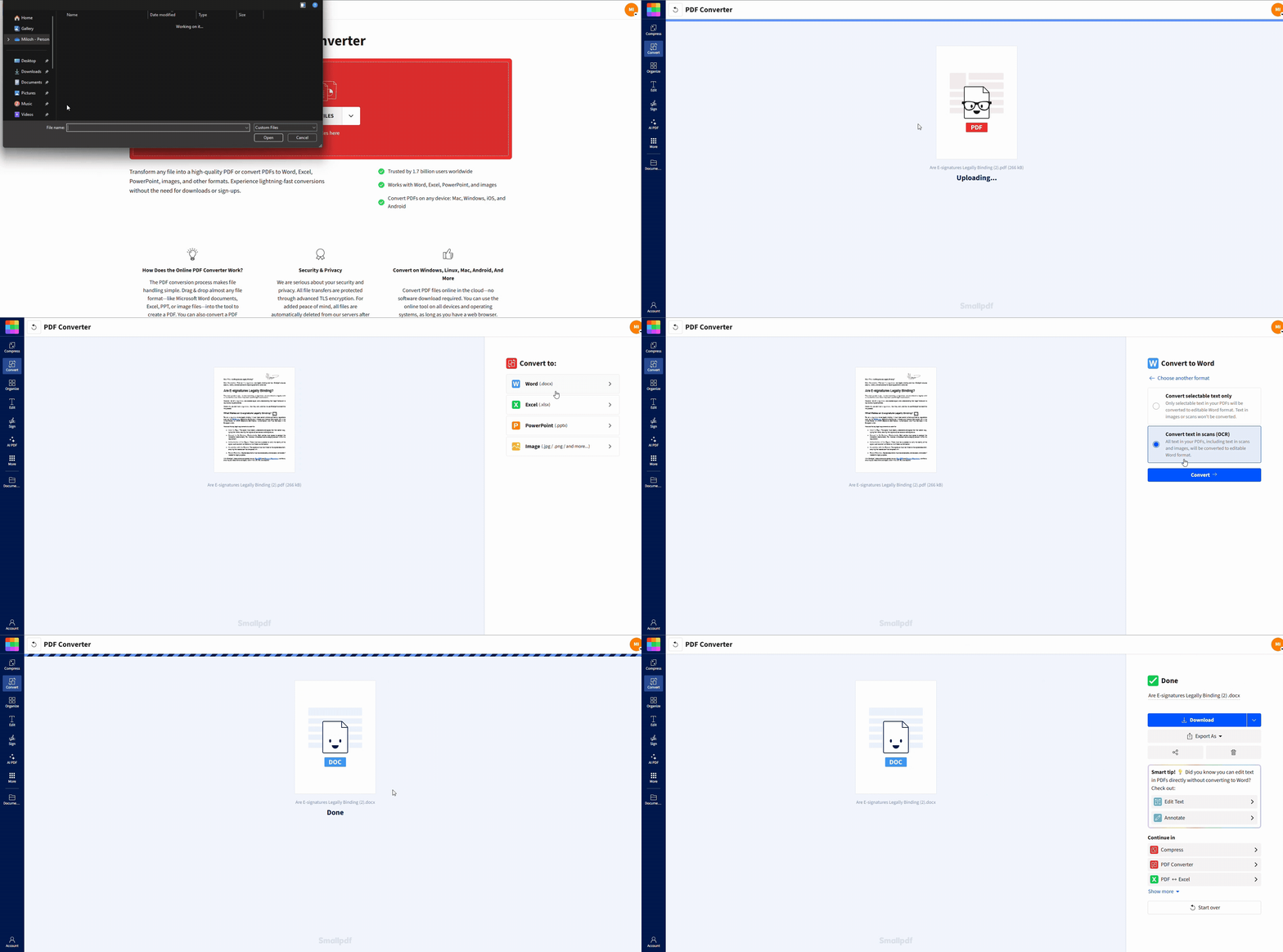
Open Smallpdf in Safari or another browser.
Choose the PDF Converter feature.
Tap “Choose File” and pick your document or image.
Wait for the conversion to finish and preview the result.
Use the converter tool below to upload or drag-and-drop your file and convert it.
Save Converted PDFs to Files or Cloud
After conversion, you can:
Download the PDF and choose “Save to Files.”
Send it directly to Google Drive or Dropbox from Smallpdf.
Share it via email or messaging apps straight from your iPad.
This is useful for turning assignments, invoices, or presentations into PDFs before sending them.
Troubleshooting PDF Saving Issues on iPad
If something doesn’t behave as expected, try these quick checks.
1. Share Button Not Showing
Refresh the page or close and reopen Safari.
Open the PDF in a new tab by long-pressing the link.
If the PDF is inside a viewer on the site, look for a separate download icon inside that viewer.
2. PDFs Not Downloading or Opening
Check your internet connection.
Go to “Settings” > “Safari” > “Downloads” and confirm the download location.
If a site blocks downloads, try a different browser or ask the sender to email the PDF.
3. Cannot Find a Saved PDF
Open “Files” and use the search bar with part of the file name or the word PDF.
Check “On My iPad,” “iCloud Drive,” and “Downloads.”
If you saved to Books, open “Books” > “Library” > “PDFs” instead of Files.
Save PDFs on iPad Smarter With Smallpdf
Once you know where to tap, saving PDFs on iPad is simple. Safari, Mail, Files, and Books handle quick downloads and reading, while tags and folders keep everything tidy.
When you need more control, Smallpdf steps in so you can convert, compress, edit, and sign PDFs from the same device.
If you work with PDFs often on your iPad, try opening Smallpdf in your browser and keeping it bookmarked. With native iOS features for storage and Smallpdf for heavier tasks, you can handle almost any PDF that shows up in your day.
Frequently Asked Questions
How do I save a PDF from Safari if the Share button doesn’t appear?
Refresh the page and try again. If the PDF is inside an embedded viewer, look for its own download icon. You can also long-press the link and choose “Open in New Tab,” which often reveals the standard Share button.Can I save PDFs for offline reading on my iPad?
Yes. Any PDF saved to the Files app or Apple Books is stored on your device. Once saved, you can open and read it even without an internet connection.Where do downloaded PDFs go on iPad?
Most downloads go to the “Downloads” folder in the Files app unless you pick a different location. PDFs saved through Books appear in the PDFs section of your Books library.Why can I not download PDFs on my iPad?
Some sites block downloads or use formats Safari cannot save properly. Check “Settings” > “Safari” > “Downloads” and make sure downloads are allowed. If the issue persists, ask the sender to email the PDF or use a different browser.Can I edit PDFs after saving them on iPad?
You can add basic highlights, drawings, and comments with the built-in markup tools. For editing text, rearranging pages, or adding signatures, open the PDF with Smallpdf and use the PDF editor and eSign features.Is Smallpdf safe for sensitive PDFs?
Yes. Smallpdf uses TLS encryption during upload and processing, and deletes files automatically after a short time. This helps keep contracts, reports, and other private PDFs secure while you work on them.Manage and save PDFs easily with Smallpdf