- Home
- ›
- ›Exporting Teams Chat to PDF & Convert Transcripts
Exporting Teams Chat to PDF & Convert Transcripts
Need a record from Microsoft Teams? Exporting Teams chat to PDF or converting a meeting transcript keeps decisions, items, and links easy to share.
PDF Meeting Resources
PDF Sharing Tool & Guides
More on Edit PDF
Before we jump in, let’s clear up one thing that trips people up. A Teams meeting transcript and a Teams chat are not the same export.
A transcript is the spoken conversation from a recorded meeting, saved as a file like .docx or .vtt. A chat is the message thread people typed, plus emojis, links, and replies.
Teams doesn’t offer a simple “Export chat to PDF” button for most work accounts, so the best approach is to copy what you need into a document, then convert it.
If you already have your transcript or chat copied into Word, you can go straight to Smallpdf Word to PDF and convert in one pass.
Quick Steps To Export Teams Chat to PDF
If you want the fast path, pick the one that matches what you’re saving.
Meeting Transcript → PDF
Download the transcript as “.docx” (best) or “.vtt” from “Recording & transcripts.”
Clean it up in Word or Google Docs, then save as “.docx.”
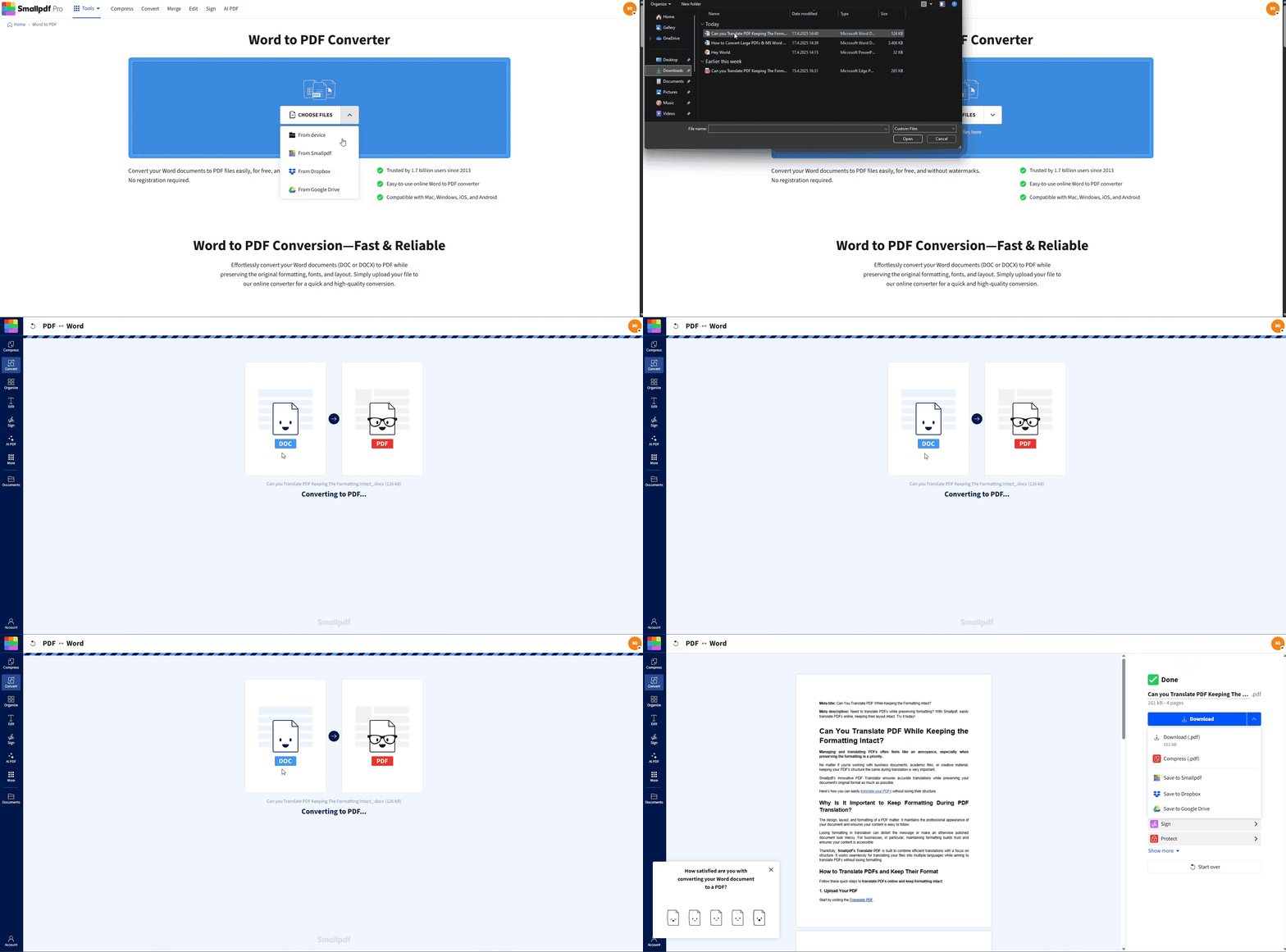
Convert using our Word to PDF, then download your PDF.
Teams Chat → PDF
Open the chat, copy the messages you need, and paste into a Word document.
Add a title and dates, then save as “.docx.”
Convert using our Word to PDF, then share or protect the PDF.
Want to Convert a Kindle book to Word With Smallpdf?
Transcript vs Chat: What You’re Actually Saving
Here’s the practical difference, so you don’t waste time on the wrong workflow.
| Content Type | What It Captures | Best For | What You Can Export |
|---|---|---|---|
| Meeting Transcript | What people said out loud | Meeting notes, decisions, action items | File download in “.docx” or “.vtt” for many meetings |
| Teams Chat | What people typed | Links, files, quick updates, follow-ups | No universal PDF export button, so you build the export yourself |
If you want a full record of what everyone said, start with the transcript. If you want the messages and links people shared, start with the chat.
How To Save a Recorded Teams Meeting as a PDF
Step 1: Download the Meeting Transcript
Open Teams and find the meeting you want to capture.
Go to “Calendar,” open the meeting, then open “Recording & transcripts.”
In the transcript area, select the download option and choose “.docx” if it’s available.
Save the file somewhere easy to find, like a folder named by date and project.
If you don’t see a transcript, it may not have been enabled, or you may not have permission to download it.
Step 2: Clean Up the Transcript for Readability
Raw transcripts are usually full of noise. A five-minute cleanup makes the PDF far more useful.
Open the “.docx” in Word or Google Docs, then tidy up:
Delete filler sections you don’t need, like repeated system lines.
Replace generic speaker labels with names if you can.
Combine choppy lines into paragraphs so it reads like notes.
Add simple headings like “Summary,” “Decisions,” and “Action Items.”
If your transcript is “.vtt,” paste it into Word first and remove timestamps you don’t need, then save as “.docx.”
Step 3: Convert the Transcript to PDF
Now convert the cleaned “.docx” into a PDF you can share anywhere.
Open Word to PDF.
Upload the DOCX from your device, Google Drive, Dropbox, or OneDrive.
Convert, then click “Download” to save the PDF.
If you want a quick polish before you send it out, open the PDF in our Edit PDF and add a title line, date, or a short “Next Steps” section.
Step 4: Make It Easier to Share and Store
Long meetings can create long PDFs. You don’t need to keep a huge file if you’re only emailing it around.
Use Compress PDF to shrink the file size before sharing.
Use Protect PDF if you’re sending sensitive notes outside your team.
Use Share PDF if you want a link instead of attachments.
Keep the file name clear, like “TeamSync_2026-01-16_Transcript.pdf.” It saves confusion later.
How To Export Teams Chat to PDF
Teams chat export depends on your account type and your permissions. For most people, the most reliable option is still a curated export: copy the chat you need, then convert it.
Step 1: Copy the Chat Messages You Need
Open the chat thread and scroll to the section you want to capture.
To avoid missing context, copy in chunks:
Start at the point where the topic begins.
Copy through the decisions, links, and action items.
Include dates or time markers if they matter.
If copying a huge chat paste gets cut off, split it into smaller sections and paste them one by one.
Step 2: Paste Into a Document and Format It
Open Word or Google Docs and paste the chat.
Then do a quick cleanup so it reads like a record, not a chat dump:
Add a title at the top, like “Client Launch Chat Export.”
Add the chat participants and the date range you copied.
Insert line breaks between topics so the PDF scans well.
Move key links into a short “Links” section near the top.
Save the file as “.docx.”
Step 3: Convert to PDF With Smallpdf
Convert the DOCX to PDF the same way you do with transcripts.
Open Word to PDF.
Upload from your device, Google Drive, Dropbox, or OneDrive.
Convert and download your PDF.
If you want to keep it short for stakeholders, convert first, then run the PDF through AI PDF Summarizer to generate a one-page recap you can paste into an email.
Alternative Export Methods
Sometimes the “copy to Word” workflow isn’t enough. Here are two alternatives that can help, depending on your environment.
1. Print a Chat Page to PDF
If you’re using Teams in a browser, you may be able to print the page to PDF. The downside is that you often capture interface clutter, and long threads can break across pages in messy ways. Use this only when you need a quick snapshot.
2. Ask Your Admin for a Compliance Export
In some organizations, chat history can be exported through admin and compliance workflows, then provided to you in an export format like CSV or PST.
If you need a complete, auditable record, this is the direction to take.
Troubleshooting Common Issues
1. Can’t See Recording & Transcripts
Some meetings don’t generate transcripts, and access can be limited by policy or permissions. Try opening the meeting details from “Calendar,” not just the chat thread.
2. Transcript Downloaded as VTT and Looks Unreadable
That’s expected. VTT is caption formatting. Paste it into Word, remove timestamps you don’t need, add headings, then save as “.docx” before converting.
3. The PDF Looks Messy After Conversion
This usually comes from the source document, not the conversion. Go back to the DOCX and fix:
inconsistent line breaks
extra spaces
missing headings
Then convert again.
4. Chat Copy Is Incomplete
Copying huge threads can fail or paste partially. Split the export into smaller chunks, paste in order, and add a date marker between chunks so nothing gets lost.
5. The PDF Is Too Big to Send
Compress it before you share. A transcript PDF is mostly text, so compression usually helps without harming readability.
Get Key Points From Teams Meeting Without Reading Everything
A long transcript PDF is useful, but it can still be too much. When the goal is speed, use Smallpdf’s AI features after conversion:
AI PDF Summarizer for a clean summary you can share with the team.
Chat with PDF when you need answers like “List action items and owners” or “What decisions were made?”
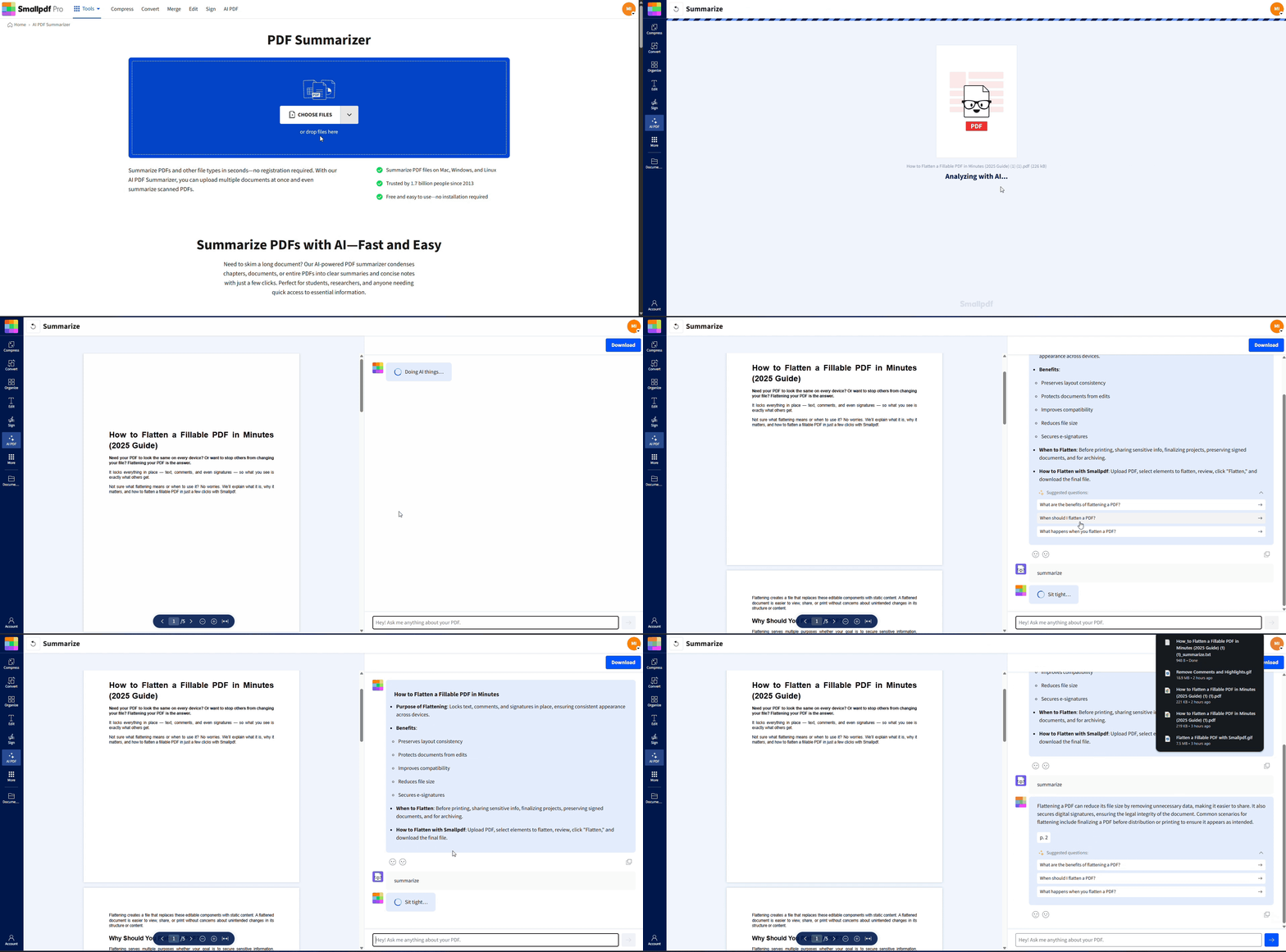
This is the fastest way to turn a long meeting into a short set of next steps.
Turn Teams Notes Into a PDF You’ll Actually Use
Meeting transcripts and Teams chat both matter, but they need different export steps. Download the transcript when you need the spoken record. Copy chat into a document when you need the written thread.
Then convert with our Word to PDF, compress if sharing is tough, and use AI PDF Summarizer or Chat with PDF when the file is too long to read.
Frequently Asked Questions
Can I save the Teams recording itself as a PDF?
No. A recording is a video file. What you can save as a PDF is the transcript or a written summary you create from the meeting.Where do I download the meeting transcript in Teams?
In many setups, you’ll find it under the meeting details in “Recording & transcripts,” where you can download as “.docx” or “.vtt.”What if I can’t download the transcript?
You may not have permission, or transcription may not be enabled for that meeting. Ask the meeting organizer to download it, or check with your IT admin.Is exporting Teams chat to PDF possible without admin access?
Yes, for most people, the best method is to copy the relevant messages into a Word document, format it, and then convert it to a PDF.How do I export a full Teams chat history?
For complete exports, your organization may require an admin workflow for compliance and audit. Ask your admin for an export and then convert the readable version to PDF.How do I keep links readable in the PDF?
Move key links into a dedicated “Links” section near the top of your DOCX before conversion. It keeps the PDF clean and prevents broken line wraps.Can I protect a transcript PDF before sharing it?
Yes. If the transcript includes sensitive names or internal decisions, add a password before you send it outside your team.Save meeting documents and chat exports as PDFs with Smallpdf
Related Articles