- Home
- ›
- ›Compressing PDFs into ZIP Files Across Devices
Compressing PDFs into ZIP Files Across Devices
Create a ZIP file from a PDF in seconds. Compress, bundle, and share documents securely across devices with Smallpdf’s simple online tools.
More on ZIP to PDF
More on PDF Compression: Tool & Guides
PDF Sharing Tool & Guides
Large PDFs can be hard to send or store. The easiest fix is to turn them into a ZIP file—shrinking size, keeping quality, and grouping multiple documents together. With Smallpdf, you can compress a PDF, bundle several into one ZIP folder, and share them quickly from desktop or mobile.
Quick Steps to Make a ZIP from a PDF
Works on Windows, Mac, Android, and iOS.
How to Compress a PDF Online Before Zipping
Before zipping your PDFs, compressing them first with Smallpdf’s Compress PDF tool gives you the best file size reduction.
Why? PDF compression optimizes the internal structure of your document, while zipping creates an archive. When you compress first, then zip, you get maximum space savings—perfect for email attachments or cloud storage.
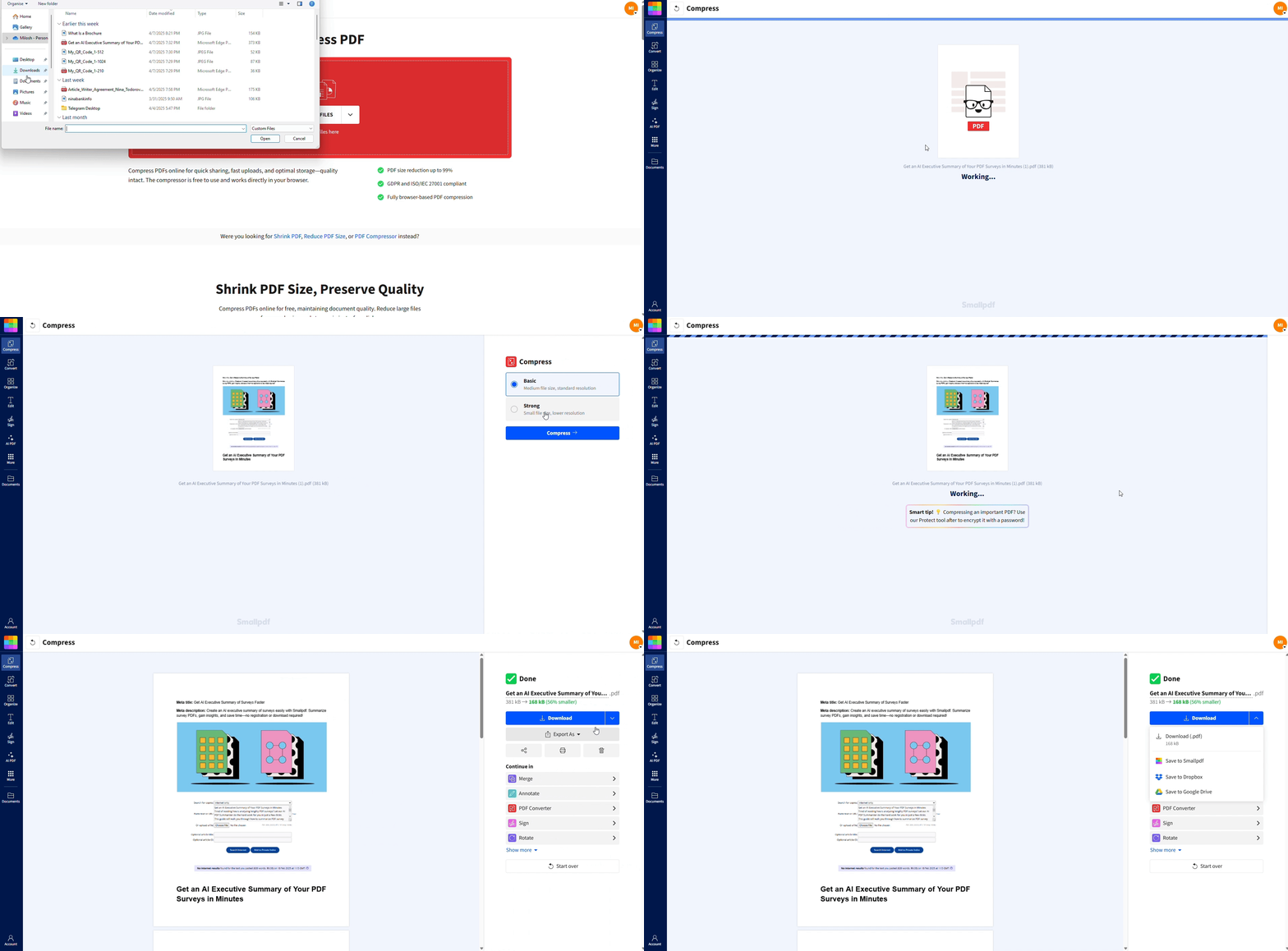
Step 1: Access the Smallpdf Compress PDF Tool
Head to our Compress PDF, or download the Smallpdf Mobile App for on-the-go functionality.
Smallpdf is compatible with all major platforms (Windows, Mac, Linux, Android, and iOS), so no matter which device you’re using, you’re covered.
Step 2: Upload Your PDF Files
Uploading your PDFs is simple:
Drag and drop your document(s) into the tool interface.
Alternatively, click the “Choose File” button to import files from your device or cloud storage like Google Drive or Dropbox.
Smallpdf’s drag-and-drop interface ensures that uploading files is as seamless as possible.
Step 3: Choose Your Compression Level
Now that your files are uploaded, choose a compression level:
Basic compression (free): Reduces file size while maintaining good quality.
Strong compression (Pro): Offers more substantial reductions in file size for advanced needs. Once you select a compression level, Smallpdf will process your file within seconds.
Step 4: Download the Compressed PDFs
After the compression process is complete, download your file.
Click the “Download” button to save it to your device.
If you compressed multiple PDFs, repeat this step for each file, ensuring all documents are optimized.
How to Zip a PDF on Your Device
Once your PDFs are compressed (or if you’re working with files that are already small enough), it’s time to create a ZIP file. The process varies slightly depending on your device, but it’s straightforward on all platforms.
Zip a PDF on Windows
Creating a ZIP file on Windows uses the built-in compression feature. Simply:
Select the files you want to zip in File Explorer.
Right-click and choose “Send to” and “Compressed (zipped) folder.”
Rename the ZIP file if needed.
Pro tip: You can select multiple PDFs at once by holding Ctrl while clicking each file. This is especially handy when preparing files for email, since most providers have a 25MB attachment limit.
Zip a PDF on macOS
Mac’s Finder makes zipping PDFs just as easy:
Highlight all the files in Finder.
Right-click (or use Control-click) and select “Compress.”
A new ZIP file will appear in the same folder.
The ZIP file will automatically be named “Archive.zip” unless you have multiple files selected, in which case it takes the name of the folder.
Zip a PDF on iPhone (iOS)
On iOS devices, use the built-in Files app:
Open the Files app and locate your PDF files.
Long-press on the file (or select multiple files).
Tap “Compress” from the menu.
Your ZIP file will be created in the same location.
Zip a PDF on Android
Android devices typically come with a file manager that includes compression:
Open your device’s File Manager app.
Select the PDF files you want to zip.
Look for a “Zip” or “Compress” option in the menu.
Name your ZIP file and save it.
Note: The exact steps may vary depending on your file manager app, but most Android devices include this functionality by default.
How to Unzip a ZIP File
Need to extract files from a ZIP? Here’s how:
Windows: Right-click the ZIP file and select “Extract All.” Choose your destination folder.
Mac: Double-click the ZIP file, and it will automatically extract to the same location.
Mobile: Tap the ZIP file in your file manager and select “Extract” or “Unzip.”
ZIP Methods Compared: Which One Should You Use?
There’s more than one way to make a ZIP file from your PDFs. Each works well in different situations.
1. Built-in Tools on Windows or Mac
These are fast and require no extra software. You can select several PDFs, right-click, and choose “Compress” or “Send to” > “Compressed (zipped) folder.”
Pros: Simple, no internet needed, good for quick sharing
Cons: No compression control, limited password options
2. Mobile File Managers (iPhone or Android)
Most phones now include this feature in the Files app or file manager.
Pros: Handy for on-the-go sharing, works directly from storage or cloud folders
Cons: Fewer settings, inconsistent results across brands and OS versions
3. Online Tools Like Smallpdf
Upload your PDFs, compress them for smaller size, then zip and download.
Pros: Works on any device, offers higher compression and 256-bit encryption, easy file deletion after one hour
Cons: Needs an internet connection, and large files may take longer to upload
4. Third-Party ZIP Software (e.g., 7-Zip, WinZip)
These apps offer advanced features for frequent users.
Pros: Custom compression levels, password protection, batch zipping
Cons: Requires installation, may be unnecessary for casual users
For most users, compressing your PDFs with Smallpdf and then zipping them using your device’s built-in tool gives the best balance of speed, security, and control.
ZIP vs. Compress PDF: When to Use Each
Understanding when to zip versus when to compress can save you time and get better results. Here’s a general guideline.
Use PDF compression when:
You have a single large PDF that needs permanent size reduction
You want to maintain PDF functionality (searchable text, links, forms)
You need to optimize image quality within the document
Use ZIP files when:
You’re bundling multiple PDFs for sharing
You need to maintain the original folder structure
You want temporary compression that can be easily reversed
Use both (compress then zip) when:
You have multiple large PDFs to share via email
You need maximum file size reduction
You’re archiving documents for long-term storage
Security and Privacy When Zipping and Compressing PDFs
Protecting your documents is crucial, whether you’re compressing or zipping. Here’s what you need to know.
Password-protect your ZIP files: Most operating systems allow you to add passwords when creating ZIP files. On Windows, use third-party tools like 7-Zip. On Mac, use Terminal or third-party apps for password protection.
Smallpdf’s security measures: When you use our compression tools, Smallpdf applies 256-bit TLS encryption to all files and automatically deletes them from our servers after one hour, ensuring your documents stay protected.
Best practices for secure file sharing:
Always use password-protected ZIP files for sensitive documents.
Share passwords through a separate communication channel.
Consider using cloud storage with access controls instead of email for large files.
Go Mobile with Smallpdf
With the Smallpdf Mobile App, you can compress, convert, and manage PDFs on the go. Whether you’re traveling for work or need a quick solution, the app ensures all tasks are accessible from anywhere.
Start Your Free Trial to Access All Smallpdf Tools
Ready to streamline your PDF workflow? From compression and conversion to editing and signing, Smallpdf offers everything you need to work efficiently with documents. Start your free trial today and discover how much easier document management can be.
FAQs About Zipping and Compressing PDFs
Can I ZIP multiple PDF files at once?
Yes! Simply select all the PDFs you want to include, then right-click and choose your system’s zip option.Does zipping a PDF affect its quality?
No, zipping doesn’t change the PDF’s quality. It just creates an archive. Compressing a PDF can reduce quality slightly but maintains readability.How do I convert a ZIP file to PDF?
You can’t directly convert a ZIP to PDF, but you can extract the ZIP file and then use Smallpdf’s Merge PDF tool to combine multiple extracted PDFs into one document.What’s the difference between zipping and compressing a PDF?
Compressing optimizes the PDF’s internal structure to reduce file size permanently, while zipping creates a temporary archive that can be easily reversed.Can I password-protect a zipped PDF?
Yes, you can add password protection when creating ZIP files using tools like 7-Zip on Windows or third-party apps on Mac and mobile devices.Why can’t I open my ZIP file?
If you get an error when opening, the download may be incomplete. Re-download the ZIP or use a standard tool like WinZip or the built-in extractor on your device.The ZIP file is too large to email—what now?
Try compressing your PDFs again using Strong Compression before zipping. You can also upload the ZIP to a cloud service and share the link instead of sending by email.Why won’t my PDF compress much further?
Some PDFs—especially those already optimized or text-only—won’t shrink much. Zipping still helps bundle them neatly for sharing.My ZIP file says it’s “corrupt.” How can I fix it?
Delete the file and create it again from your original PDFs. Avoid renaming or editing the ZIP while it’s still uploading or downloading.Are zipped PDFs secure?
Yes. You can add a password to your ZIP using your system’s compression tool. When using Smallpdf, files are encrypted with TLS 256-bit security and automatically deleted after one hour of processing.Compress your PDFs into a ZIP instantly using Pro