- Home
- ›
- ›Create Tamper-Proof PDFs: Prevent Screenshots & Copying
Create Tamper-Proof PDFs: Prevent Screenshots & Copying
Create a tamper-proof PDF and stop unauthorized editing, copying, and screenshots. It's easy to do and doesn't require any fancy software.
More on Protect PDF
More on Edit PDF
More on Unlock PDF
Tamper-proof PDFs are like digital lockboxes. Whether it’s contracts, invoices, or private documents, you don’t want someone sneaking in to edit, copy, or screenshot sensitive information.
Unfortunately, PDFs are naturally shareable. So without the right precautions, they’re open to all kinds of misuse. That’s why securing your PDFs matters. With Smallpdf, you can make your PDFs a fortress of security without breaking a sweat.
Your Main Options to Protect a PDF
Here’s a quick overview of the main ways you can protect a PDF from copying, editing, or screenshots:
Set permission restrictions: Add an owner password to block copying, editing, or printing. Works best for casual protection.
Convert pages to images: Turns the PDF into an image-based file where text can’t be selected or copied.
Add password protection: Use an open password to control who can view the file, or a permission password to limit actions.
Apply a visible watermark: Helps reduce misuse by marking each page, even if someone takes a screenshot.
Redact sensitive details: Permanently remove text or images before sharing.
You can combine some of these methods to strengthen protection, depending on how you plan to share the file.
Why Protect a PDF From Copying and Editing?
Protecting your PDFs from unauthorized copying and editing isn’t just about being cautious—it’s about safeguarding your work, your business, and your privacy. When you’ve put time and effort into creating documents, you want to control how they’re used and shared.
Here are the most common scenarios where PDF protection makes sense:
Contracts and legal documents that shouldn’t be altered without permission
Creative work and intellectual property like designs, reports, or presentations
Confidential business information including financial reports or strategic plans
Educational materials that you want to share but not have redistributed
Personal documents containing sensitive information
While no method is 100% foolproof against determined users, these protection methods significantly deter casual copying and unauthorized use.
Think of it as putting a lock on your front door—it won’t stop a professional burglar, but it’ll keep most people from wandering in uninvited.
How to Disable Copy and Paste in a PDF (Permission Restrictions)
This method uses permission restrictions to block copying, editing, and other actions. We’ll show you the simpler online method that combines Smallpdf’s intuitive tools with LibreOffice’s powerful security features.
Here’s How to Disable Copy and Paste in a PDF
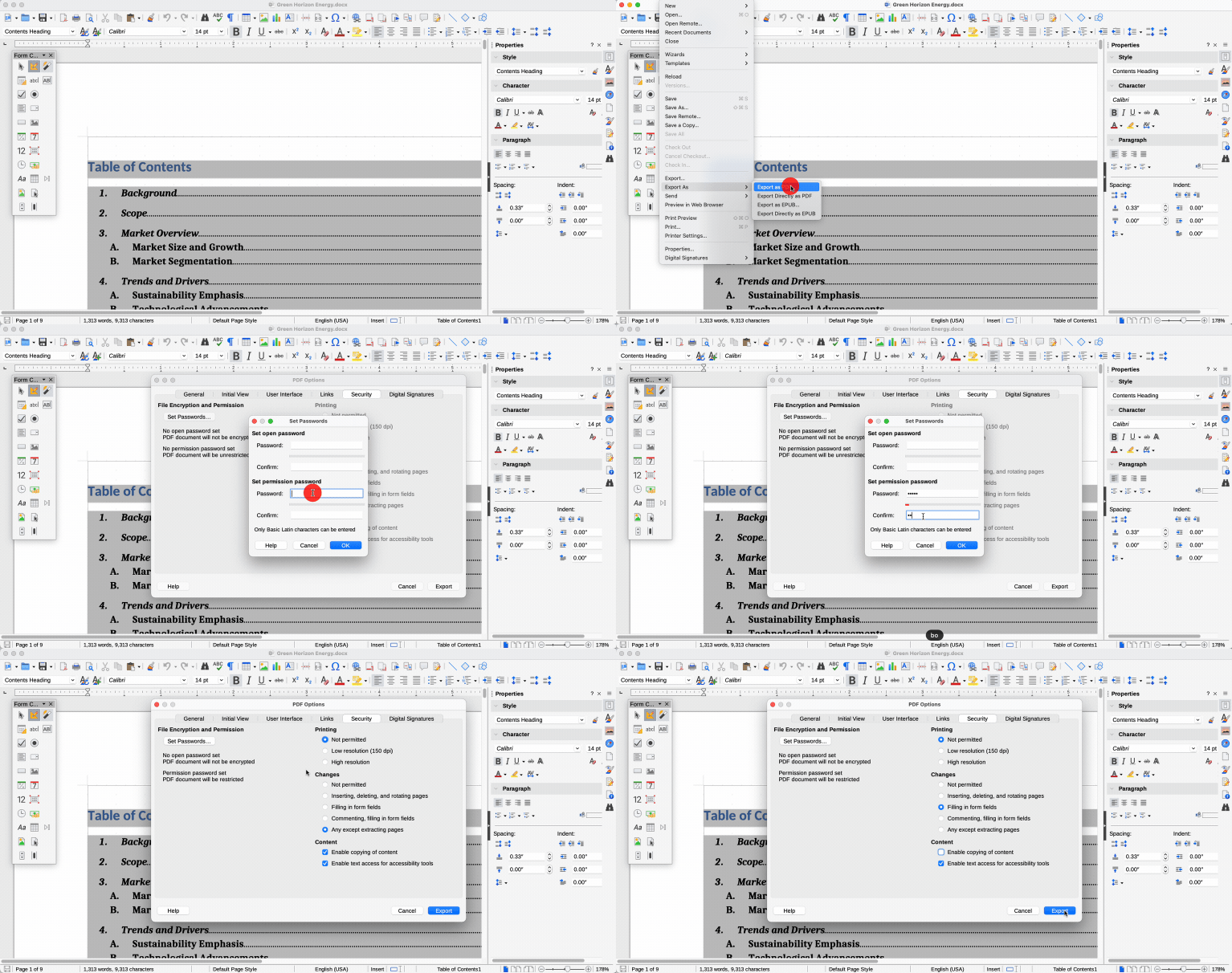
This method is ideal for anyone, regardless of device. A key point to remember when adding a password is that you are only setting a permission password, not an open password. Since you want your documents to be accessible, keep “Enable text access for accessibility tools” checked. And if your document includes fillable form fields, you must select “Filling in form fields.”
Protect PDFs with Preview
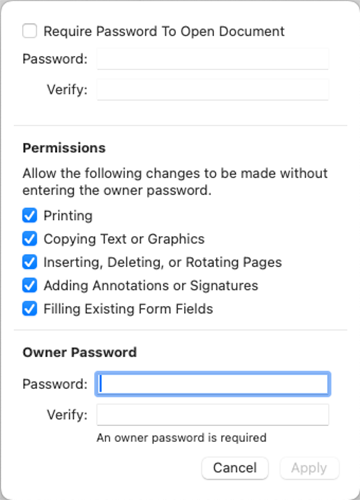
If you’re on a Mac, you’ve got a built-in tool that makes securing PDFs a breeze: Preview. Here’s how to do it:
Open your PDF in Preview on your Mac.
Go to “File,” and “Edit Permissions.”
Deselect any permissions you want to remove.
Add a strong “Owner Password” to secure your PDF.
Save your file, and you’re done—your PDF is locked and secure!
Lock a PDF From Editing by Converting to Images
Converting your PDF pages to images completely prevents text selection and copying—it’s like taking a photo of your document. This method creates an image-based PDF where no text can be extracted or edited.
Here’s how to do it with Smallpdf:
Upload your PDF to our PDF to JPG converter.
2. Download the converted images.
3. Use our JPG to PDF converter to combine them back into a PDF.
4. Skip the OCR option to keep it as images only.
5. Download your copy-protected PDF!
Pros:
Completely prevents text selection and copying
Works on any device or PDF viewer
No passwords needed
Cons:
Larger file sizes
Text becomes unsearchable
May reduce image quality slightly
How to Password-Protect a PDF (and When to Use It)
Password protection works best when you need to control who can open your document in the first place. Use an open password (also called a user password) when you want to restrict access entirely, or a permission password (owner password) when you want people to view the document but not copy or edit it.
Smallpdf uses AES-256 encryption, the same standard used by banks and government agencies. Here’s how to add password protection:
Upload your PDF to our Protect PDF tool.
2. Enter a strong password—mix letters, numbers, and symbols.
3. Download your encrypted PDF.
Password Best Practices:
Use at least 12 characters
Mix uppercase, lowercase, numbers, and symbols
Avoid dictionary words or personal information
Store passwords securely (never in the same location as the PDF)
Watermark a PDF to Discourage Screenshots and Reuse
Unfortunately, none of the permissions you can edit include the blocking of screenshots, but there is still a way to discourage screenshots. Adding a watermark to each page is one of the easiest ways to protect your PDF from unauthorized use, even if someone takes a screenshot. A visible watermark ensures your document is clearly marked as yours, making it harder to misuse.
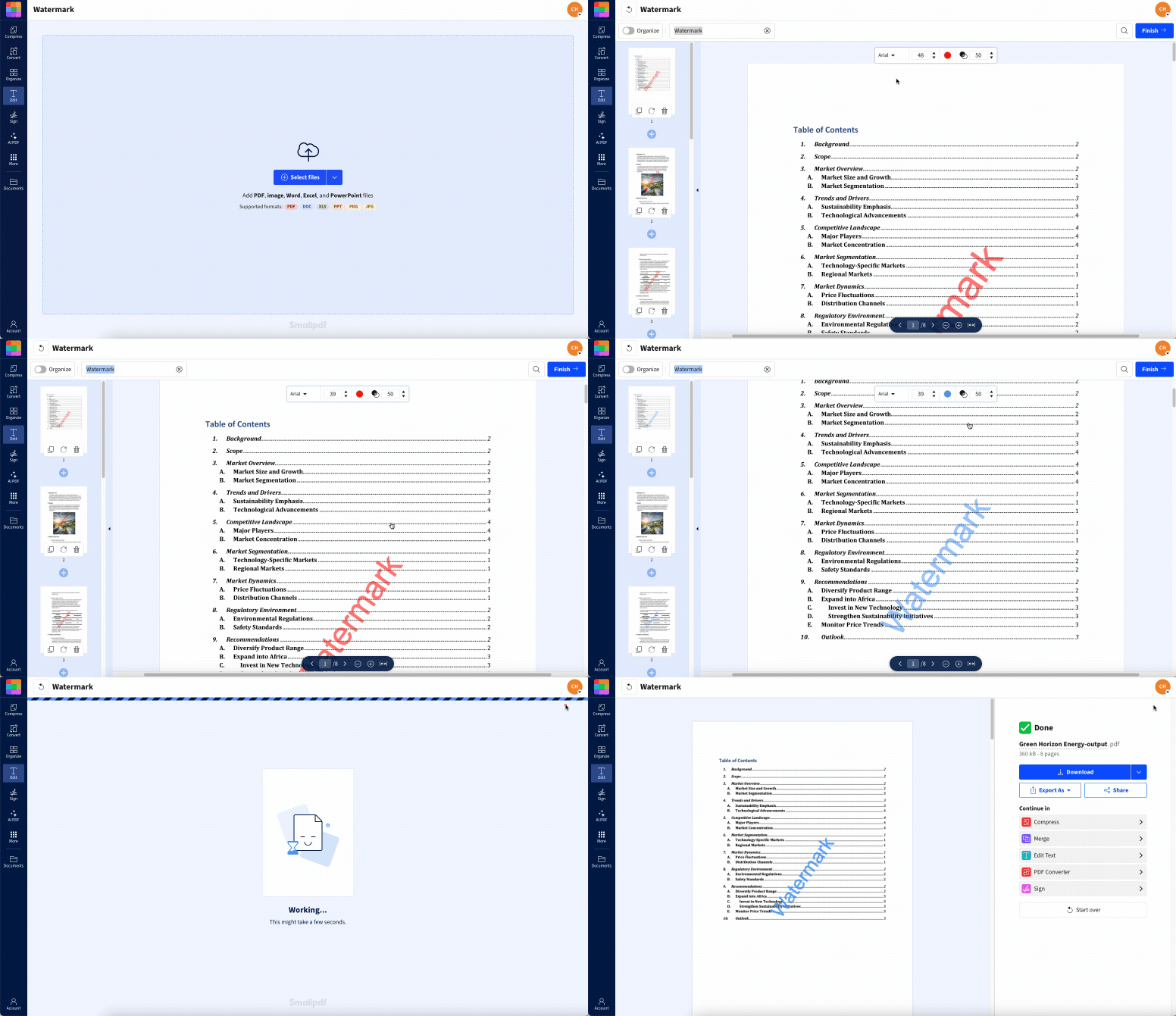
Here’s how to do it with Smallpdf’s Watermark PDF:
Upload your PDF to the Watermark PDF tool.
2. Replace the default “Watermark” text if you want.
3. Adjust the position, size, color, and transparency to fit your document.
4. Click “Finish” and download your watermarked PDF.
Watermark Best Practices:
Place it diagonally across the center for maximum visibility.
Use 20-30% transparency so content remains readable.
Include your company name or copyright notice.
Consider combining with other protection methods.
It’s quick, effective, and makes your files unmistakably yours.
Tips for Blocking Sensitive Information in PDFs
Before you share your PDF, double-check that there’s no sensitive info you’ve accidentally left visible. Redacting text and images is the best way to make sure nothing private slips through.
Smallpdf’s Redact PDF makes it easy to block out sensitive text or images before sharing your document. Just head to Redact PDF, upload your file, and highlight the areas you want to obscure. Once you’re done, save your redacted PDF to ensure those details are permanently hidden.
If you prefer to black out or white out specific sections, try Smallpdf’s PDF Annotator. Use the rectangle shape tool to cover the text or images you want to block. After that, flatten the document to ensure the hidden content cannot be uncovered. This extra step locks everything in place.
Compare Your PDF Protection Options
Permission Restrictions (Copy/Print/Edit Blocking)
Good for casual protection when you want to stop quick copying or printing.
Strengths:
Blocks copying, editing, and printing in compliant PDF viewers
Doesn’t change how the document looks
Quick to add and easy to combine with other methods
Limits:
Can be bypassed in some non-compliant viewers
Doesn’t stop screenshots
Doesn’t prevent someone from retyping or OCR-scanning the content
Image-Based PDFs (Convert Pages to Images)
Good for stopping text selection completely.
Strengths:
Prevents copying and text extraction
Looks the same across all devices and viewers
No passwords required
Limits:
Larger file sizes
Text becomes unsearchable
Screenshots are still possible
Password Protection (Open Password or Permission Password)
Good for controlling who can open a file or what they can do with it.
Strengths:
AES-256 encryption protects access
Works across most modern PDF readers
Combine with other methods for a stronger setup
Limits:
Does not stop screenshots
Easy-to-guess passwords reduce security
Access control only (once someone accesses the file, they can then record the screen)
Visible Watermarks (Discourage Screenshots and Redistribution)
Good for deterring misuse when screenshots can’t be blocked.
Strengths:
Stays visible in screenshots and printouts
Helps identify ownership or intended audience
Works even when permissions are bypassed
Limits:
A determined user can crop or blur the watermark
Doesn’t stop copying or editing on its own
Best used with at least one other method
Redaction (Permanent Removal of Sensitive Content)
Good for removing information you don’t want anyone to recover.
Strengths:
Permanently hides text or images
Works across all devices and readers
Prevents accidental disclosure
Limits:
Doesn’t stop copying the remaining content
Must be done carefully to avoid leaving metadata behind
Frequently Asked Questions
Can I stop someone from taking screenshots of a PDF?
No. There’s no technical way to block screenshots on a PDF. Any device can capture what’s on the screen. What you can do is make screenshots less useful by adding a visible watermark across each page or by limiting access with a password so fewer people can view the file in the first place.Can someone remove a watermark from a PDF?
Sometimes. A watermark placed behind the text is easier to remove than one placed on top of the content. If the watermark sits on each page and isn’t tucked into the background, removing it usually requires re-creating the page from scratch. That’s why diagonal, semi-transparent marks across the center work best.Is it possible to make a PDF 100% copy-proof?
No. You can make copying much harder, but no method gives absolute protection. Permission restrictions, image-based PDFs, passwords, and watermarks all reduce casual misuse. Once a person can see the content, though, they can always retype it or take a screenshot.Do permission restrictions work the same in every PDF reader?
Not always. Most major readers respect permission flags, but some tools ignore them, which is why permissions should be paired with at least one other method. Password encryption, for example, works across all modern readers and gives more reliable control.What’s the difference between an owner password, an open password, and DRM?
An open password controls who can view the PDF at all. An owner password controls what someone can do after opening it—such as copying or printing. DRM (digital rights management) adds device-level controls, but it requires specialized software and usually isn’t supported by standard PDF readers. Most people rely on the first two options because they work on any device.Protect PDFs from copying and screenshots with Smallpdf Pro