How To Save a Large Zoom Meeting as a PDF
Got a long Zoom transcript you need to share or archive? Turn it into a clean PDF, trim the clutter, and keep the important decisions easy to find.
PDF Meeting Resources
PDF Sharing Tool & Guides
More on Edit PDF
A Zoom transcript is useful, but it’s not always easy to work with. It can be full of timestamps, repeated speaker labels, and awkward line breaks.
Converting it to PDF gives you a stable format you can store, print, and share without the layout changing on someone else’s screen.
In this guide, we’ll show you the easiest way to save a large Zoom meeting as a PDF.
Quick Steps to Save a Large Zoom Meeting as a PDF
Best Method for Your Zoom Transcript
| What You Need | Best Workflow | Why It Works |
|---|---|---|
| A clean PDF you can share | VTT/TXT → DOCX → Word to PDF | Keeps formatting readable and consistent |
| A smaller file for email or Slack | Convert → Compress PDF | Reduces file size without rebuilding the doc |
| “Just the key points” | Convert → AI PDF Summarizer / Chat with PDF | Pulls action items without reading everything |
| Sensitive content in the transcript | Convert → Redact PDF | Removes private info before you send it |
Where Zoom Transcripts Come From
Zoom usually gives you transcripts in two common ways:
Cloud recording transcript (most common for post-meeting): Zoom’s audio transcription for cloud recordings produces a VTT file you can download with the recording.
Saved captions during the meeting: Zoom’s “Save Captions” can generate a TXT transcript saved locally.
If you don’t see any transcript option, it often means audio transcription was not enabled for cloud recording, or the meeting was not recorded to the cloud.
How To Save a Large Zoom Meeting as a PDF
Step 1: Download Your Zoom Transcript
Start in the Zoom web portal, since that’s where recordings and transcript downloads are easiest to manage.
Sign in to the Zoom web portal.
Open “Recordings” in the left menu.
Select the meeting you want.
Download the audio transcript file, which is typically .vtt for cloud recording transcripts.
Tip. The VTT version is built like captions, so expect timestamps and short lines.
Step 2: Clean Up the Transcript So It Reads Like Notes
This is where most large meeting transcripts get easier to use. Open the file in a text editor, Word, or Google Docs and do a quick cleanup pass.
For a fast cleanup, focus on these items:
Remove or reduce timestamps if you don’t need them.
Replace repeated speaker tags like “Speaker 1:” with real names if you have them.
Combine choppy caption lines into readable paragraphs.
Add simple headings like “Decisions,” “Action Items,” and “Open Questions.”
If you plan to share the PDF, add a short header at the top that includes the meeting name and date. It saves time later.
If you’re starting from VTT, it’s normal to paste the content into Word or Google Docs and save it as DOCX before conversion. That matches Smallpdf’s recommended TXT workaround and keeps the PDF output clean.
Step 3: Convert the Cleaned Transcript to PDF
Once you have a DOCX file, conversion is straightforward.
Open Word to PDF (or use our PDF Converter).
Upload your .docx from your device, Google Drive, Dropbox, or OneDrive.
Convert, then download your PDF.
Why this method works. Word-style documents convert into PDFs with predictable spacing and page breaks, which is exactly what transcripts need.
Step 4: Compress the PDF if the File Is Still Too Large
Large Zoom meetings can create long PDFs, especially if you keep timestamps or include screenshots.
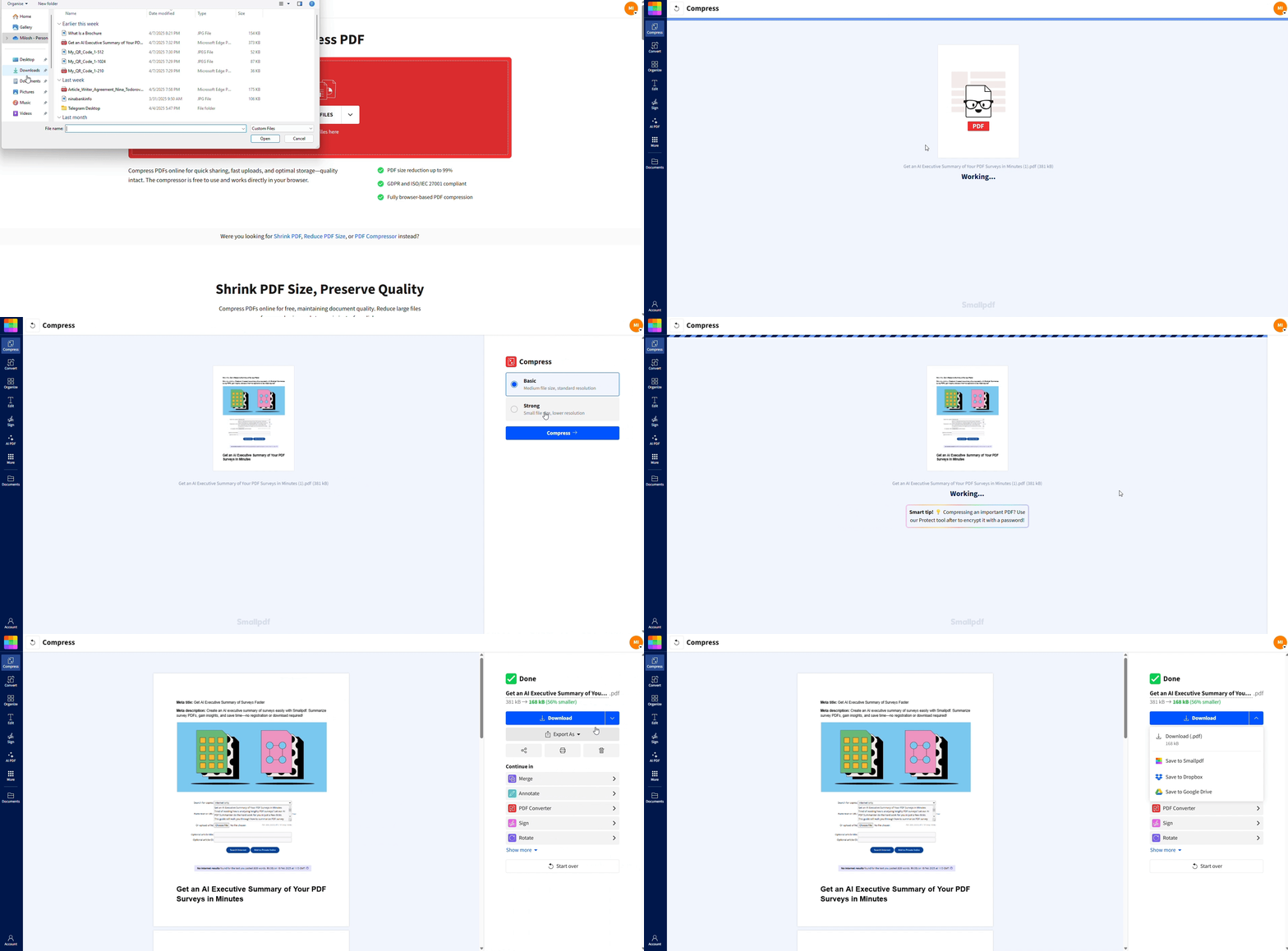
Open Compress PDF.
Upload the PDF you just created.
Choose Basic or Strong compression, based on how aggressively you need to shrink the file.
Download the smaller version and share it.
If you’re sharing internally, Basic is often enough. If you’re emailing it or uploading to a strict portal, Strong can help, but always review the output.
Step 5: Use AI When the Transcript Is Too Long To Read
Some transcripts are technically “done” as PDFs, but still not usable because they’re massive. That’s where AI can save you time.
Upload the PDF to the AI PDF Summarizer to get a clean summary.
Use Chat with PDF to ask targeted questions like “What decisions were made?” or “List action items and owners.”
This approach is especially useful when you need the outcomes, not the full transcript.
Alternative Methods To Save a Large Zoom Meeting as a PDF
Sometimes you don’t need a conversion flow at all. These options can work, depending on your setup.
Option A: Export to PDF From Word or Google Docs
If you already cleaned the transcript in Word or Google Docs, you can export it to PDF directly from there.
This is a good backup method when you’re in a locked-down environment. The tradeoff is that you miss Smallpdf’s quick compression and PDF finishing steps.
Option B: Keep the Transcript as TXT When You Only Need Search
If your goal is internal search and copy-paste, TXT can be enough. For sharing and storing, PDF is usually the better choice since it keeps the same layout everywhere.
Troubleshooting Common Issues Saving a Large Zoom Meeting
1. Don’t See a Transcript File in Zoom
Audio transcription for cloud recordings may not be enabled, or the meeting may not have been recorded to the cloud. Zoom’s own guidance ties transcripts to cloud recording audio transcription and processing time.
2. Transcript Is VTT and Looks Broken
That’s normal. VTT is structured like captions. Paste it into Word or Google Docs, clean it up, then save as DOCX before converting.
3. The PDF Looks Cramped or Hard To Read
Go back to the DOCX and increase line spacing slightly, add headings, and remove excess timestamps. Then reconvert. Transcripts need white space.
4. The PDF Is Still Too Big To Share
Compress it. If you’re working with a huge file, compression is usually faster than trying to shorten the transcript manually.
5. This Transcript Includes Sensitive Information
Before you share it, remove private details like phone numbers, addresses, internal IDs, or pricing. Smallpdf Redact PDF permanently removes selected content so it can’t be recovered.
Security Notes for Meeting Transcripts
Meeting notes often include client names, internal decisions, and confidential details. When you process files with Smallpdf, they’re protected with TLS encryption during transfer, and Smallpdf maintains security and compliance standards, including ISO 27001 and GDPR.
Convert, Compress, Then Get the Key Points
For large Zoom meetings, the best workflow is simple: download the transcript, clean it into readable sections, convert it to PDF, then compress it if sharing gets tricky.
When the transcript is too long to review, we’d use AI PDF Summarizer or Chat with PDF to pull decisions and action items fast.
Frequently Asked Questions
Can I convert a Zoom transcript file to PDF directly?
If your transcript is DOCX, yes. For VTT or TXT, the cleanest workflow is to paste into Word or Google Docs, save as DOCX, then convert to PDF.Why is my Zoom transcript a VTT file?
Zoom’s cloud recording audio transcription produces a VTT file that’s designed for captions and time alignment.How do I keep timestamps in the PDF?
Keep them during cleanup, but format them consistently. Many teams keep timestamps only for key moments, like decisions and action items, so the PDF stays readable.What’s the best way to share a very long transcript?
Convert it to PDF, compress it, then share the PDF. If you only need highlights, summarize it with AI and send the summary plus the PDF as backup.Can I store the transcript as a PDF and still search it?
Yes, if the PDF contains real text (from DOCX conversion). If you scanned it or turned it into images, you may need OCR to make it searchable.What if the transcript is inaccurate?
Clean up obvious errors during the formatting pass, especially names, dates, and numbers. If accuracy matters for compliance or legal records, treat the transcript as a draft and confirm key statements with the recording.Convert Zoom meeting transcripts and notes to PDF using Smallpdf