How to Add Comments to Your PDF
Need to add comments to PDF files for review? Add notes, highlights, and markups on any device, then share one clean PDF back.
More on PDF Annotator
More on Edit PDF
More on PDF Form Filler
Adding comments is the quickest way to turn a read-only PDF into a real review document. Instead of sending a separate email with vague notes, you can attach feedback right to the exact sentence, table row, or clause that needs attention.
In this guide, you’ll see the simplest ways to add comments to a PDF online, on Mac, on Windows, and on mobile.
Quick Summary: Different Methods to Add Comments to PDF
This table helps you pick the right option in seconds.
| Method | Best For | What You Can Add | Main Limits | Typical Time |
|---|---|---|---|---|
| Smallpdf PDF Annotator | Any device, consistent workflow, sharing | Text notes, highlights, shapes, draw, text boxes | Needs internet | About 30 to 60 seconds |
| Mac Preview | Quick markup on a Mac | Notes, highlights, shapes, text | macOS only, lighter collaboration | About 15 to 30 seconds |
| Microsoft Edge | Quick review on Windows | Highlights, comments, ink | Basic features, viewing can vary | About 20 to 45 seconds |
| iPhone/iPad Markup | On-the-go review on Apple devices | Markup, text, shapes, signatures | Small screen, fewer controls | About 45 to 90 seconds |
| Android (Google Drive or viewer annotate) | Basic markup on Android | Pen, highlight, simple markup | Features vary by app and device | About 60 to 120 seconds |
Add Comments to PDF Online (With Smallpdf)
If you want one reliable method that works on Windows, Mac, Chromebook, iPhone, and Android, online annotation is the most consistent. It also helps when you need to comment in different browsers, like Chrome, Edge, Safari, or Firefox.
Here’s how to add comments to a PDF online using Smallpdf PDF Annotator:
Open PDF Annotator.
Upload your PDF from your device, or import it from Google Drive, Dropbox, or OneDrive.
Select the comment or text option, then click where you want the note to appear.
Add highlights, shapes, or drawings to make feedback easier to spot.
Adjust color and thickness so your markup stays readable at normal zoom.
Click “Finish,” then download the commented PDF or save it back to your cloud storage.
Use the annotator tool below to upload or drag-and-drop your PDF and start annotating.
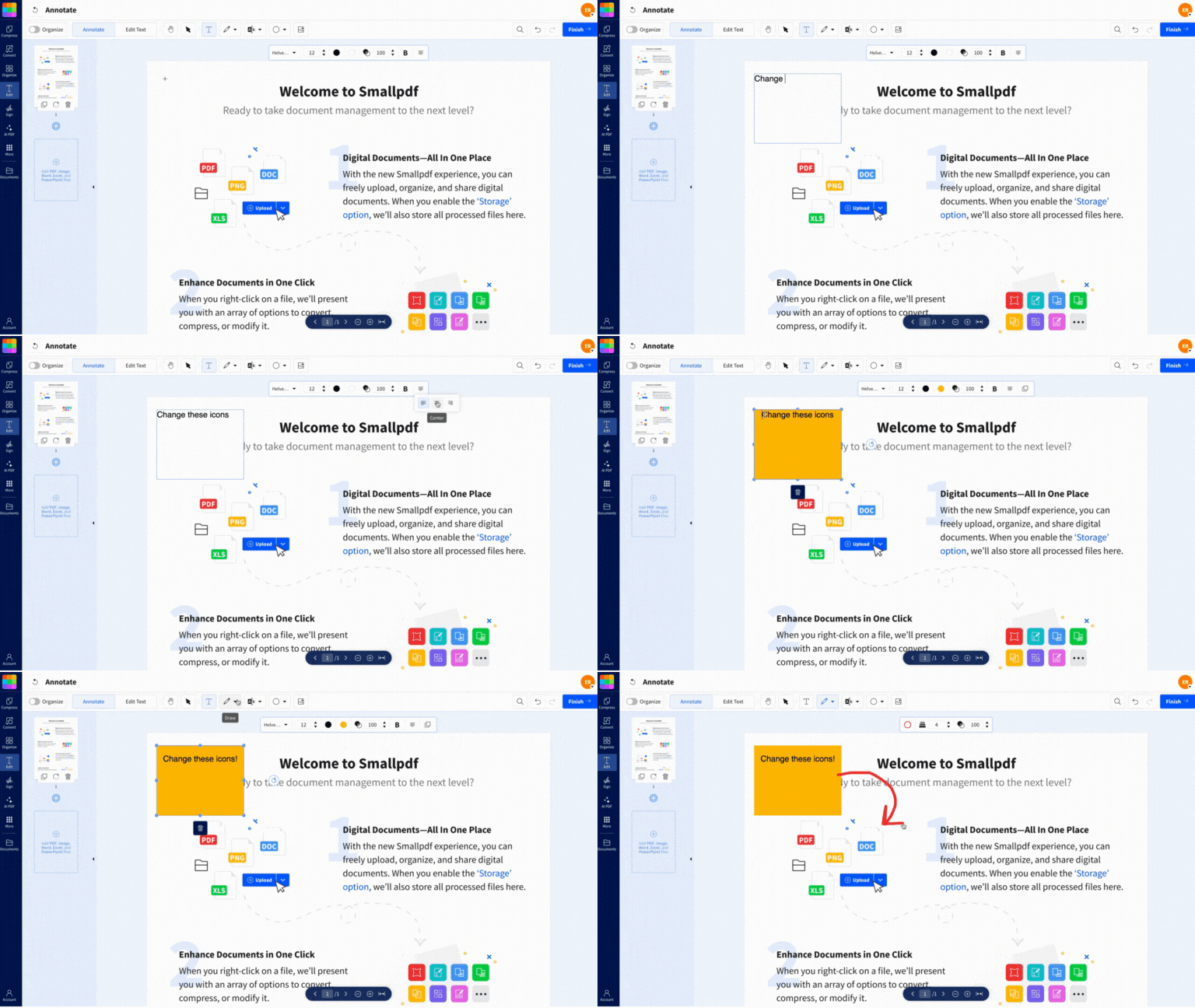
This method works well for day-to-day review work because you don’t have to match the reviewer’s device to your own. Everyone sees the same markup in the same place, as long as they open the file in a PDF viewer that supports annotations.
What Makes Smallpdf Helpful for Commenting
Smallpdf is not just a place to drop a sticky note. It’s also a good option when you need to keep your review workflow tight.
A few practical advantages:
You can upload from your device or from Google Drive, Dropbox, and OneDrive, which saves time when files live in cloud folders.
You can keep your original layout intact while still leaving detailed feedback on top.
You can follow up with other PDF actions when needed, like converting the file to Word for deeper edits, compressing it for email limits, or protecting it with a password.
Privacy and Handling Notes for Online Commenting
When you comment on PDFs, you’re often working with contracts, financials, HR files, or internal drafts. That makes privacy a real part of the decision.
With Smallpdf, files are protected during transfer with TLS encryption and automatically deleted after a short retention period. Smallpdf also supports GDPR compliance and ISO 27001 certification for information security.
Free usage limits can apply, and some advanced features are available with Smallpdf Pro.
Why Comments Make PDF Reviews Easier
PDFs are strong at preserving formatting. That’s the reason people use them for proposals, contracts, and final drafts. The downside is that ‘preserve formatting’ can also mean ‘harder to respond to.’
Comments fix that. You can keep the PDF stable while still making the review process clear because comments:
Reduce miscommunication because feedback is attached to the exact spot
Speed up approvals because reviewers can scan highlights and notes quickly
Keep context intact, especially for tables, totals, and legal sections
Make it easier to track what changed across review rounds, as long as you save versions clearly
If your goal is collaboration, the best comments are short, specific, and anchored to a clear place in the document.
Add Comments to a PDF on Mac With Preview
Mac Preview is built in, so it’s a solid option when you want quick notes without installing anything. It works best for individual review or light collaboration.
Here’s how to add comments to a PDF in Preview:
Open the PDF in Preview.
Click the markup button to show the Markup toolbar.
Click the Note icon, then click the page to place the comment.
Type your note, then click outside the note to collapse it.
Press “Command” + “S” to save your changes.
Preview also supports highlights, text boxes, shapes, and freehand drawing. If you want your feedback to stay readable, zoom in before placing notes so they land exactly where you intend.
Useful Preview Shortcuts
If you review PDFs often, shortcuts make the process feel smoother.
| Action | Shortcut |
|---|---|
| Show Markup Toolbar | “Command” + “Shift” + “A” |
| Add Note | “Command” + “Control” + “N” |
| Highlight Text | “Command” + “Control” + “H” |
Preview has one behavior that surprises people. Notes often collapse into a small icon after you finish typing. That keeps pages cleaner, but it can also make comments easier to miss unless the reviewer clicks each note.
Add Comments to a PDF on Windows With Microsoft Edge
On Windows, Microsoft Edge includes a built-in PDF viewer with basic commenting. It’s a fast option for lightweight review work, especially when you already open PDFs in your browser.
Here’s how to add comments to a PDF in Microsoft Edge:
Open your PDF in Microsoft Edge.
Highlight the text you want to comment on.
Right-click the highlight, then choose “Add comment.”
Type your note into the comment box.
Click the checkmark to save the comment.
Press “Ctrl” + “S” to save the PDF with your markup.
A quick tip that helps: Edge also has an annotation bar near the top of the viewer for drawing and highlighting, depending on your version and settings.
Where Edge Can Feel Limited
Edge works best for basic notes, not detailed review workflows.
A few limits to expect:
Annotation features are simpler than dedicated PDF editors.
Comment viewing and sharing can vary if teammates use different viewers.
Some secured PDFs block markup depending on how the file was locked.
If you need consistent results across teams and devices, online annotation often creates fewer surprises.
Add Comments to a PDF on Mobile
Mobile markup is useful when you need to approve a line item, flag an issue, or leave quick feedback while away from your desk. It’s less comfortable for long documents, so it helps to keep comments short and zoom in before placing them.
iPhone and iPad With Markup
iOS includes Markup, which works in Files and some mail and preview screens.
Here’s a common workflow:
Open the PDF in the Files app, Mail, or another app that supports Markup.
Tap the Markup icon, which looks like a pen tip.
Tap “+” to add text, shapes, or a signature, or use the pen to write.
Tap “Done” to save the annotated copy.
If you use an Apple Pencil, handwriting feels smoother and more precise, especially for circling or underlining.
Android With Google Drive or a PDF Viewer
Android devices can annotate PDFs, but the exact buttons can vary by device brand and app version. Google Drive is a common starting point, and many Android viewers have an “annotate” option.
A typical approach looks like this:
Open the PDF in Google Drive or your PDF viewer app.
Tap the annotate or edit icon, often shown as a pen.
Use highlight or pen markup to mark the section you’re discussing.
Save changes as a copy so you don’t overwrite the original by mistake.
If you don’t see any annotate option, your current viewer might be read-only. In that case, you’ll need a PDF app that supports markup or an online option that works in your mobile browser.
Using Smallpdf on Mobile
If you switch between laptop and phone often, the biggest win is consistency. Smallpdf on mobile keeps the commenting workflow similar across devices, so you don’t have to relearn where each platform hides the markup controls.
You can also pull files directly from cloud storage, comment, then save the updated file back to the same folder.
Common Problems When Comments Don’t Work
Commenting looks simple until something goes wrong. These quick fixes cover the most common issues people hit across Edge, Preview, and mobile viewers.
1. The PDF Won’t Let Me Add Comments
This usually comes down to one of these causes:
Your viewer is read-only and doesn’t support annotations.
The PDF has restrictions that block commenting or editing.
You’re working with a scanned PDF image and expecting selectable text tools.
If you’re blocked in one app, try a different viewer that supports annotations. If the file is restricted, you may need permission from the document owner to remove restrictions.
2. My Comments Don’t Show Up for Other People
This is common when:
The other person uses a PDF viewer that doesn’t support annotation display.
The PDF was not saved after markup.
Comments were added in a format that isn’t embedded into the PDF in a standard way.
A simple rule helps. After adding comments, save the PDF and test it by reopening the file in another viewer on your own device.
3. My Comments Won’t Print
Printing comments depends on the print settings and the viewer. Many apps let you print “Document” only, which can hide annotations.
If comments don’t print:
Open the PDF in a desktop viewer that supports annotation printing.
Look for a print option that includes “annotations” or “comments.”
Try printing to PDF first to confirm the markup appears in the output file.
4. The PDF Is Scanned and I Can’t Highlight Text
A scanned PDF is often just an image of a page. You can still add comments on top, but text highlights may not behave like normal because the text isn’t actually recognized.
If you need true text selection, search, or copy, OCR is the step that turns images into real text. OCR can be available with Smallpdf Pro.
When You Need More Than Basic Comments
Most reviews only need highlights and a few notes. Some workflows need more structure, especially in teams.
You may need a more advanced setup if you deal with:
Multiple reviewers commenting in parallel, with version handoffs
Strict version control across several review rounds
Audit-style tracking that records who commented and when
Heavier markup conventions, like formal redlining
In those cases, the method you choose matters less than how you manage versions. Saving clear file names like “Contract-v3-reviewed” reduces confusion fast.
Smallpdf vs Other Methods: Why Choose Our Tool
If you’re deciding between the quick built-in options and an online workflow, this table sums up the practical differences.
| Feature | Smallpdf PDF Annotator | Mac Preview | Microsoft Edge |
|---|---|---|---|
| Works across devices and browsers | Yes | No | No |
| Upload from Google Drive, Dropbox, OneDrive | Yes | No | No |
| Consistent markup controls across platforms | Yes | macOS only | Windows only |
| Sharing-friendly for mixed-device teams | Yes | Limited | Limited |
| Helpful next steps if a review turns into edits | Convert, compress, protect | Limited | Limited |
Preview and Edge can be great for a quick personal review. If you’re collaborating with people on different devices, consistency usually becomes the deciding factor.
Add Comments to Your PDF With Smallpdf
When you need comments that are easy to place, easy to read, and easy to share, Smallpdf PDF Annotator keeps the workflow consistent across devices.
Upload from your device or cloud storage, add feedback, then download or share the updated PDF in minutes.
Frequently Asked Questions
Can I add comments to a PDF without Adobe Acrobat?
Yes. You can comment using Smallpdf PDF Annotator, Mac Preview, Microsoft Edge, and many mobile markup options. The best choice depends on your device and how you plan to share the PDF.How do I see all comments in a PDF?
Many PDF viewers show comments as small icons or highlighted text. If you don’t see comments, open the PDF in a viewer that supports annotations, then click a highlight or note icon to expand it.Can I print a PDF with comments visible?
Often, yes, but you need the right print setting. Check your print dialog for an option that includes “comments” or “annotations,” or print to PDF first to confirm markup is included.Why can’t I comment on my PDF?
Your PDF viewer might be read-only, or the file may have restrictions set by the creator. Try opening the file in a different viewer that supports annotations. If the file is restricted, you may need permission from the document owner.How do I delete or edit my comments?
Most apps let you click the comment, then choose delete or edit from a small menu. If you can’t select the comment, zoom in and try again, since mobile viewers can make small notes hard to tap.Can multiple people comment on the same PDF?
Yes, but it works best with version discipline. Share one “current” file, collect comments, then save a new version for the next round so feedback doesn’t get overwritten.Add and manage PDF comments with Smallpdf