- CompressConvertAI PDF
- Organize
- View & Edit
- Convert from PDF
- Convert to PDF
- SignMoreScan
- Home
- ›
- ›How to Check Font Size in PDF and Find Font Type and Color
How to Check Font Size in PDF and Find Font Type and Color
Need to match a PDF’s typography? Here are the fastest ways to check font size in PDF files, identify font type, and match colors with Smallpdf.
PDFs don’t behave like Word documents. You can’t always click text and see the font size, family, or color. Sometimes the text is editable. Other times it’s embedded, outlined, or part of a scan.
In this guide, we’ll show you the fastest ways to inspect font size in PDFs. Then, we’ll walk you through how to identify font type and color, and what to do when the PDF won’t give you much to work with.
Quick Guide: Font Size, Type, and Color
If you’re in a hurry, use this as your decision map.
| What You Need | Fastest Reliable Method | Best For |
|---|---|---|
| Font size | Add a text box in Smallpdf Edit PDF and size-match visually | Most editable PDFs and “match the look” edits |
| Font type | Compare fonts in Smallpdf Edit PDF by typing a sample line | Common fonts and quick replacements |
| Font list used in the PDF | Check the PDF’s “Fonts” list in a desktop PDF editor (if available) | When you need exact font names |
| Font color | Use the text color picker in Smallpdf, then paste a hex code from a color picker | Brand work and consistent styling |
| Scanned PDF text | Run OCR first, then match size and style | Images saved as PDFs |
How to Check Font Size in PDF With Smallpdf: Step-by-Step Guide
Smallpdf Edit PDF lets you add text and adjust font size from the on-screen toolbar, which makes it a solid way to match existing text when you’re editing a PDF quickly.
Step 1: Open Smallpdf Edit PDF and Upload Your PDF
Go to Edit PDF and upload your file from your device. You can also pull it in from Google Drive, Dropbox, or OneDrive using the editor upload area below.
Step 2: Add a Text Box Near the Text You Want to Match
Click “Text” in the toolbar, then click near the original text to place a text box. Type a short sample that includes letters with clear shapes, like ‘ag’ or ‘e.’
Step 3: Adjust the Font Size Until the Baselines Match
Use the font size control in the toolbar and increase or decrease until your sample text lines up with the original.
A quick accuracy trick is to zoom in first. Small size differences are hard to spot at 100%.
Step 4: Lock in Spacing and Alignment
Once the size matches, nudge the text box so the baselines sit evenly. If the PDF uses tight line spacing, keep your text box narrow so it wraps in a similar way.
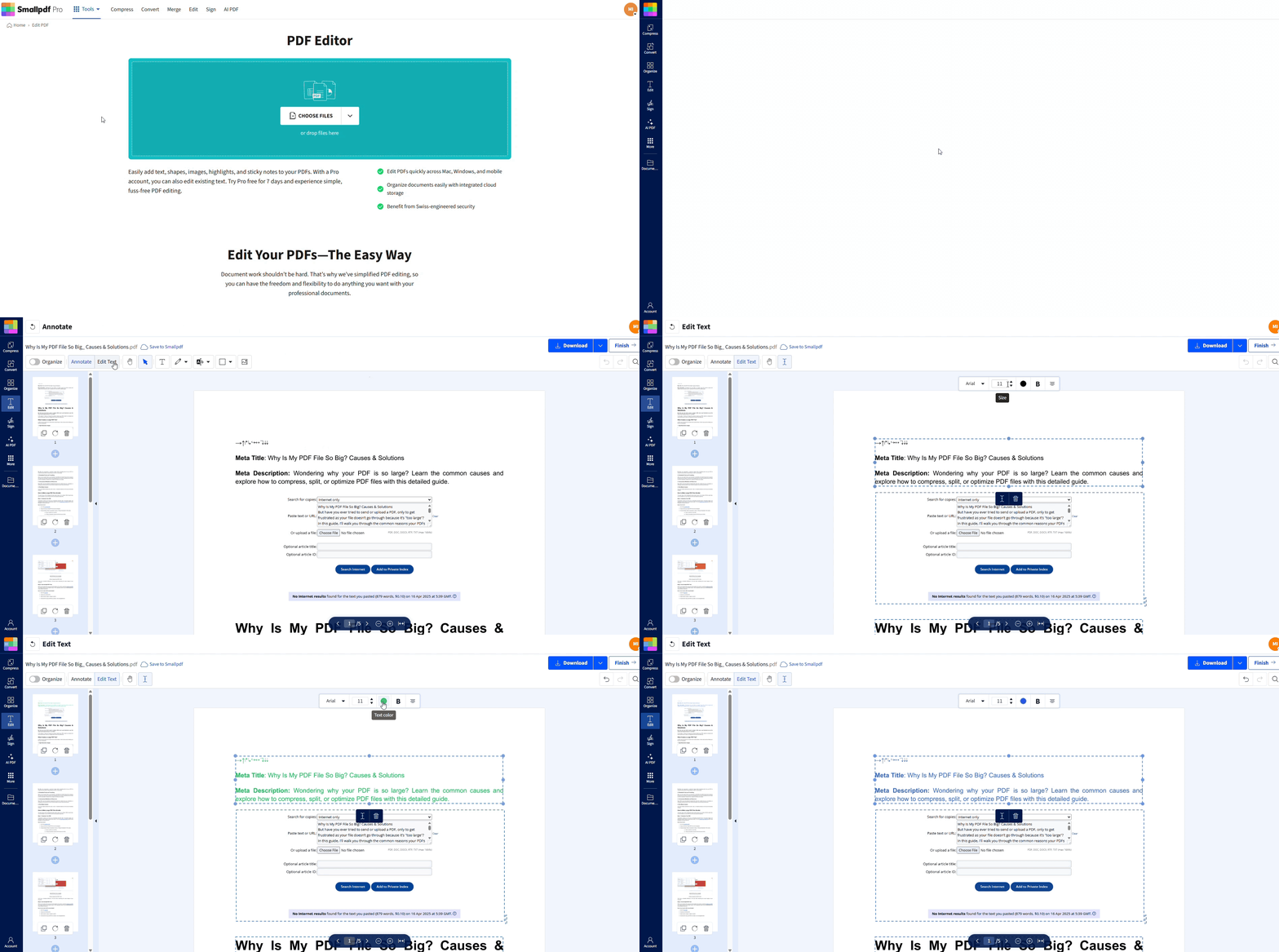
How to Check Font Size in PDF With Smallpdf: Step-by-Step Guide
You can’t print directly from a Kindle device or app—you’ll need to convert your book to PDF first on a computer. Amazon applies digital rights management (DRM) protection to most of its e-books, preventing users from doing whatever they want with them.
Don’t worry—it’s easier than it sounds! Here’s what you’ll need to get started:
A computer (Windows, Mac, or Linux)
USB cable to connect your Kindle
Calibre software (free e-book management program)
DeDRM plugin for Calibre
Important: Remember to only print books for personal use to respect copyright laws.
Can You Print from the Kindle App or eReader?
Unfortunately, this isn’t an option. The Kindle apps available on iOS, Android, Mac, and PC are designed solely for reading and managing your e-book library. Because of DRM protection on most Kindle books, these apps do not give users the ability to print e-books directly.
When You Can Get the Exact Font Size
There’s a big difference between matching font size and actually reading the exact point size from the PDF.
If the PDF Text Is Truly Editable
In some PDFs, the text is editable in a way that preserves font data. In that case, you may be able to click text blocks and edit them directly.
Even then, point size visibility depends on how the PDF was created and what your viewer exposes. Many viewers still won’t show a clean font size value.
If the PDF Was Flattened or Outlined
If the text was converted to shapes, your cursor can’t see font size anymore. The matching method above becomes the reliable option.
Alternative Ways to Check Font Size in PDF Files
Sometimes you need another approach, especially when the layout is tight or the font is unusual.
Method 1: Convert to an Editable Format, Then Inspect
If the PDF needs heavy text edits, convert it to Word, check formatting there, then export back to PDF.
This can be faster for multi-page documents, especially when you need consistent headings and body styles.
Method 2: Use Line-Height Matching for Better Precision
If you can’t visually match the size quickly, measure the line height.
Zoom in until the text is large on-screen.
Use a pixel ruler or measurement overlay.
Adjust the font size until the height of your text line matches the original.
This works well for forms, invoices, and documents with strict spacing.
Method 3: Use Common Document Size Benchmarks
Many business PDFs follow common conventions. These won’t guarantee accuracy, but they help you pick a starting point.
8 pt: Footnotes, table notes
10 pt: Compact reports and forms
11 pt: Modern body text in many templates
12 pt: Common body text default
14–16 pt: Subheads and emphasis
18 pt and up: Titles and headers
Use these to start, then fine-tune with the Smallpdf matching workflow.
How to Find Font Type in a PDF
Once your font size looks right, font style becomes the next giveaway. If the typeface is off, everyone notices.
Method 1: Visual Font Matching in Smallpdf Edit PDF
This is the fastest path when you don’t need an exact font name.
Upload your PDF to Smallpdf Edit PDF.
Click “Text” and type a short sample line.
Cycle through the font list and compare letter shapes.
Focus on these letters first:
a and g (single-storey vs double-storey)
e (open vs closed)
t (crossbar height)
1 and 0 (document fonts often show distinct shapes)
If you’re replacing missing or substituted fonts, swapping to a standard font can restore readability fast.
Method 2: Check the PDF’s Embedded Font List in a Desktop PDF Editor
Some desktop PDF editors show a “Fonts” list in Document Properties. This can reveal exact embedded font names.
Two important limitations apply:
If fonts aren’t embedded, the list might be incomplete.
Subset fonts can show shortened names that don’t help much.
This method is best when you need the exact font name for a brand guideline or a template rebuild.
Method 3: Screenshot + Online Font Identification
If the font is unusual, a font identifier can help.
Screenshot a clean word with sharp edges.
Upload it to a font finder like WhatTheFont or WhatFontIs.
Compare the closest match in your PDF editor.
This is also handy when the PDF text isn’t selectable.
How to Check and Match Font Color in a PDF
Color is where almost right still looks wrong, especially in branded PDFs.
Smallpdf lets you change text color for text boxes using the editor controls.
Match Color in Smallpdf Edit PDF
Add or select a text box in Smallpdf Edit PDF.
Click the color control in the toolbar.
Choose a preset or paste a hex value if the picker supports it.
Pull the Exact Color From the PDF
If you need the exact brand shade:
Use a browser color picker extension.
Hover over the original text color to capture the hex code.
Apply that value to your added text.
Finding Fonts in Scanned PDFs
If the PDF is a scan, the text is an image. That means there’s no font data to inspect.
Option 1: Run OCR First
OCR turns the scan into searchable text, which makes copying and finding words easier. Smallpdf offers PDF OCR to make scanned files searchable.
OCR doesn’t always restore perfect formatting, but it can make font matching easier because you can copy text and compare structure.
Option 2: Match the Look Instead of Extracting Font Data
If you just need to add a name, date, or correction:
Add a text box on top of the scan.
Match font type visually.
Size-match using the font size workflow above.
Match the color so the edit blends into the scan.
This approach is often faster than rebuilding the whole page.
Troubleshooting PDF Font Detection Problems
PDFs can hide font details in a few common ways.
1. Subset Fonts
You might see font names that look shortened or coded. That usually means the PDF embedded only the characters it needed. Visual matching is the practical path here.
2. Font Substitution
If a device can’t load the original font, it can display a substitute like Arial or Times New Roman. This changes spacing and breaks the look.
If you see weird spacing or a different typeface across devices, pick a stable standard font inside the editor and recheck the layout.
3. Text Isn’t Selectable
This usually means the file is a scan or the text was outlined. Use OCR for scans, or match visually for outlined text.
4. Your New Text Shifts the Layout
Text boxes can expand and overlap nearby elements.
Reduce font size slightly, widen the text box, or reposition it so the surrounding layout stays readable.
Why Use Smallpdf for Font Matching in PDFs
If your goal is clean edits that look like the original PDF, Smallpdf Edit PDF keeps the workflow simple.
You can add text boxes and adjust font size from the toolbar.
You can swap fonts to fix missing or substituted text quickly.
You can change text color to match brand styling.
You can work in a browser on Mac, Windows, iOS, and Android.
For sensitive documents, Smallpdf uses TLS encryption, is ISO/IEC 27001 certified, and is GDPR compliant. Files are typically deleted automatically after one hour for most tools.
Match Font Size First, Then Dial In the Details
If you want edits that blend in, start with how to check font size in PDF files using a size-match workflow in Smallpdf Edit PDF. Once the size is right, matching font type and color becomes much easier.
When the PDF won’t reveal anything, treat it like a design match job. Add text, size it, style it, color-match it, and keep the layout clean. Start a free trial and start making changes.
Check Font Size in PDF Now
Frequently Asked Questions
How to check font size in PDF files if the text is editable?
Add a text box near the original line in Smallpdf Edit PDF, then adjust size until both lines match. Zoom in to spot small differences.Why can’t I see the exact font size in my PDF viewer?
Many PDF viewers don’t expose font size values, even when text is selectable. PDFs store text differently than Word docs, so matching is often more reliable than reading the value.How do I check font size in a scanned PDF?
You can’t read font size from a scan because it’s an image. Run OCR to make it searchable, or add a text box and match size visually on top of the scan.What if my added text doesn’t align with the original?
Zoom in, match baseline alignment, then resize from a corner so proportions stay consistent. If the line spacing is tight, narrow the text box so wrapping matches.Why does the font look different after I export or share the PDF?
That’s often font substitution. If the original font wasn’t embedded, another device can replace it with a default font. Embedding fonts during export prevents that.Can Smallpdf tell me the exact font name used in a PDF?
Smallpdf Edit PDF is built for editing and matching, not listing embedded font metadata. If you need exact font names, check the PDF’s font list in a desktop PDF editor, then use Smallpdf to apply matching edits.Inspect fonts in PDFs for design accuracy Smallpdf Pro
Related Articles