- Home
- ›
- ›The Most Punishing Forms in America, Ranked by Complexity
The Most Punishing Forms in America, Ranked by Complexity
Smallpdf ranked eight major U.S. forms by difficulty and found that confusing paperwork is costing Americans money, benefits, and opportunities.
For millions of Americans, filling out paperwork determines whether someone can access healthcare, financial aid, housing, employment, or other life-changing opportunities, yet many are difficult to understand and complete correctly. To identify which forms create the biggest obstacles, Smallpdf developed a Complexity Index that evaluated eight common government and institutional forms using measurable factors including completion time, field count, reading level, page count, and published error or rejection rates. Combined with a nationwide survey of 1,005 Americans, the findings reveal how overly complex paperwork creates real financial, emotional, and practical consequences.
Key takeaways
The ACA/Medicaid application is America's most punishing form, with 556 fields and a 69% paperwork-failure rate.
The FAFSA is America's second most punishing form, with 463 fields across 23 pages standing between students and college financial aid.
46% call the IRS Form 1040 their most stressful form, and 39% have quit it midway.
1 in 4 Americans have quit an important form before finishing it, with Gen Z (33%) being the most likely to do so.
31% of Americans have missed out on money, benefits, housing, school, or a job because of a form that was too complex to complete.
Nearly 1 in 3 Americans (29%) have used an AI tool or chatbot to help complete an important form.
America's Most Complex Forms Have the Highest Stakes
Some paperwork carries consequences that reach far beyond a delayed task. The forms that unlock healthcare and education also ask applicants to navigate hundreds of fields, multiple pages, and processes where even small mistakes can have lasting effects.
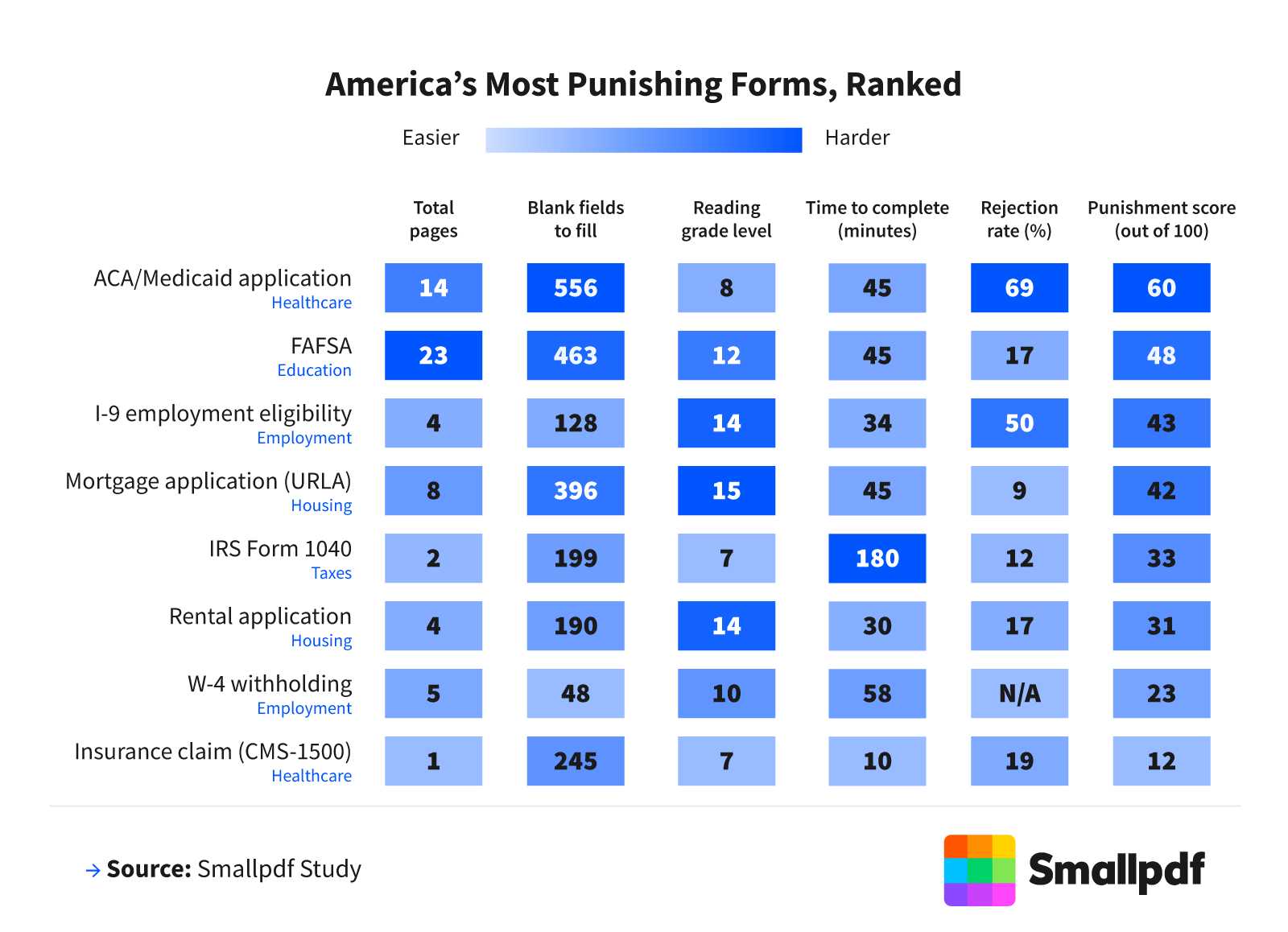
The ACA/Medicaid application ranked as the most punishing form in America. It contained 556 fields and carried a 69% paperwork-failure rate, making it the highest-scoring form on the Complexity Index. For many applicants, the process of qualifying for healthcare begins with completing one of the most demanding forms they may ever encounter.
The FAFSA followed closely behind as the nation's second most complex form. Students seeking financial aid faced 463 fields spread across 23 pages, creating a lengthy application before they could access grants, loans, or scholarships. When essential opportunities depend on completing extensive paperwork correctly, complexity becomes more than an inconvenience. It can become a barrier to education and financial security.
Why People Walk Away From Important Paperwork
Lengthy forms are only part of the challenge. Frustration, confusion, and repeated setbacks often make completing important paperwork feel overwhelming, leading many Americans to delay or abandon forms altogether.
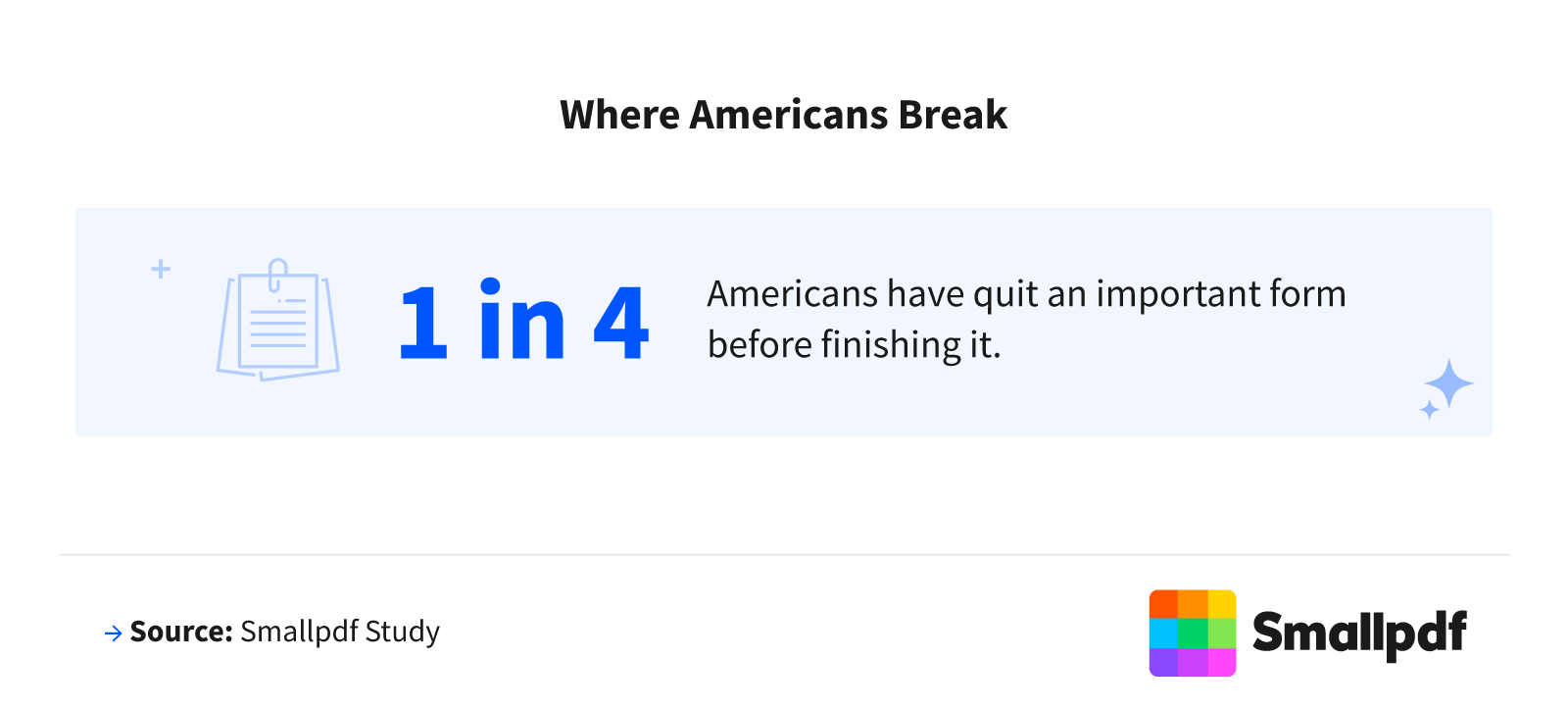
One in four Americans admitted they had quit an important form before finishing it. Younger adults struggled the most, with 33% of Gen Z saying they had abandoned an important application midway through. More than a quarter of respondents (28%) also believed dealing with these forms had become harder over the past two years, suggesting that paperwork continues to grow more challenging instead of more accessible.
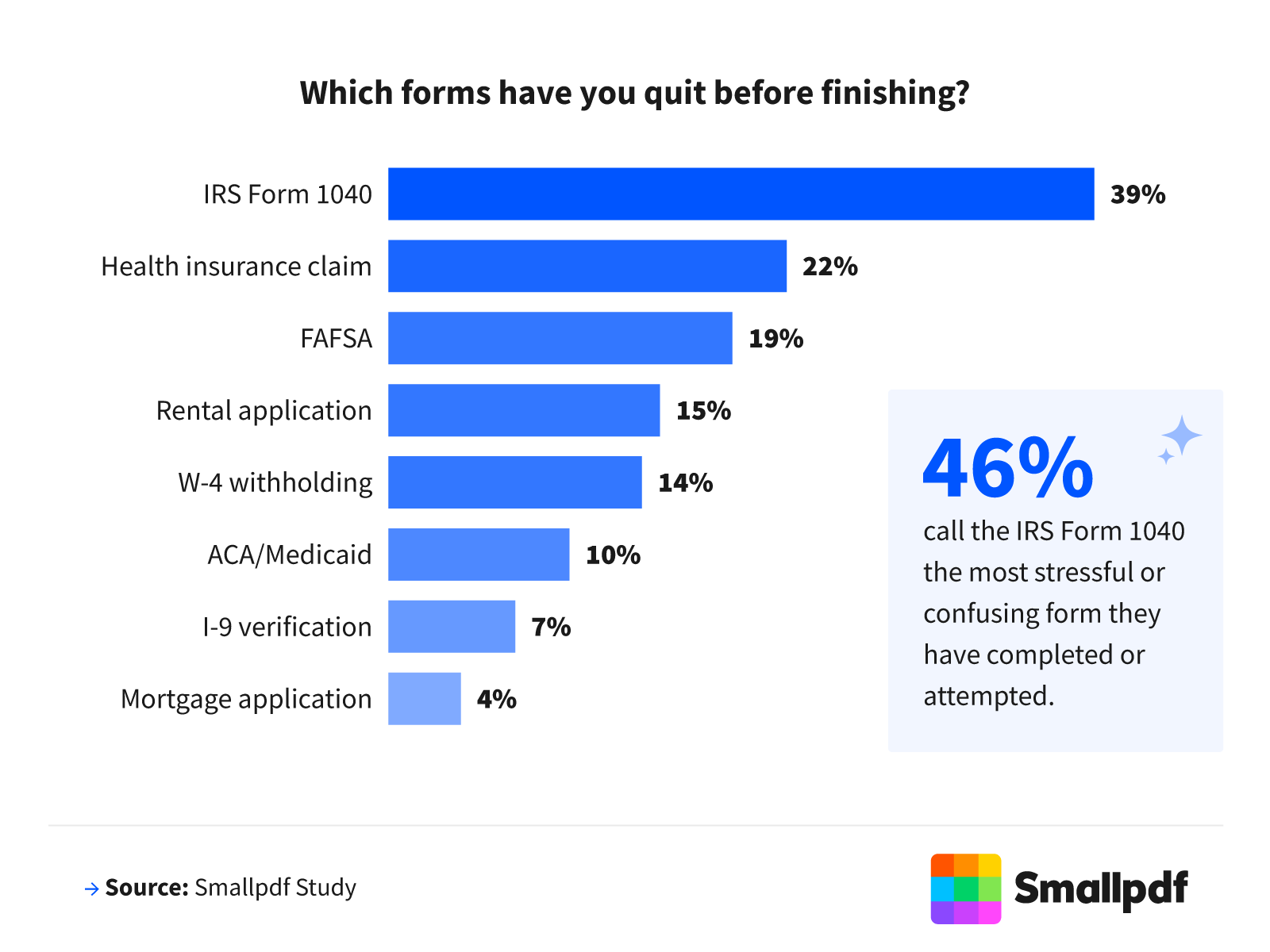
Although the ACA/Medicaid application ranked as the most objectively complex form measured, only 10% of Americans said they had quit completing it. The IRS Form 1040 told a different story. Despite placing only fifth out of eight forms on the Complexity Index, 46% identified it as their most stressful form, while 39% said they had abandoned it midway through. Familiarity, deadlines, and financial consequences may influence stress just as much as objective complexity.
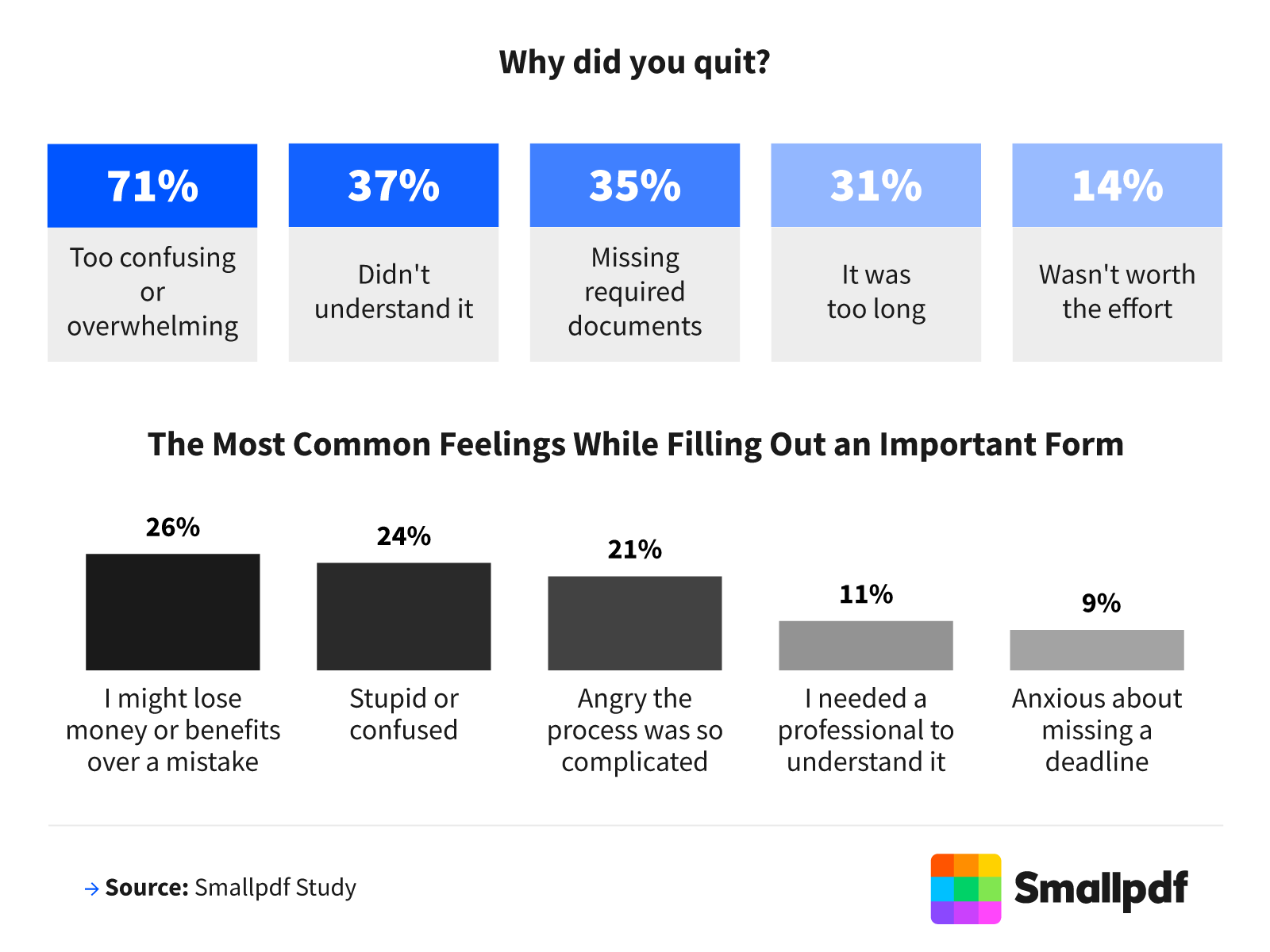
The emotional toll appeared just as significant as the practical one. Among Gen Z respondents, 37% said important forms made them feel stupid or confused. Another 18% admitted they had lied to or misled a partner or family member about already finishing an important form, highlighting how paperwork can create feelings of embarrassment and avoidance.
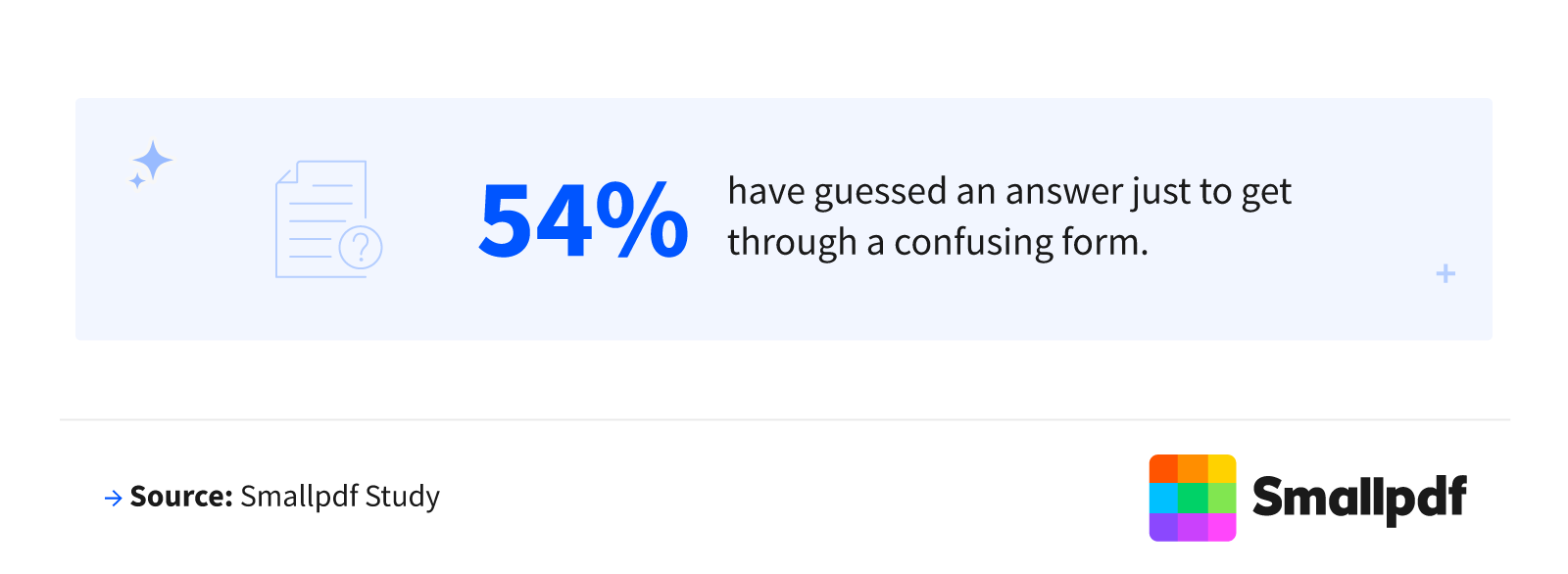
The burden also discouraged people from pursuing benefits they deserved. More than one in five Americans (22%) reported skipping an insurance claim because completing the paperwork simply was not worth the effort. Even when support is available, overly complicated processes can prevent people from accessing it.
When Complexity Creates Real-Life Consequences
Complicated forms don't just consume time. They can shape major life outcomes by creating obstacles between people and opportunities they need, while also changing how Americans seek help when paperwork becomes overwhelming.
A majority of Americans (63%) believed government and institutional forms were intentionally designed to make people give up. Whether or not that perception reflects the intent behind these documents, it highlights widespread frustration with processes that many people feel are unnecessarily difficult to navigate.
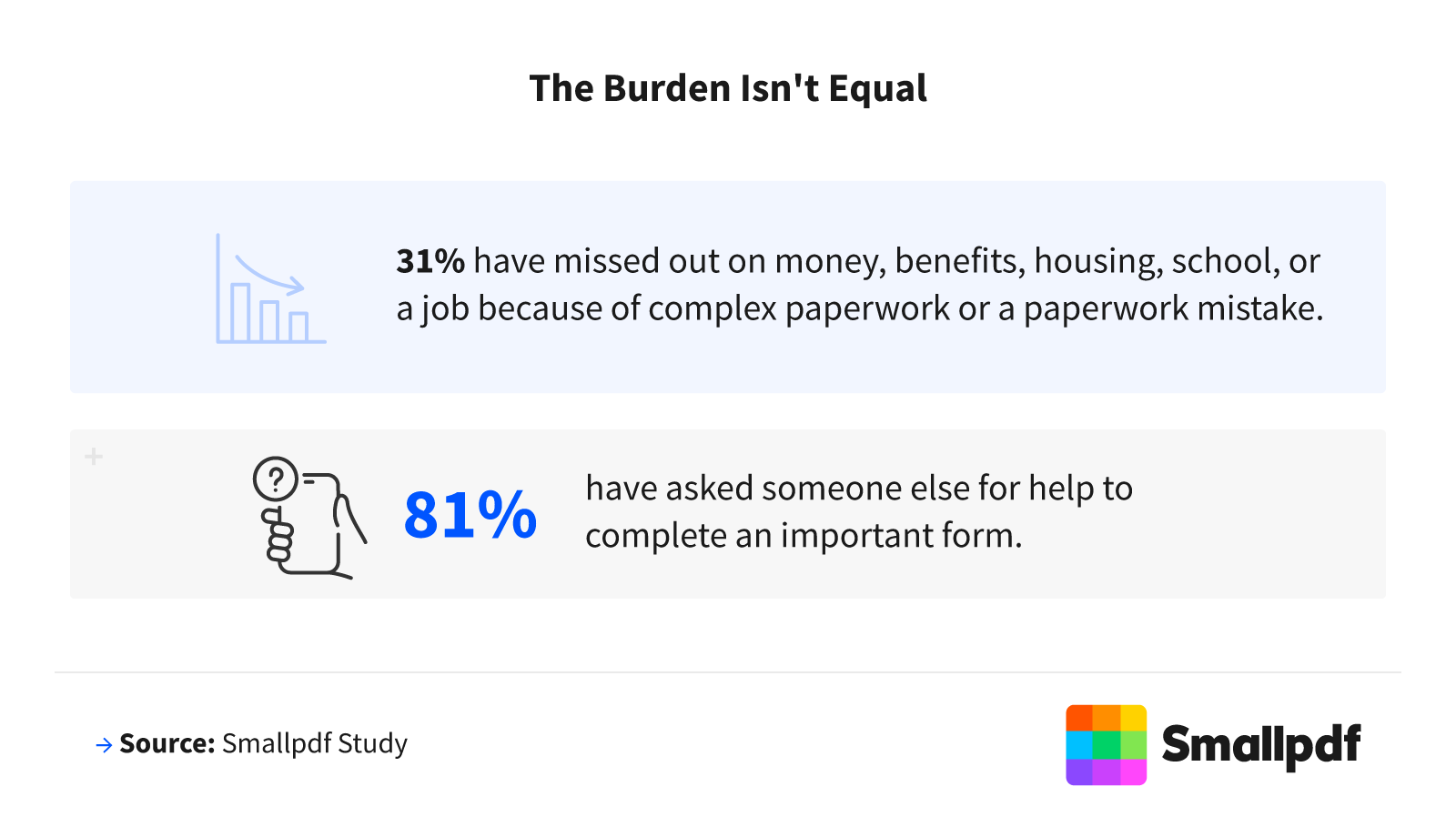
The consequences extended far beyond inconvenience. Nearly one-third of Americans (31%) reported missing out on money, benefits, housing, school, or a job because a form was too complex to complete. When essential services depend on lengthy applications, confusing instructions, or error-prone paperwork, complexity can become a barrier to opportunity.
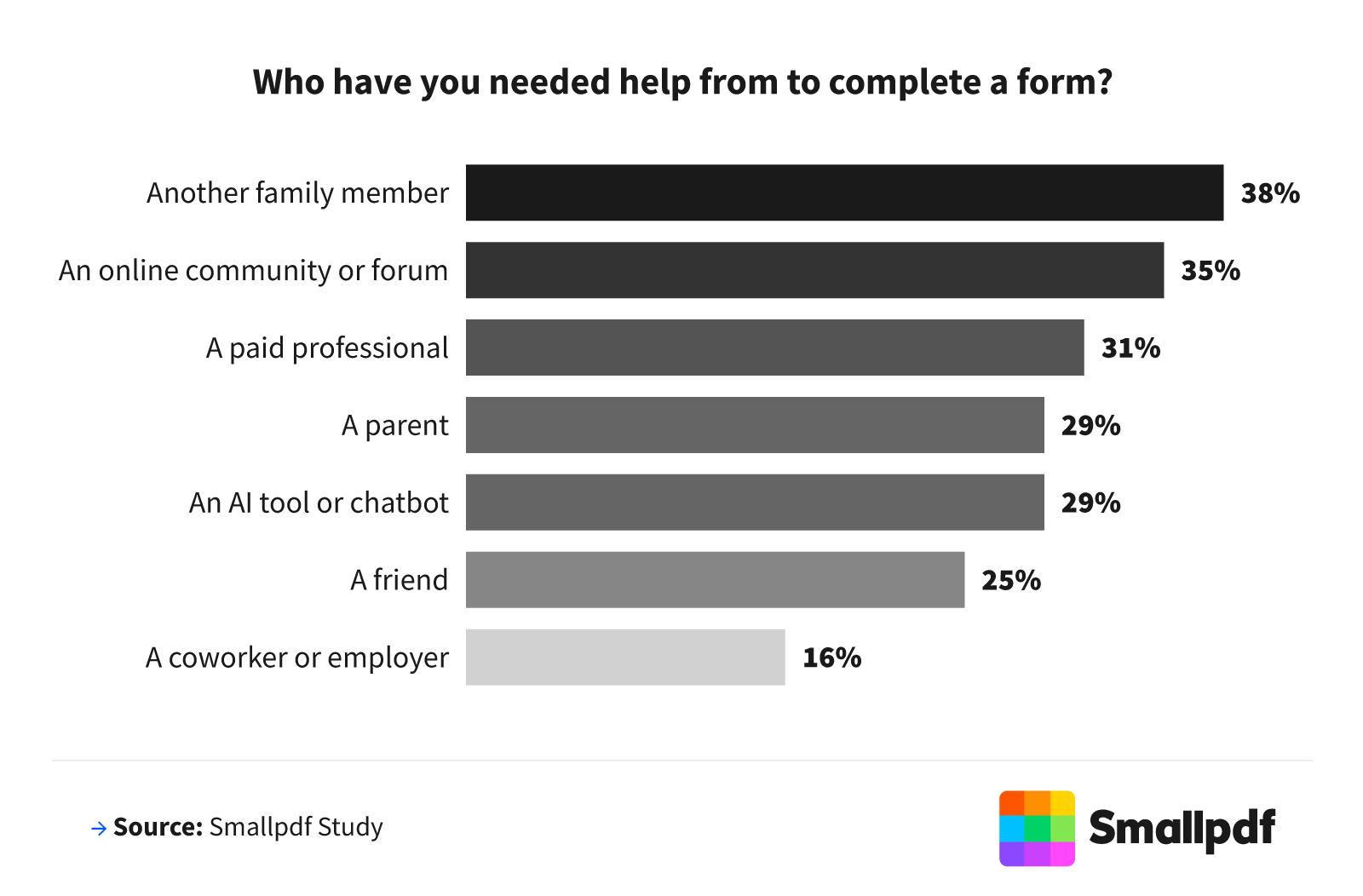
Most Americans also relied on others to get through important paperwork. More than four in five respondents (81%) said they had needed someone else's help to complete an important form, leaving only one in five who regularly handled these documents on their own. Friends, family members, financial professionals, and other trusted sources often became an essential part of navigating high-stakes applications.
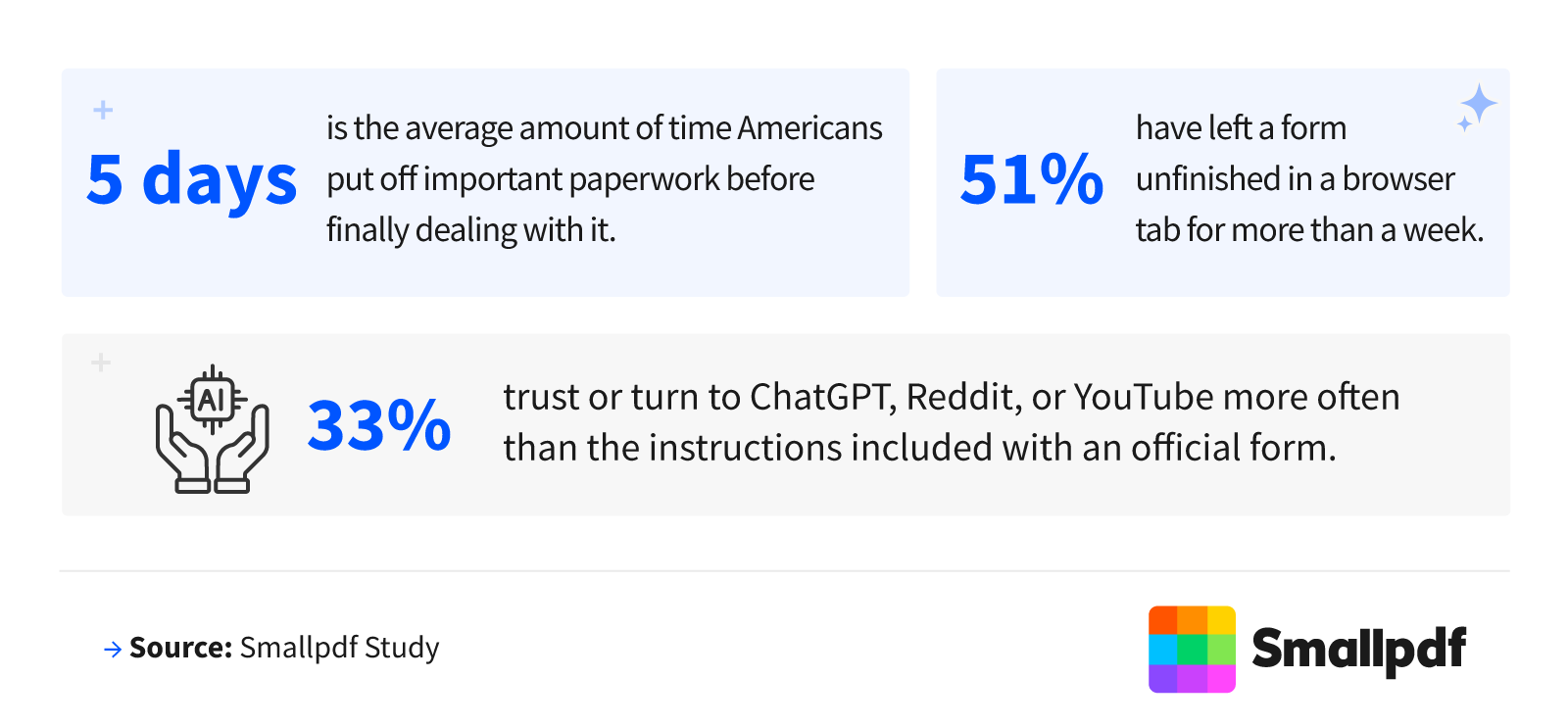
Technology has also become part of that support system. Nearly one in three Americans (29%) said they had used an AI tool or chatbot to help complete an important form. As digital tools become more common, many people are looking for ways to simplify confusing paperwork and reduce the likelihood of costly mistakes.
Complexity Shouldn't Stand Between People and Opportunity
Paperwork isn't going away, but a few habits can make it less painful. Here's how to tackle a complex form without losing hours or your patience:
Break the form into sections: Tackling one page or category at a time feels less overwhelming than facing hundreds of fields at once.
Keep digital copies organized: Storing scans and signed documents in one place saves time on forms that ask for the same paperwork more than once. A tool like Smallpdf's PDF combiner can merge scattered files into a single document before you upload.
Ask for help early: More than four in five Americans have needed someone else's help with a form, so reaching out to a professional or a trusted contact isn't a last resort.
Use AI as a starting point, not a final answer: AI tools can help explain confusing terms, but they can also get details wrong. Always double-check anything AI-generated against the official form instructions before you submit.
Methodology
The Complexity Index ranks eight of the most commonly required U.S. government and institutional forms—the FAFSA, IRS Form 1040, W-4, I-9, ACA/Medicaid application, health insurance claim (CMS-1500), rental application, and mortgage application—by how difficult they are to complete. Each form was scored on five measurable factors and combined into a single Complexity Score from 0 to 100, where a higher score indicates a more complex, more punishing form. Data was drawn from the official form PDFs, federal paperwork-burden filings, and agency and industry records.
Scoring factors and weights
Completion time (25 points): The estimated time to fill out the form, in minutes. For federal forms, this is the government's official Paperwork Reduction Act burden estimate; private forms use the best available industry estimate.
Source: OMB/RegInfo.gov, IRS, USCIS, CMS; industry estimates for the mortgage and rental applications.
Error/rejection rate (25 points): The published rate at which the form fails the filer—the share that is rejected, denied, or completed with errors.
Source: IRS Taxpayer Advocate, CFPB (HMDA), KFF, NASFAA, and industry screening data.
Number of fields (20 points): The number of separate fields a person must complete, counted directly from the official form PDF.
Source: Official form PDFs (IRS, Federal Student Aid, USCIS, CMS, Fannie Mae, Texas REALTORS).
Reading level (20 points): The reading difficulty of the form's text, measured as a Flesch-Kincaid grade level.
Source: Official form PDFs.
Page count (10 points): The number of pages in the official form, weighted lowest because it overlaps with field count.
Source: Official form PDFs.
Each factor was scaled from 0 (least complex form) to 100 (most complex), multiplied by its weight, and summed into the final Complexity Score. The W-4 has no rejection process, so it was scored on the other four factors, with their weights rescaled to 100. Because no single form ranks worst on every factor, even the highest-scoring form falls below 100. For forms without one national standard, a representative version was used (mortgage: Fannie Mae URLA/Form 1003; insurance claim: CMS-1500; rental: Texas REALTORS application). Rankings reflect the most complex form among the eight studied.
We also surveyed 1,005 Americans about their experiences completing important government and institutional forms, including tax returns, financial aid and health insurance applications, employment paperwork, and rental and mortgage applications. The sample spanned generations, including millennials (47%), Gen X (26%), Gen Z (17%), and baby boomers (10%), and skewed slightly female, with women (56%) and men (41%).
Methodology percentages not totaling 100% are due to rounding or to respondents selecting more than one option. The data was collected in July 2026.
About Smallpdf
Smallpdf helps millions of professionals, students, and businesses simplify document management with fast, secure, and easy-to-use PDF tools. From compressing, converting, and editing PDFs to eSigning important documents, Smallpdf streamlines every stage of the document workflow so users can spend less time dealing with paperwork and more time getting work done.
Fair Use Statement
The information in this article may be used for noncommercial purposes only. If you reference or share these findings, please provide proper attribution with a link back to Smallpdf.