The Documents Americans Can't Finish
A survey of 1,003 Americans shows how often people sign contracts, insurance policies, and medical forms without fully understanding them.
Signing a lease, accepting a job offer, or tapping "I agree" on an app update takes seconds, but understanding what you just agreed to takes a lot longer, and most people never get there. We surveyed 1,003 Americans about the paperwork they sign, then put them to the test with an excerpt from a real residential lease: half read the original legal wording, half read the same terms in plain English. What came back was a clear gap between how much people think they understand and how much they actually do.
Key takeaways
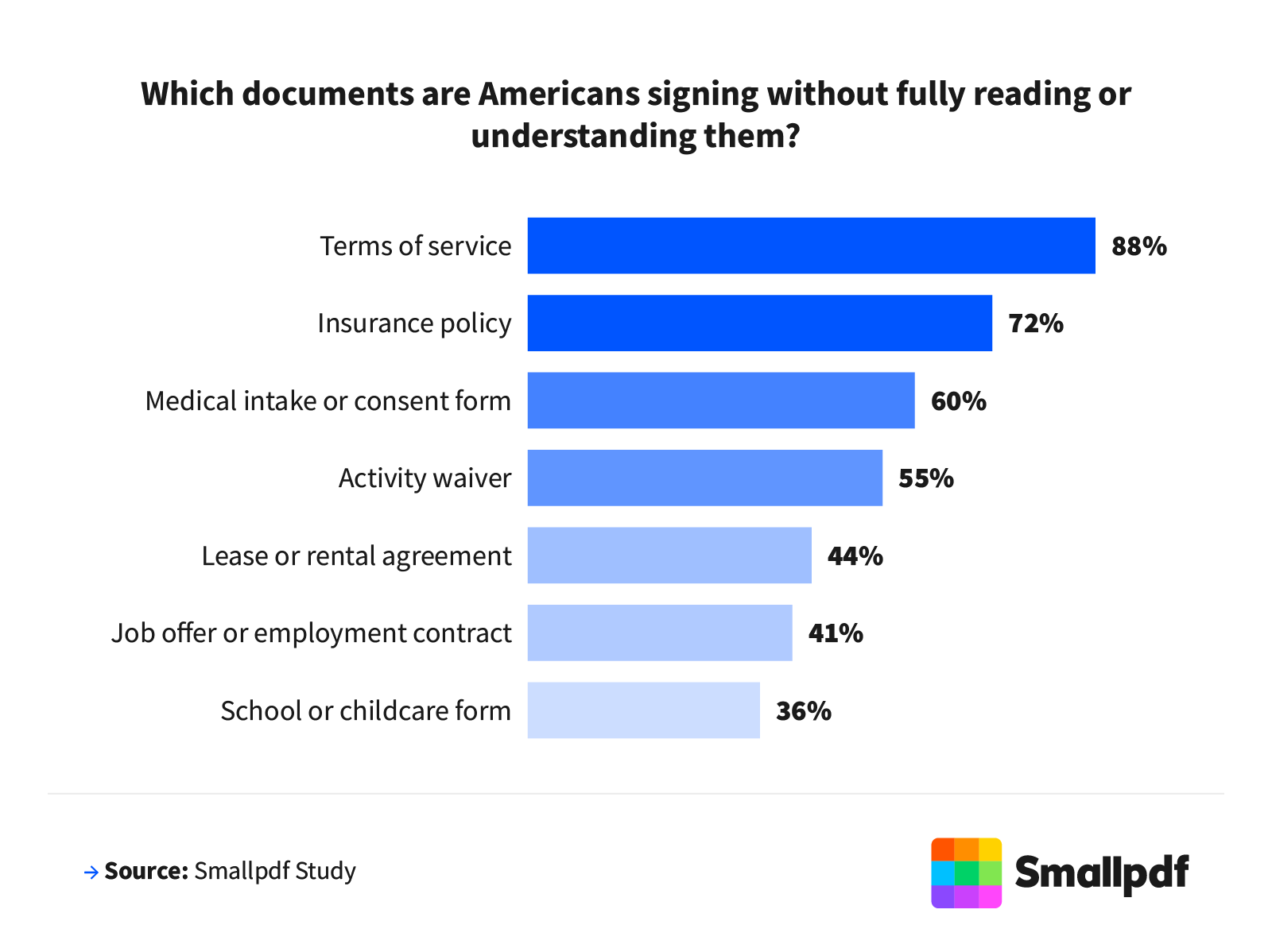
The three documents Americans are most likely to sign without reading are terms of service (88%), insurance policies (72%), and medical intake forms (60%).
89% of Americans admit signing an important document they didn't fully understand in the past year, with terms of service the most commonly skipped.
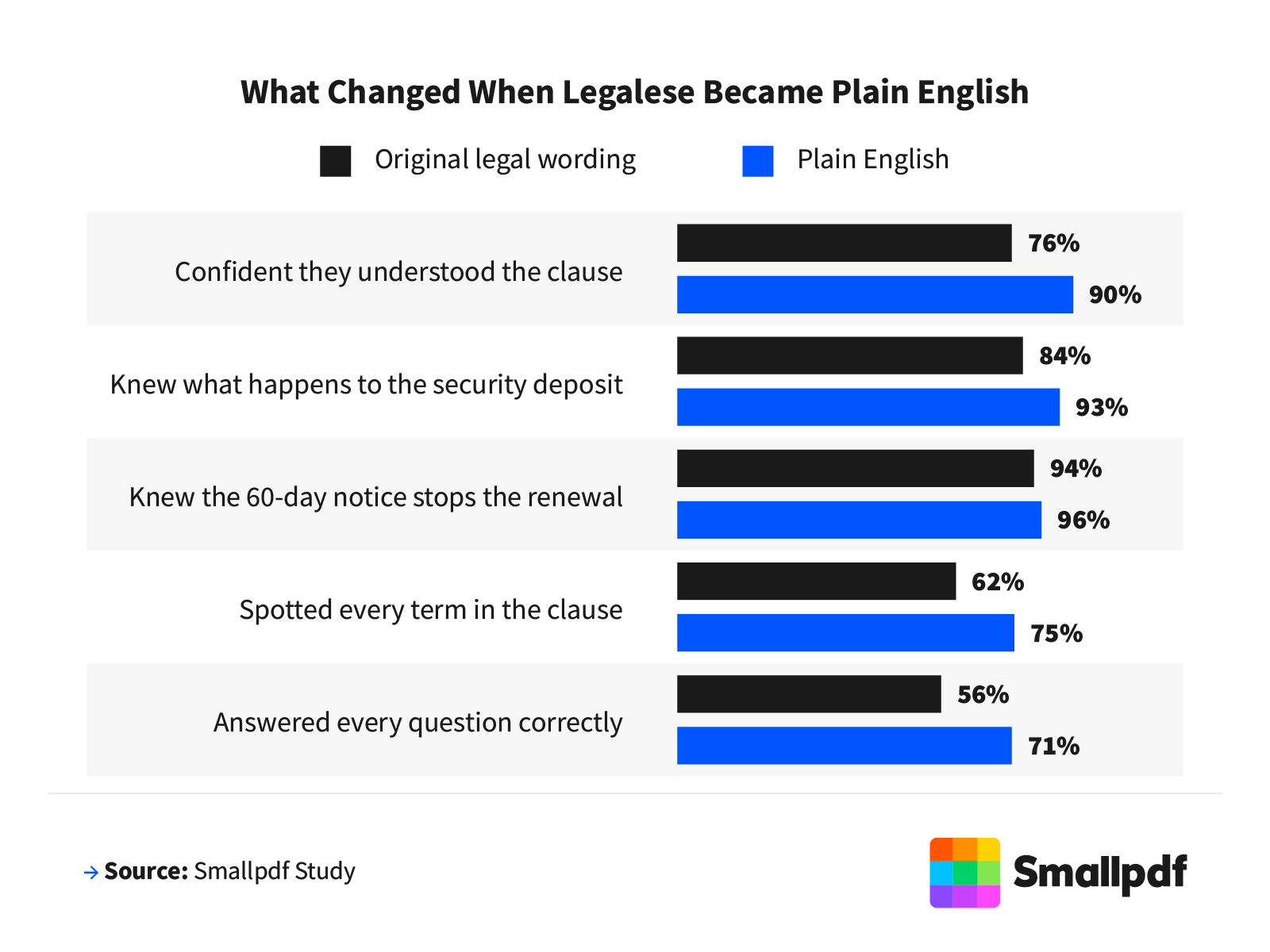
76% of Americans are confident they understood a lease clause in legal language, but only 62% could correctly say which terms it did and did not contain.
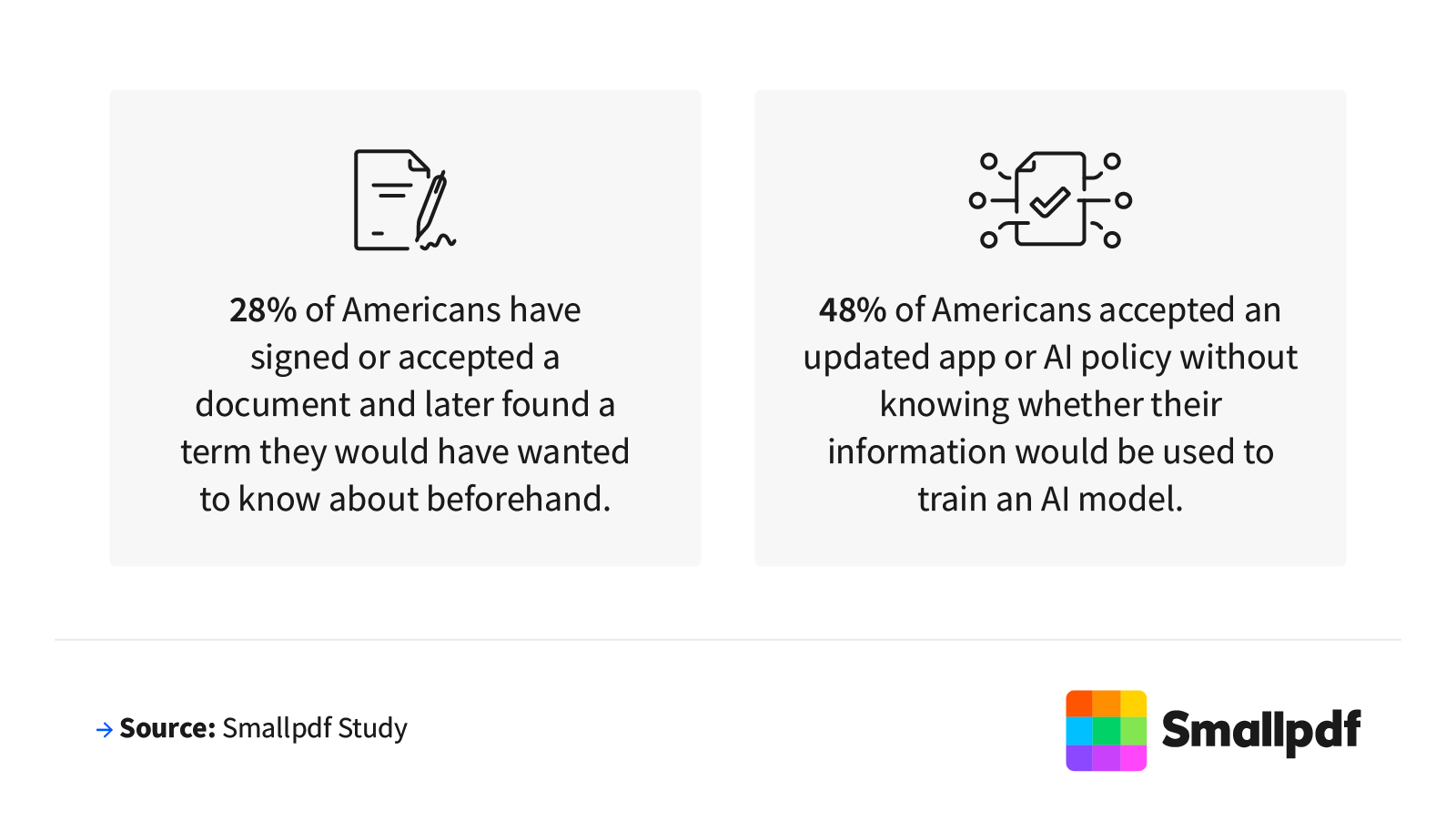
48% of Americans have accepted an app or AI policy update without knowing whether their data would be used to train a model.
Over 4 in 10 Americans (41%) have signed a job offer without fully reading or understanding it.
Sign Now, Read Never
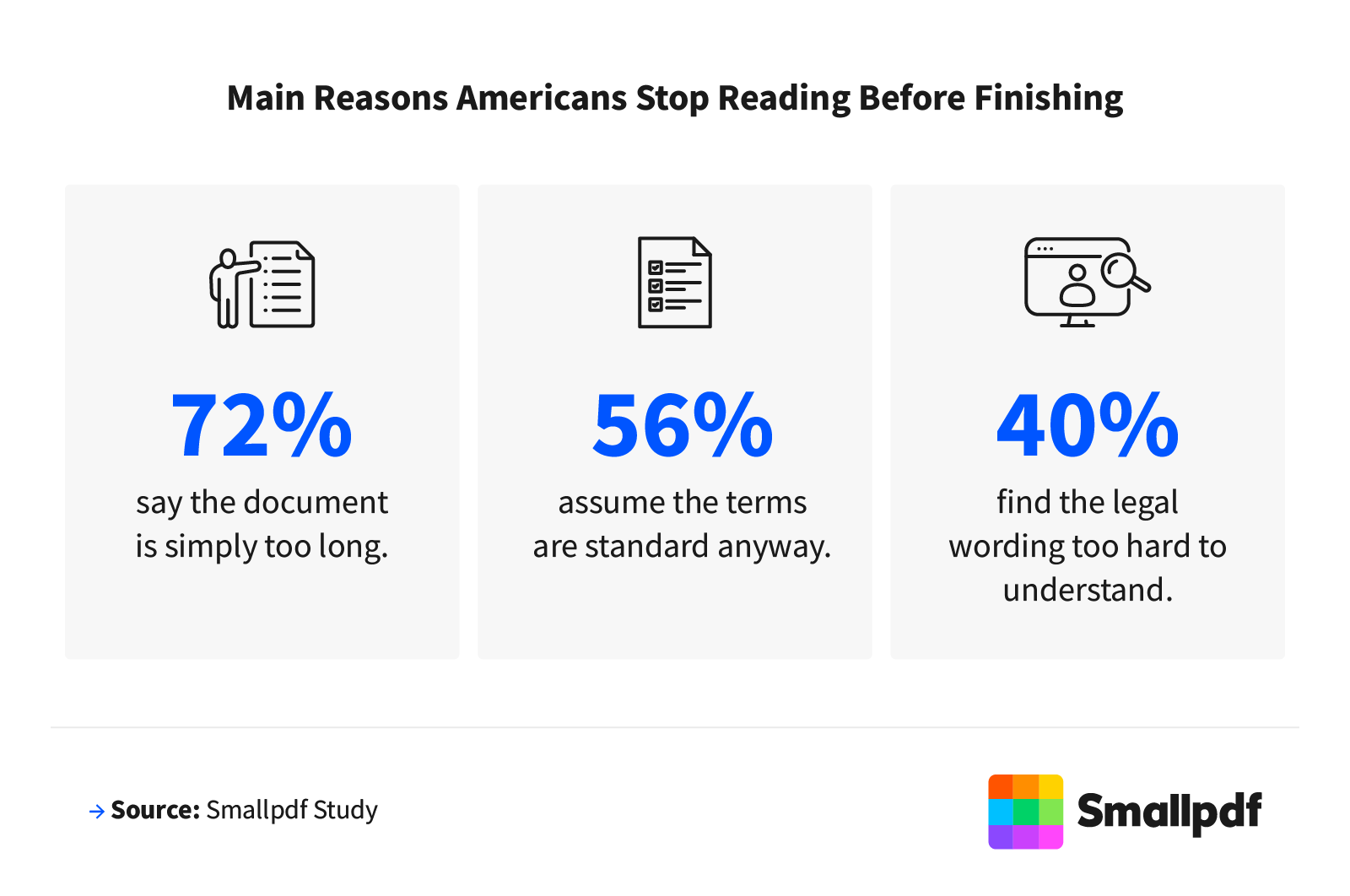
Agreements pile up faster than anyone can process them, and something has to give. For most people, what gives is the reading.
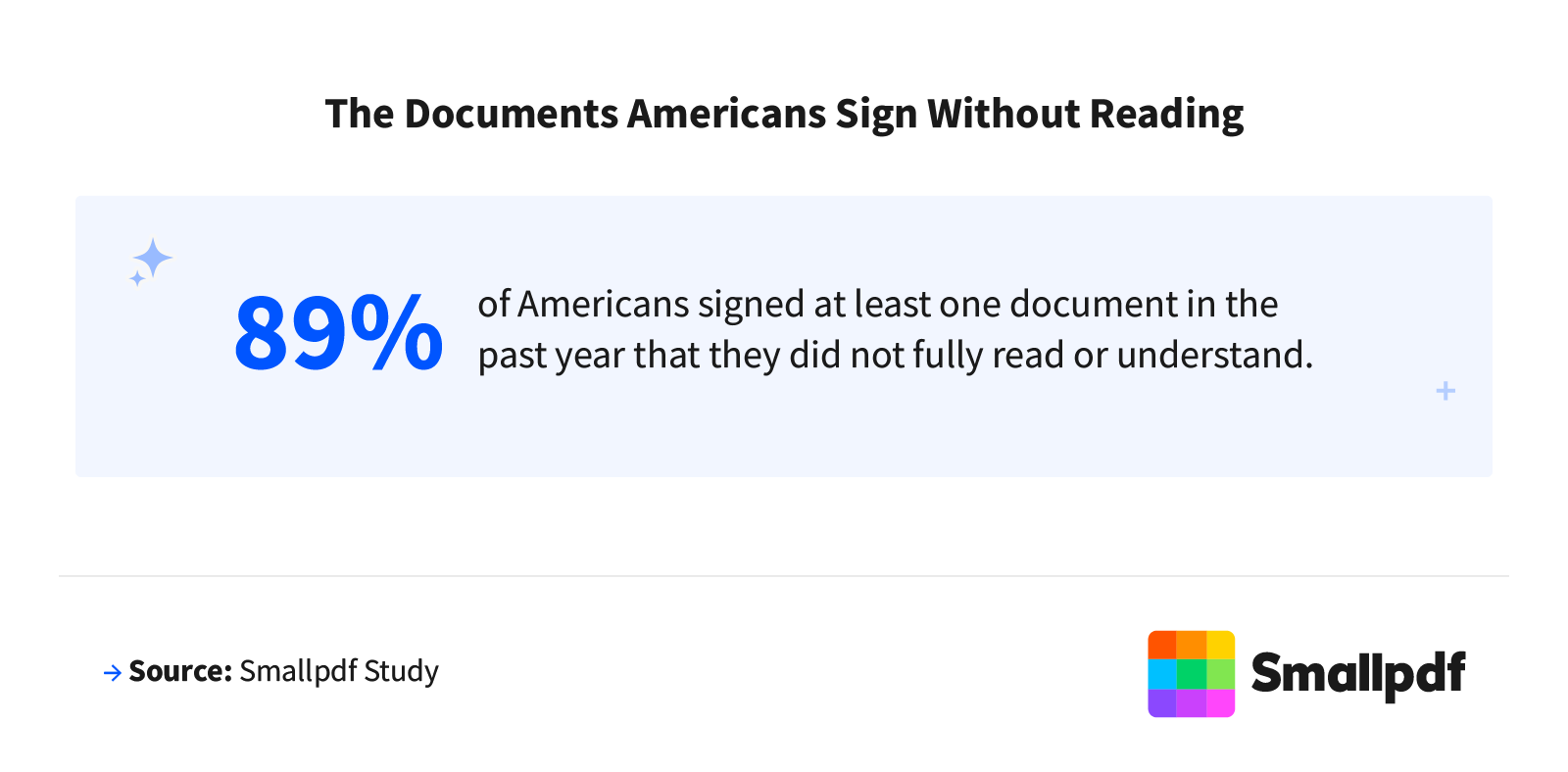
Nearly nine in ten Americans (89%) admitted signing an important document in the past year without fully understanding it. Terms of service topped the skip list at 88%, followed by insurance policies (72%) and medical intake forms (60%). These are the agreements that decide how disputes get settled, what a claim covers, and who sees your health history.
Certain clauses get skipped so consistently they might as well be invisible. A third of respondents (33%) never checked whether disputes must go to arbitration instead of court, 15% never checked what can be deducted from a deposit, and 13% never checked whether their personal information is shared with other companies. Smaller shares skipped automatic renewal terms (9%) and cancellation or early exit fees (5%).
Policy updates carry the same blind spot into newer territory. Almost half of Americans (48%) accepted an updated app or AI policy without knowing whether their information would be used to train a model. Gen Z led at 54%, just ahead of millennials (52%), with Gen X (41%) and baby boomers (37%) further behind.
School and childcare paperwork showed a similar pattern, with 48% of Gen Z parents and guardians saying they didn't fully read or understand the form they signed, compared with 37% of Gen X and 32% of millennials. Job offers were no exception either: 44% of Gen Z signed one without fully reading or understanding it, against 40% of everyone else.
Passing the Fine Print to a Chatbot
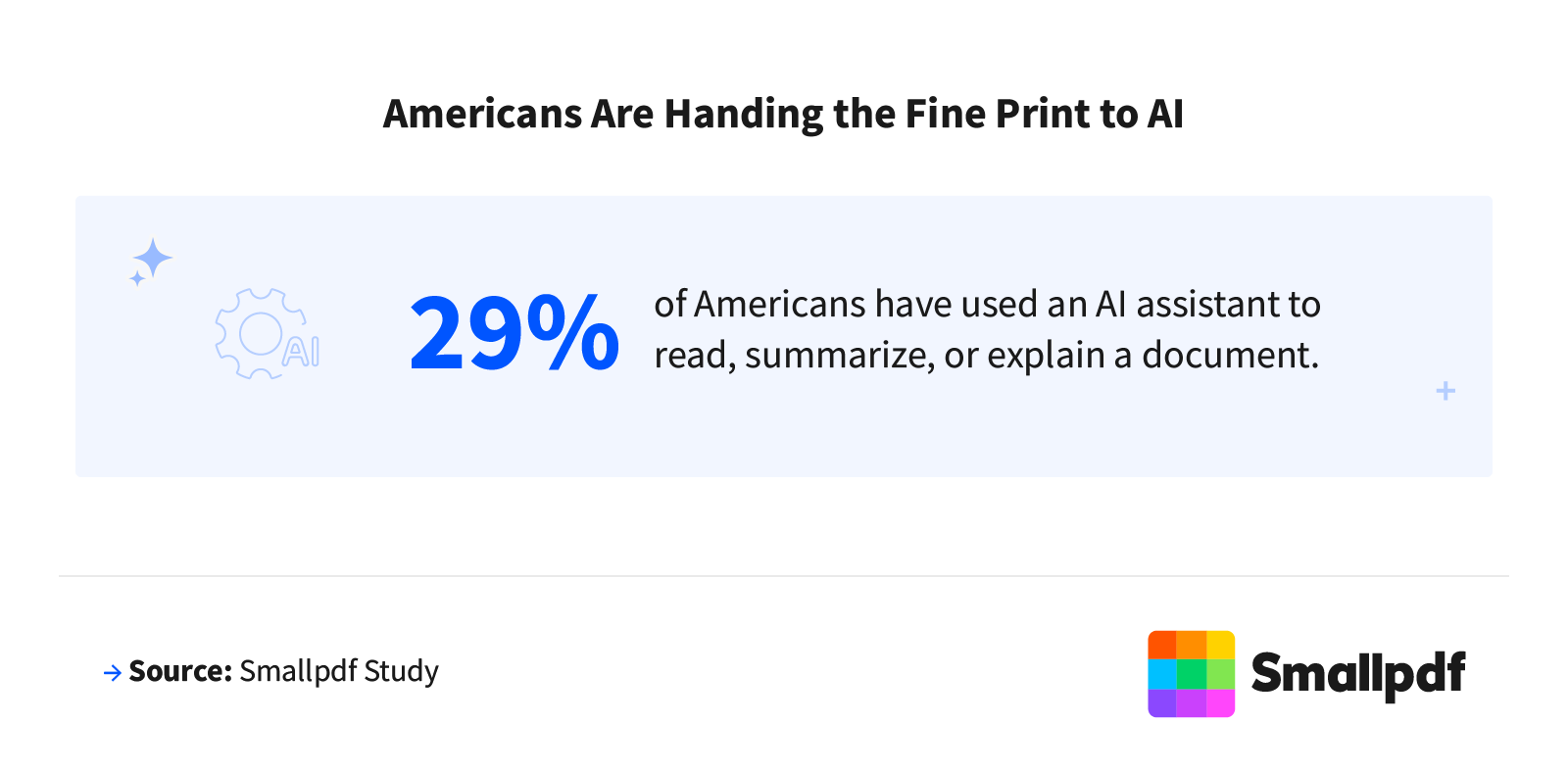
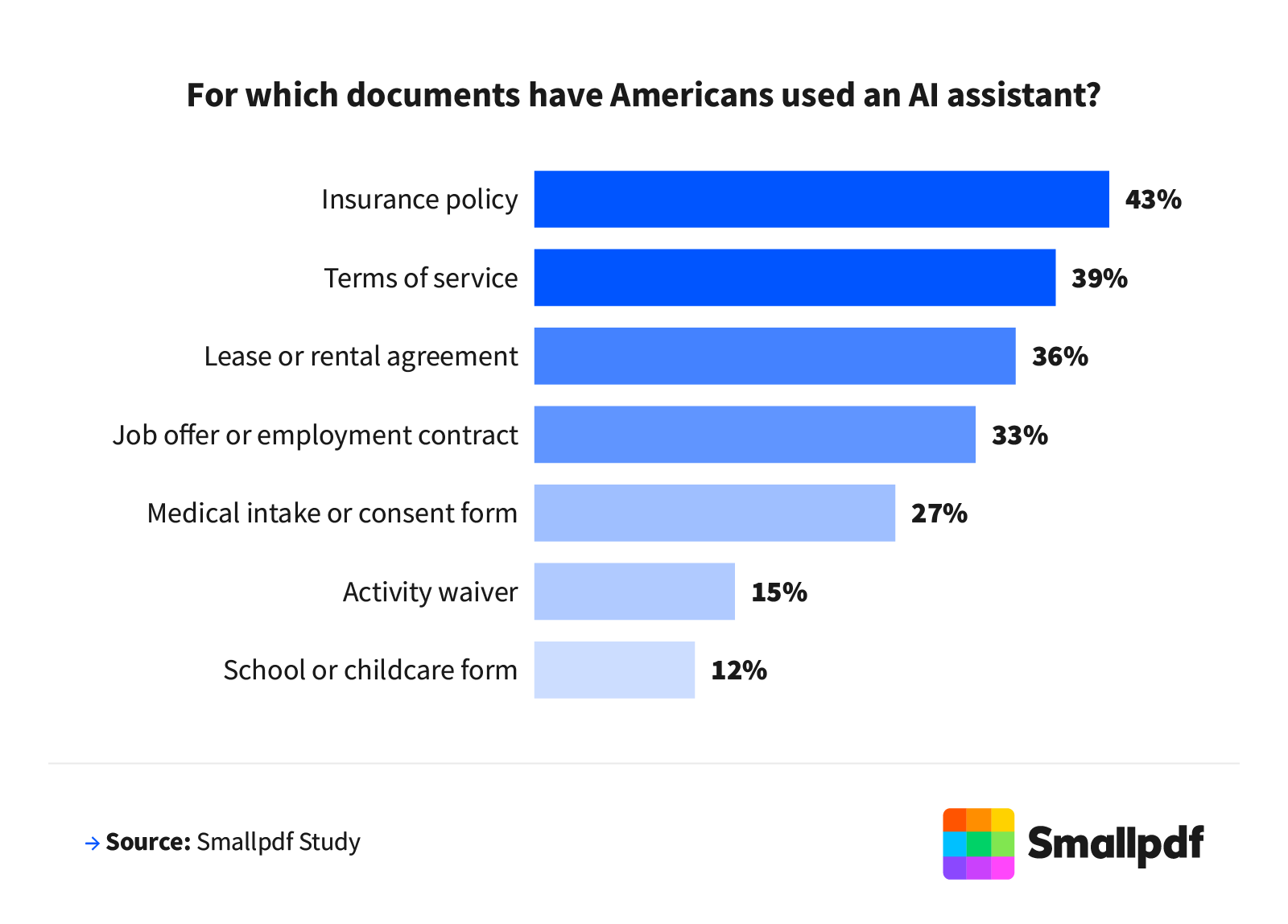
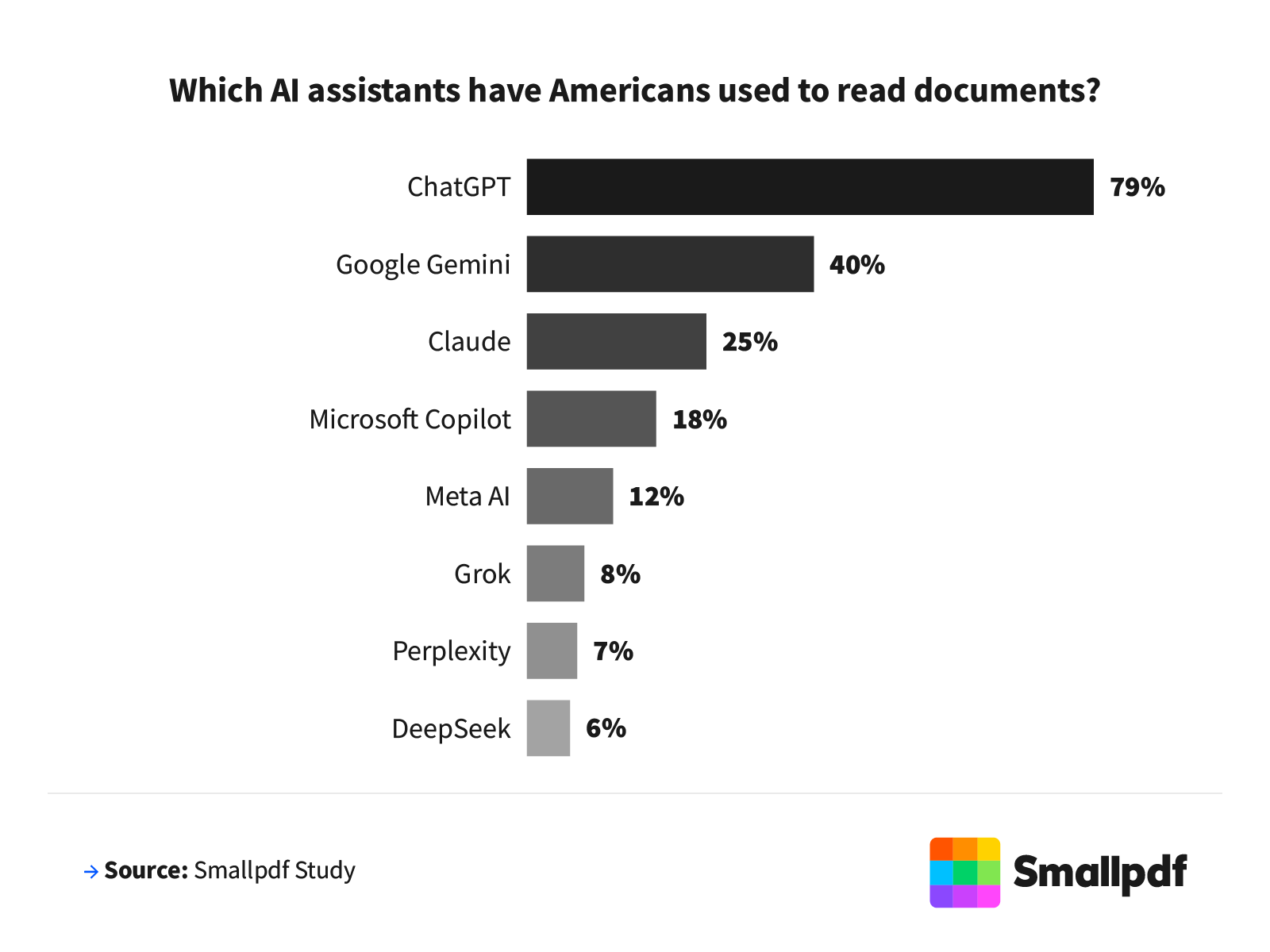
When documents get too long to read, plenty of people look for a shortcut. Lately that shortcut has a chat window.
Plain English Changes What People Catch
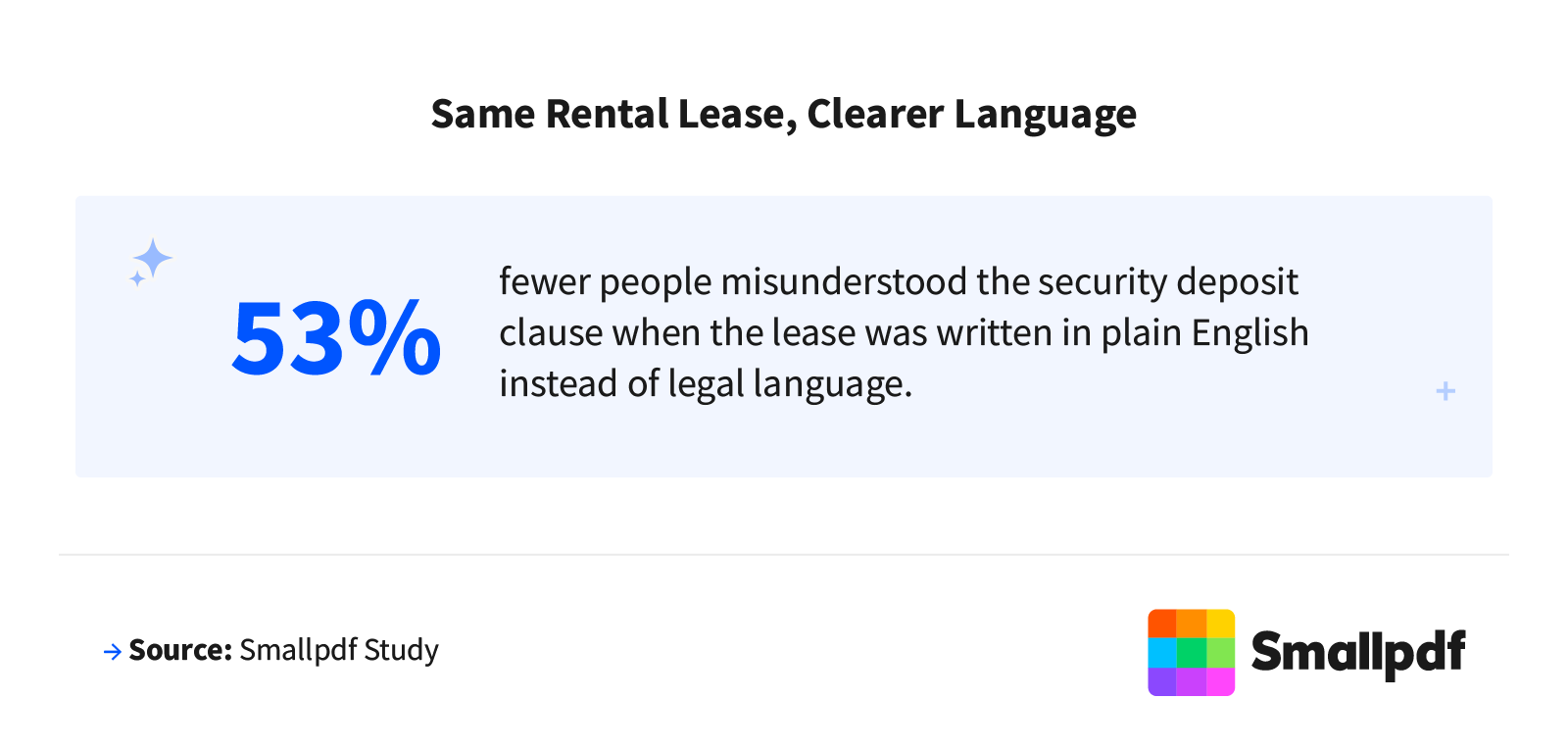
To find out how much of the confusion traces back to wording alone, we handed every respondent an excerpt from a real residential lease and tested what they took away from it. Half read the clause in its original legal wording, and half read the identical terms rewritten in plain English. Both groups then answered the same questions, so the only thing that changed between them was the writing.
A 2-page plain-language version: 78%
20 pages with the key clauses highlighted: 59%
20 pages in bullet points instead of paragraphs: 57%
20 pages opening with a 1-page plain-language summary: 49%
20 pages in larger type with more white space: 35%
20 pages in standard legal language: 21%
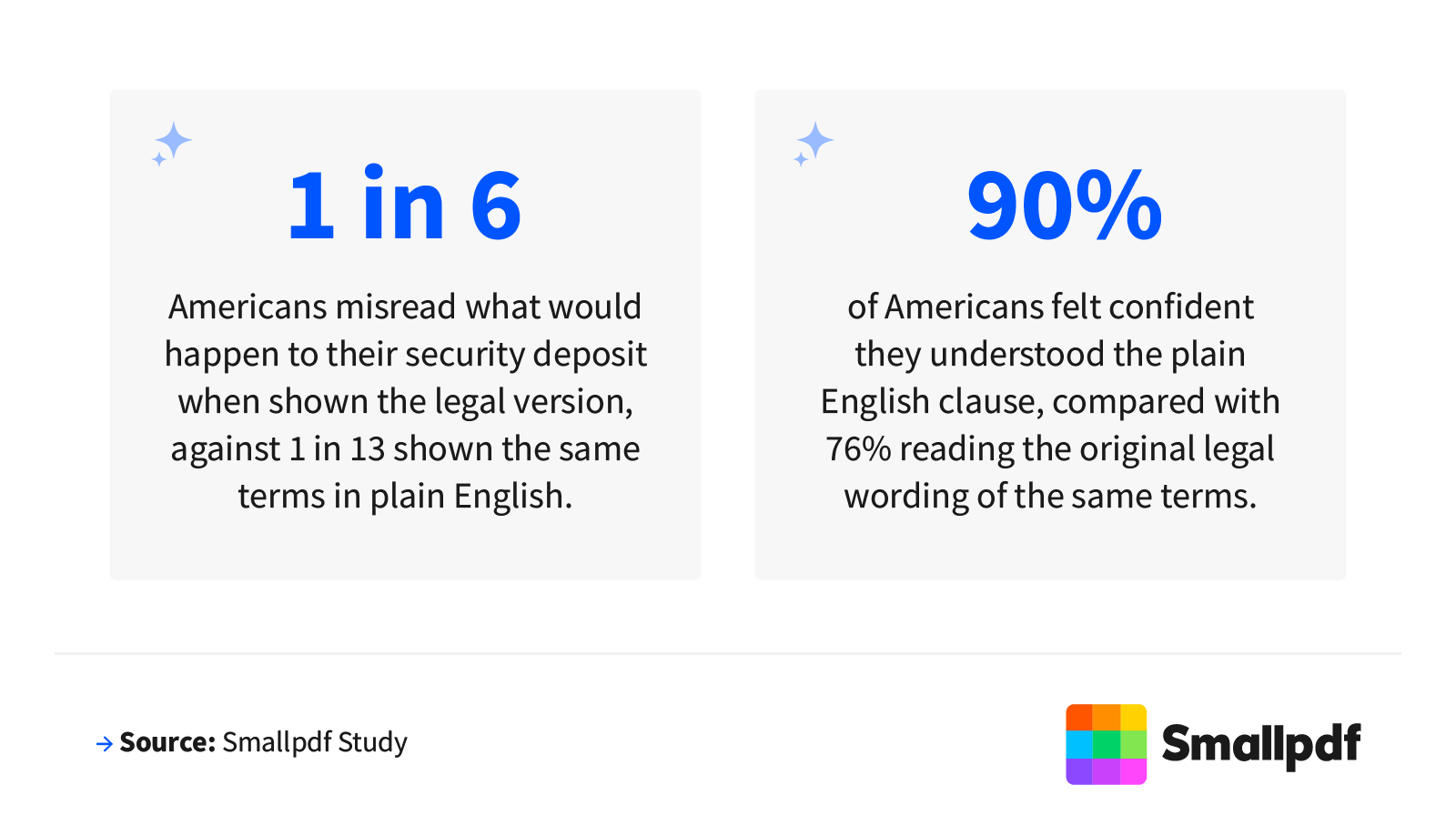
Readers who saw the plain English version also felt more confident in their answers, spotted every term in the clause, and answered every question correctly at higher rates than those who read the original legal wording. Same terms, same obligations, better outcome for the person signing.
Practical Takeaways for Reading Important Documents
A few extra minutes with an important document can prevent a much bigger problem later. These habits can make the fine print easier to manage:
Start with the terms that affect you most. Look for fees, cancellation rules, automatic renewals, deposits, data sharing, and dispute terms before signing.
Break long documents into sections. If 20 pages feels overwhelming, review a few pages at a time and mark anything you want to revisit.
Don't treat an AI summary as the document itself. Use AI to identify clauses worth reviewing, but return to the original document before agreeing to anything involving your money, data, or legal obligations.
Highlight and annotate important clauses. Marking up a PDF can make important terms easier to find and gives you a reference if you need to revisit the agreement later.
Clear Documents Protect Everyone
Americans aren't careless readers. They're often dealing with documents that are difficult to get through and understand. Our lease test showed that plain wording helped readers understand more without changing the terms themselves. Clearer documents can make it easier for everyone to know what they're agreeing to.
Methodology
We surveyed 1,003 Americans about the documents they sign and accept, including leases, job offers, insurance policies, medical intake forms, school forms, activity waivers, and terms of service. We also showed every respondent an excerpt from a real residential lease and tested what they understood from it. Half the sample read the clause in its original legal wording, and half read the identical terms rewritten in plain English, then both groups answered the same questions.
The sample spanned generations, including millennials (47%), Gen X (24%), Gen Z (20%), and baby boomers (9%), and skewed slightly female, with women (54%) and men (44%). Percentages not totaling 100% are due to rounding or to respondents selecting more than one option.
The data was collected in August 2026. These first-hand responses offer insight into how Americans approach important documents, including what they skip, misunderstand, and do to make complicated language easier to understand.
About Smallpdf
Smallpdf is one of the world's most popular and trusted PDF editing software suites. Over 1 billion users rely on it to manage their documents online. Smallpdf, the maker of PDF Summarizer, makes it easy to get to the heart of a lease, insurance policy, or medical form before you sign it. You can pull out the key takeaways, scan them as bullet points, and ask follow-up questions about the sections that matter most, so nothing gets buried in the fine print.
Fair Use Statement
Feel free to share these findings for noncommercial purposes. If you do, please credit Smallpdf with a link back to this page so readers can explore the full study.