Can Your Signature Be Your Initials?
Can your signature be your initials? In many cases, yes. Learn when initials are accepted and how to add them to a PDF with Smallpdf.
Quick Takeaways
Your initials may count as your signature when you use them with a clear intention to sign.
A signature does not always have to match your full legal name or be easy to read.
Initialing a page or clause is different from signing the complete document.
Banks, government bodies, and other organizations may require the signature they have on file.
Some documents need witnesses, notarization, identity checks, or a specific type of electronic signature.
Smallpdf Sign PDF lets you add a signature or initials to a PDF in your browser.
Can your signature be your initials? In many everyday situations, yes. A signature does not always need to spell out your full legal name or look like careful handwriting. Your initials may count when you use them as your signature and intend them to show that you approve or accept the document.
But context counts. A bank, government office, employer, or other organization may ask you to use the signature recorded in its system. Certain legal documents also have formal signing, witnessing, or identity-check requirements that initials alone may not meet.
So, initials can work as a signature. But you should check what the document and recipient require before relying on them.
Can a Signature Legally Be Your Initials?
In many legal systems, the signer’s intention carries more weight than the length or appearance of the mark. A signature may be a handwritten name, initials, a symbol, a typed name, or an electronic action when it identifies the signer and shows that they intended to approve the document.
For example, US federal law defines an electronic signature broadly as an electronic sound, symbol, or process attached to a record and carried out with the intention of signing it. EU rules also say an electronic signature cannot be denied legal effect only because it is electronic, although qualified electronic signatures receive the same legal effect as handwritten signatures throughout the EU. UK law allows electronic signatures to be admitted as evidence when questions about authenticity arise.
That does not mean every set of initials will automatically bind you to every document. Whether initials are accepted can depend on:
The law applying to the document
The type of transaction
Evidence of who added the initials
Whether the signer meant to approve the terms
Any signing rules stated in the document
Requirements set by the receiving organization
A quick scribble in the margin may not carry the same meaning as initials placed in a clearly marked signature field. The surrounding process helps show what you meant to do.
Intent Is Usually More Important Than Legibility
Your signature does not need to be a neat version of your printed name. Plenty of signatures are shortened, stylized, or unreadable.
What usually needs to be clear is that the mark is yours and that you placed it there to sign. A consistent set of initials can provide that signal, especially when it appears beside your printed name, the date, and other identifying details.
The format becomes more important when somebody disputes the signature. A clear signing process, identity record, timestamp, or witness can help connect the initials to you.
Initials Are Not Always a Complete Signature
Documents often ask you to initial individual pages, corrected terms, or specific clauses. In that setting, the initials usually confirm that you saw a particular section. They may not replace the full signature requested at the end.
Suppose a rental agreement asks you to initial a clause about pets and sign the final page. Adding “JM” beside the clause shows that you acknowledged it. You should still complete the signature field unless the landlord or form states that initials are enough for the entire agreement.
Read each label carefully:
“Initial here” asks for initials.
“Signature” asks for the mark you use as your signature.
“Printed name” asks for your name in readable letters.
“Authorized signatory” may require proof that you can sign for a business or another person.
When a form contains separate initial and signature fields, treat them as separate requests.
When Initials Work as a Signature—and When They Don’t
Initials are often accepted for lower-risk approvals and routine documents. They are less suitable when the receiving party needs to compare your mark with an existing record or follow a fixed signing process.
Initials May Work for Everyday Agreements
Your initials may be enough when the other party accepts them as your signature and the process clearly shows your approval. Examples might include an internal approval, a delivery confirmation, a simple consent form, or an agreement between parties who can identify one another.
Electronic initials may also be used inside a document-signing process. Smallpdf Sign PDF, for example, lets you add a signature, initials, text, and dates to a PDF.
The safest approach is to use your initials in the designated signature field, add the date, and keep a copy of the completed document.
Use the Signature on File for Banking
Banks and other financial institutions may compare a new signature with the one recorded for your account. A set of initials that differs from that record could lead to a delay or rejection, even when you normally treat those initials as your signature.
Checks can have their own requirements. A bank may expect the signature used on the account, and the rules may vary by institution and location. Ask the bank before changing from a full signature to initials on checks, account forms, loan papers, or payment instructions.
Consistency helps here. A bank employee should not have to guess whether two very different marks came from the same customer.
Follow Formal Requirements for Higher-Risk Documents
Some documents have extra requirements because of their legal or financial consequences. Depending on local law, this may include wills, deeds, real-estate transfers, powers of attorney, court papers, sworn statements, or documents requiring notarization.
These requirements can cover:
Where you sign
Who must witness the signature
Whether a notary must verify your identity
Whether the signature must be handwritten
What kind of electronic signature is accepted
Whether your full name must appear nearby
Do not assume that initials alone will meet those rules. Follow the instructions on the document and get legal advice when the consequences of an invalid signature would be serious.
Match Workplace and Government Procedures
An employer may accept initials for timesheets or internal approvals but require a full electronic signature for an employment contract. A government form may reject any mark that does not follow its written instructions.
Use the format requested on the page. When the form says “sign using your full name,” initials are unlikely to be the right choice, even if you use them elsewhere.
Ask the Other Party When the Form Is Unclear
A blank field labeled only “Sign” does not tell you whether initials are acceptable. Asking before signing can prevent the document from being returned.
A simple question is enough: “I normally sign using my initials. Is that acceptable for this form?”
Get the answer in writing for an important transaction. That gives you a record showing that the recipient agreed to the format.
How to Create and Use a Consistent Signature Online
A short signature is useful only when you can reproduce it. Decide how your initials will look, then use the same general form each time.
They do not need to be identical down to every curve. Handwritten marks naturally vary. But a consistent order, shape, and style make your signature easier to recognize.
Choose a Clear Set of Initials
Most people use the first letters of their given name and surname. You could include a middle initial if it helps distinguish you from someone with a similar name.
For example:
Jordan Lee might use “JL.”
Jordan Avery Lee might use “JAL.”
Someone who regularly uses a double surname might include both surname initials.
Your initials do not necessarily need to include every part of your legal name. Still, avoid switching between several versions for official documents unless the receiving organization allows it.
Decide Whether to Add a Stroke or Symbol
You can join the letters, overlap them, or add a simple line or flourish. Keep the design easy enough to repeat on paper and a touchscreen.
An extremely detailed signature can become frustrating when you need to sign quickly. A mark that is too simple, such as one printed letter, is also easier for someone else to imitate.
Aim for something natural to your hand. Practice it a few times and choose the version you can produce without stopping to remember every line.
Add Your Initials to a PDF With Smallpdf
Smallpdf Sign PDF lets you sign a document online without printing and rescanning it.
Open Sign PDF or select “Choose Files” and upload your PDF from the drop box below
Choose the option to add your initials or signature.
Draw, type, or upload the mark available for the field you need.
Place it in the correct part of the document.
Add your printed name or the date where required.
Select “Finish.”
Download the completed PDF and check every signed field.
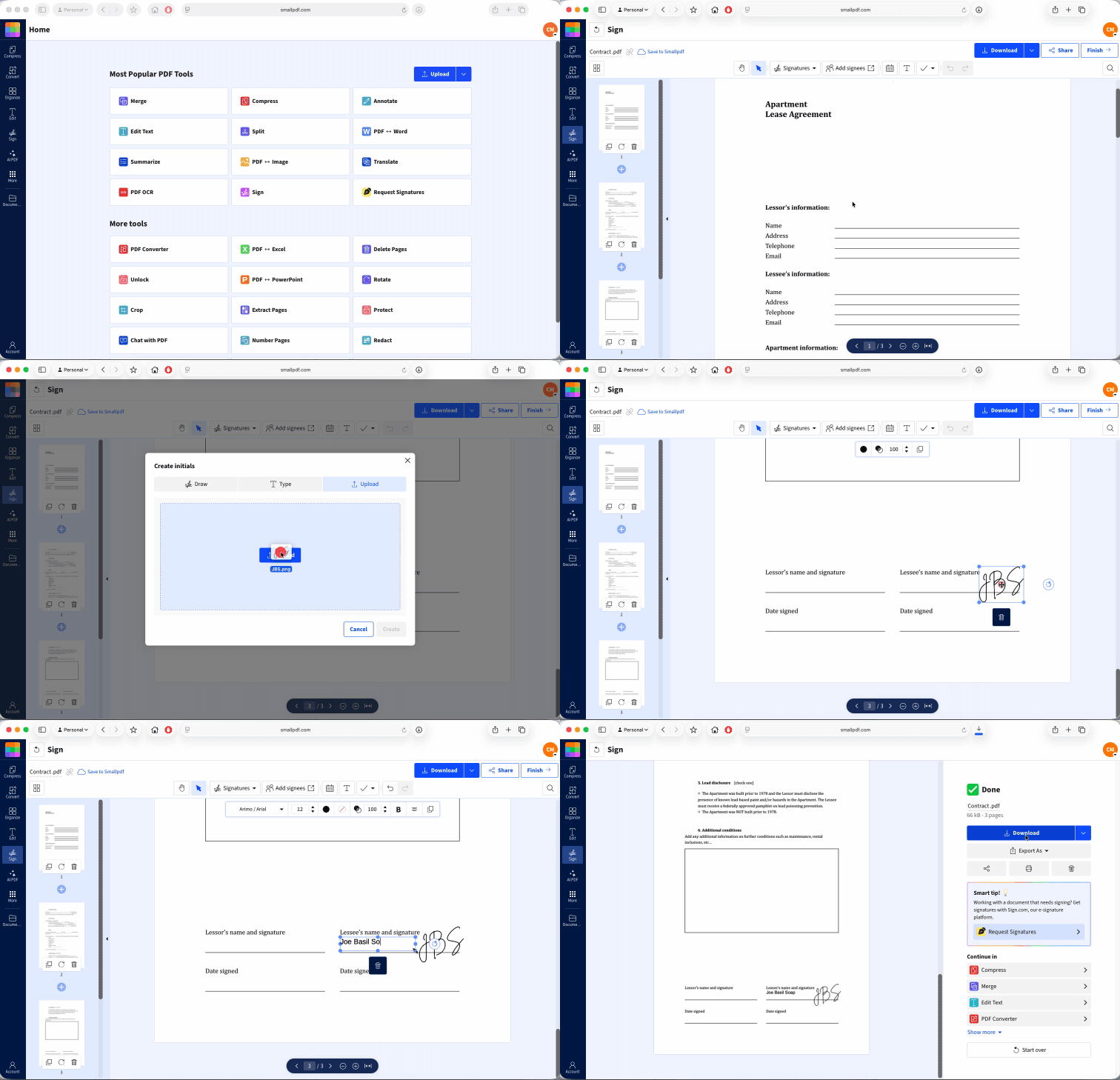
The tool works in a browser and can be used on Mac, Windows, iOS, Android, and Linux. Most Smallpdf tools are free to use, although free accounts have daily download limits. With Smallpdf Pro, you get unlimited access to all 30+ tools, unlimited document downloads, and extra features for regular PDF work. You can try Pro with a 7-day free trial.
Before finishing, zoom in and make sure the initials are not covering the date, printed name, or nearby terms. Also check whether the document asks for initials on several pages.
Keep Evidence of the Completed Document
Save the final PDF rather than keeping only the unsigned original. Use a clear file name that separates the two, such as:
‘service-agreement-signed.pdf’
When the signed document is important, keep the email or message used to send it. That record can help show when the file was signed and who received it.
For higher-risk agreements, a signing process with identity checks, timestamps, and a stronger audit record may be more suitable than placing a simple image or initials on the page.
If I Sign With Initials Once, Do I Have to Use Them Every Time?
Using initials once does not normally mean you are forbidden from ever changing your signature. People alter their signatures for many reasons, including a name change, injury, age, or a decision to use a shorter mark.
But changing your signature can cause practical problems. A bank, employer, or government body may compare it with a stored example and ask you to verify the change.
Use the same signature within one document and transaction. Do not initial the first page, use a full handwritten name on the second, and add a different typed version at the end unless the form calls for those separate actions.
When you decide to change the signature you use regularly:
Choose the new version and use it consistently.
Update banks or other organizations that keep a specimen signature.
Carry suitable identification when signing important documents.
Ask whether any formal update form is required.
Your old agreements do not usually stop applying simply because your signature later changes. The question is whether you intended to sign when you completed them, not whether your mark looks the same forever.
Make Initials Easier to Verify
Initials are short, so the rest of the document should help identify who used them.
Add your printed name near the signature field when the form provides space. Include the date and fill in any requested contact or identification details accurately.
For a business document, add your job title and the company name when you are signing on its behalf. Your initials alone may not show whether you signed personally or as an authorized representative.
Never place somebody else’s initials on a document unless you have proper authority and the signing method clearly records that arrangement. Writing “for” or “on behalf of” beside a mark does not automatically give you permission to sign for another person.
Frequently Asked Questions
Can I use my initials on a check or for the bank?
Possibly, but use the signature your bank has recorded unless it confirms that initials are acceptable. A different mark may be questioned or rejected, especially on checks, account changes, and payment instructions.Do my initials have to match my legal name?
They do not always need to include every part of your legal name, but they should be identifiable as yours. A form, bank, government body, or employer may set stricter rules and ask for a signature linked to your full legal name.Can my signature be a symbol or doodle instead of letters?
A symbol may function as a signature when you use it to identify yourself and show an intention to sign. It may still be refused when the document or receiving organization requires a specific signature format.Are typed or electronic initials as valid as handwritten ones?
They can be, depending on the law, document, signing process, and evidence of your intent. Electronic-signature laws in several major jurisdictions recognize electronic symbols or processes, but some transactions have extra formal requirements.Is an electronic signature with initials legally binding?
It may be legally binding when the initials identify you, show your intention to sign, and meet the rules applying to the document. The result depends on the transaction and jurisdiction, so check local requirements for important legal or financial documents.Add signatures or initials to PDFs with Pro