Save Excel to PDF With Embedded Fonts
You formatted your spreadsheet with care — then exported it to PDF, and suddenly the fonts changed, shrank, or disappeared completely.
If you’ve been wondering how to save Excel as a PDF with embedded fonts, you’re not alone. Font substitution is one of the most common issues users face when converting spreadsheets. Even popular fonts like Arial or Calibri sometimes vanish, especially when shared or printed.
We’ll show you how to fix it, so your text always looks the way you intended.
Why Excel Fonts Change When Exported to PDF
When you export an Excel file to PDF, the output often doesn’t match the original layout. You may notice:
Font sizes look smaller
Bold text appears faint or disappears
Layout spacing or columns shift
Custom fonts revert to defaults
That’s why so many users search for:
Excel to pdf without font change
Excel save as pdf changes font
convert Excel to PDF font change
This happens because:
Excel doesn’t always embed fonts by default
Not all fonts are licensed for embedding
Custom or simulated fonts don’t convert cleanly
Exported PDFs rely on the viewer’s installed fonts
The result? A PDF that looks nothing like your Excel file.
Step 1: Convert Excel to PDF the Right Way
To preserve your fonts, always start with a reliable export. You have two options:
Option A: Use Smallpdf’s Excel to PDF Tool
For the best results, head to our Excel to PDF converter:
Upload your Excel file
We convert it directly in your browser
No font substitutions or layout errors
Ideal for sharing, printing, or archiving
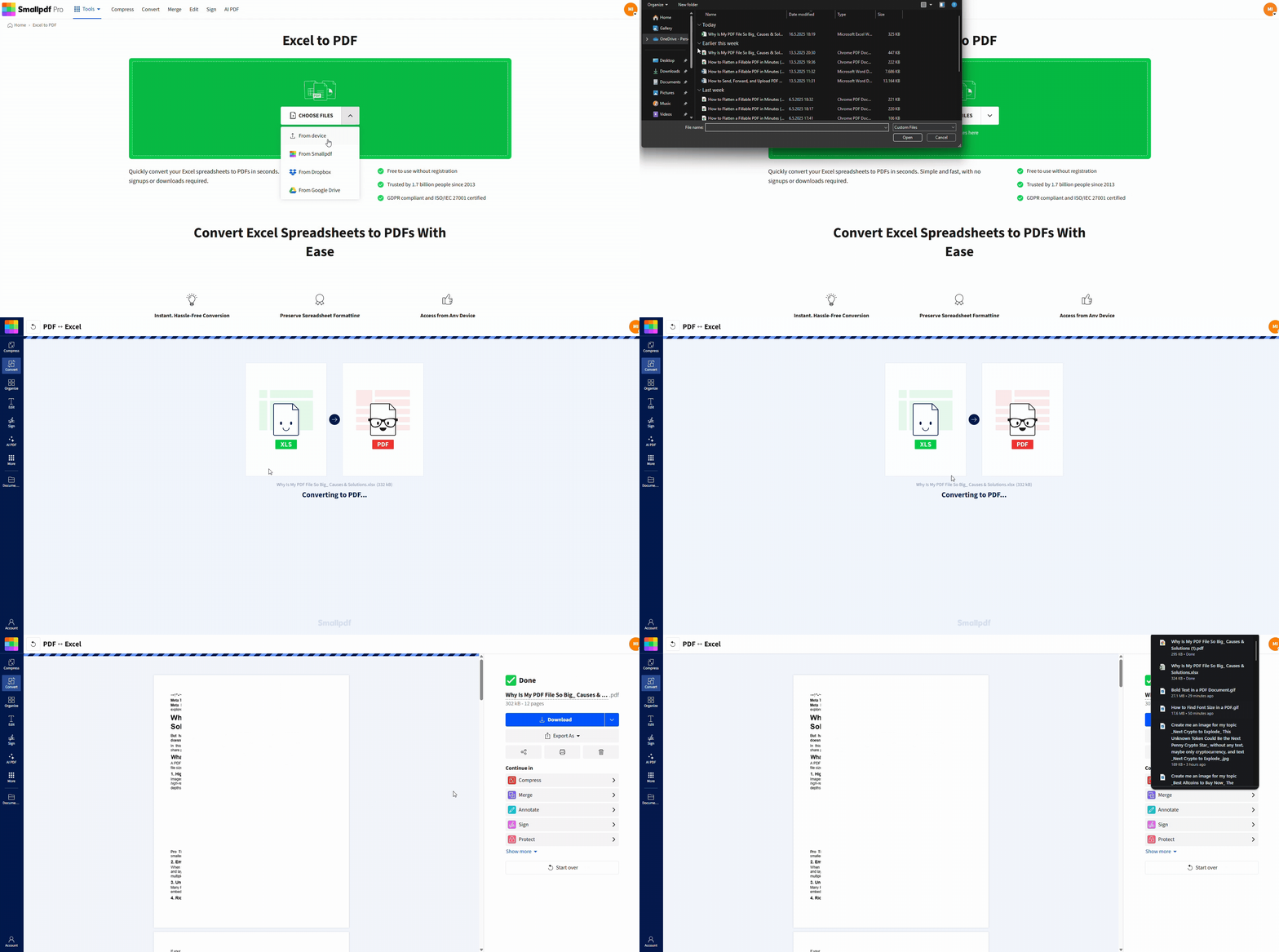
Option B: Export Manually from Excel
If you prefer exporting from Excel:
Go to File > Save As > PDF
Or use Export > Create PDF/XPS Document
Be sure to check “Optimize for: Standard (publishing online and printing)”
Some versions let you tick “Embed fonts” in advanced settings
But even with those settings, font issues can still appear in the final PDF. That’s where our Edit tool comes in.
Step 2: Check for Font Problems in the PDF
After exporting, open your PDF and check for:
Missing bold text
Fonts replaced by generic ones
Cell content misaligned
Text appearing smaller than in Excel
If any of that happens, your fonts weren’t fully embedded — or the viewer can’t render them properly.
Step 3: Fix It with Smallpdf’s Edit PDF Tool
Here’s how to correct font and layout issues fast:
Open your file in Edit PDF
Click Choose File and upload your converted PDF
Select the Text tool from the top menu
Click anywhere on the PDF to insert a new text box
Type in the corrected content
Choose a supported font like
Resize and align your text to match your spreadsheet formatting
This process works especially well if your Excel PDF font is too small or if bold cells don’t show as expected.
Step 4: Save and Print Your Updated PDF
When you're done editing:
Click Download in the top right
Open your file to preview
Print with Ctrl + P (Windows) or Cmd + P (Mac)
Your PDF will retain all the font styling you added
This ensures the final output matches what you originally built in Excel.
Why Use Smallpdf for Font Preservation?
Microsoft Excel’s export options aren’t perfect — especially if you use custom fonts or share across devices. Even default fonts like Calibri sometimes render inconsistently.
Smallpdf helps you:
Fix font changes in exported Excel PDFs
Reapply styling manually with trusted bold fonts
Edit layout and size issues after export
Ensure printed copies match your design exactly
Avoid issues like Excel to PDF font too small or PDF not embedding fonts
Keep Your Fonts Intact, Every Time
If you’ve struggled with:
convert Excel to PDF without changing font
Excel export to PDF changes font size
embed fonts from Excel into PDF
— you’re not alone. These are common issues, and you don’t need to start over from scratch.
With Smallpdf, you can export, fix, and print your spreadsheet as a clean PDF — with no font surprises.
Frequently Asked Questions
How to convert Excel to PDF without changing font?
Use Smallpdf’s Excel to PDF to preserve your formatting. It converts your file online without font substitution or layout errors. If you still notice issues after export, you can fix font style and size using the Edit PDF.Why do my fonts change when converting from Excel to PDF?
This usually happens when the font isn’t embedded or the viewer doesn’t support it. Excel may also simulate bold or use custom fonts that aren’t licensed for embedding. Using Smallpdf ensures your PDF displays standard fonts correctly — on any device or browser.